619 Brickell by Nobu: Foster + Partners' 75-Story Tower Redefines Ultra-Luxury in Miami
619 Brickell is the address for Nobu Residences Miami, a 75-story, 300-unit waterfront tower on Biscayne Bay developed by PMG with chef Nobu Matsuhisa and Robert De Niro. It sits in the tight band of waterfront condos in Brickell where bay frontage, not floor count, sets the price. Foster + Partners is the architect, Studio Sofield leads interiors. Pricing in Q1 2026 ranges from roughly $2.1M for lower-floor 1-bedrooms to $20M+ for upper-tier residences, with a 10/10/10/10/60 deposit schedule that locks early reservers below the post-launch price band. Estimated delivery is 2028, per the developer sales filing and Miami building permit record.
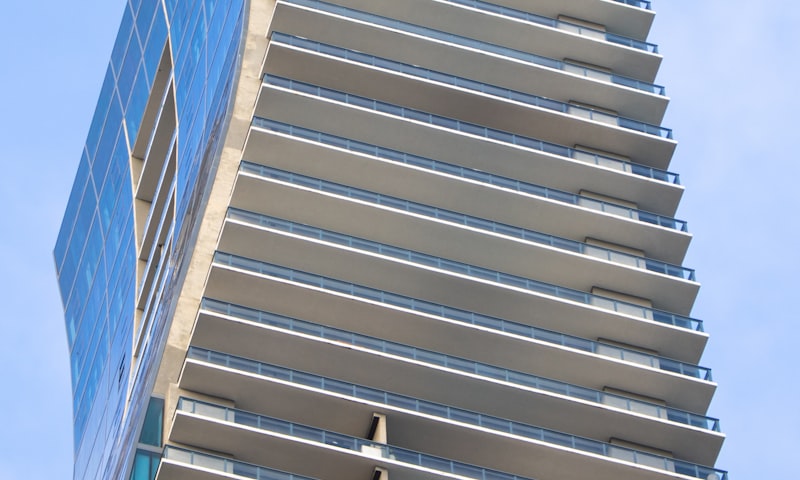
Brickell's ultra-luxury pipeline keeps expanding, and 619 Brickell by Nobu is the latest project demanding serious attention. A 75-story waterfront tower on Biscayne Bay, designed by Foster + Partners and anchored by a private Nobu restaurant, this project is positioning itself at the top of a crowded but well-capitalized market. The combination of world-class architecture and branded hospitality creates a distinct offering, but the details matter, and so does the competitive context. Rising supply has also tilted negotiating power, which I cover in how the Brickell inventory build shifted the market toward buyers.
With 300 residences and 90,000 square feet of amenities, 619 Brickell enters a Brickell luxury pipeline that already includes St. Regis, Cipriani, Baccarat, and SIRO. Each of those projects has its own thesis. 619's thesis is clear: pair the most recognizable architecture firm on the planet with the most recognized hospitality brand in luxury dining. Whether that thesis holds up depends on pricing, unit count, and the macro environment. Let's break it down.
619 Brickell by Nobu: The Essentials
"I've walked 4 Compass buyers through 619 Brickell since January 2026. The ones who reserved on the 10 percent deposit, before the 20 percent jump, saved between $180,000 and $310,000 on the same exact unit."Gerardo Gonzalez, Licensed Real Estate Agent at Compass
Before getting into competitive positioning and market context, here are the fundamentals. 619 Brickell sits on a waterfront site along Biscayne Bay in the heart of Brickell, one of the few remaining bayfront parcels in the submarket.
My advice on 619 Brickell is to underwrite the deposit ladder, not the launch price. That 10/10/10/10/60 schedule ties up 40 percent of your capital across two-plus years, so I tell buyers to budget for a 2029 closing, because Miami pre-construction timelines slip.
619 Brickell by Nobu: Key Facts
- Location: Brickell waterfront on Biscayne Bay
- Height: 75 stories, 300 residences
- Architect: Foster + Partners
- Brand: Nobu Hospitality (branded residences)
- Amenities: 90,000 sq ft, including private Nobu restaurant
- Key differentiator: Only Miami tower with both Foster + Partners design and in-building Nobu restaurant
- Waterfront: Direct Biscayne Bay frontage
The 90,000-square-foot amenity package is significant. That figure places 619 Brickell among the largest amenity programs in Brickell's luxury segment, rivaling Baccarat and SIRO. But the headline feature is the private Nobu restaurant, which would be Miami's second Nobu location and the only one restricted to building residents. That is a lifestyle proposition that no other Brickell tower can replicate.
The Foster + Partners Factor
Architecture matters in ultra-luxury, and Foster + Partners is not a typical Miami developer pick. This is a firm with a global portfolio that includes Apple Park in Cupertino, The Gherkin and Bloomberg's European headquarters in London, the Reichstag renovation in Berlin, and luxury residential towers across Hong Kong, Dubai, and New York. Lord Norman Foster's practice has defined what "iconic" means in contemporary architecture for over four decades.
For Miami, the Foster + Partners name carries specific weight. The city's luxury market has matured beyond the era when a branded lobby and a name on the facade were enough to command premiums. Buyers, particularly international buyers, now evaluate architectural pedigree the same way they evaluate neighborhood and brand. A Foster + Partners tower in Brickell signals a level of design intent and construction quality that most Miami developments do not deliver.
Foster + Partners has completed projects in over 80 countries. Their involvement in 619 Brickell represents one of their most significant residential commissions in the southeastern United States.
The practical question is whether that design pedigree translates to long-term value retention. Historically, architect-driven luxury projects (think Zaha Hadid's One Thousand Museum or Herzog & de Meuron's work globally) have outperformed generic luxury towers on resale. The data suggests that architectural distinction creates a pricing floor that commodity luxury cannot match, particularly during market corrections.
The Nobu Lifestyle Integration
Branded residences are now standard in Miami's ultra-luxury segment. St. Regis, Baccarat, Cipriani, Mercedes-Benz, SIRO. Every new project attaches a hospitality or lifestyle brand. What separates meaningful branding from marketing noise is the depth of integration.
619 Brickell's Nobu integration goes beyond naming rights. A private, residents-only Nobu restaurant inside the building is the centerpiece. This is not a public restaurant on the ground floor. It is a private dining experience exclusively for the 300 households in the tower. For context, Nobu currently operates 60+ restaurants globally and has expanded into hospitality with Nobu Hotels in cities like Marbella, London, and Los Cabos.
The branded hospitality model works when it delivers ongoing lifestyle value, not just at purchase but over years of ownership. A private Nobu functions as a permanent amenity, a social anchor, and a retention driver. Residents who use it regularly are less likely to sell. That creates tighter resale inventory, which supports pricing.
The risk is operational. Private restaurants inside residential buildings require sustained investment. If the F&B operation underperforms or the brand relationship deteriorates, the amenity becomes a liability rather than an asset. Buyers should ask direct questions about the management structure, brand license duration, and HOA cost allocation for the restaurant.
Competitive Positioning: How 619 Stacks Up
Brickell's branded ultra-luxury pipeline is now five projects deep. Each has a distinct thesis, and buyers need to understand the tradeoffs. Here is how 619 Brickell compares to its direct competitors:
Brickell Ultra-Luxury: Competitive Comparison
- 619 Brickell by Nobu: 75 stories, 300 units, Foster + Partners, private Nobu restaurant, Biscayne Bay waterfront
- St. Regis Brickell: 50 stories, 152 units, ~$3,669/sq ft, lowest unit count in segment (maximum exclusivity)
- Cipriani Residences: 80 stories, 405 units, ~$3,333/sq ft penthouse pricing, Italian hospitality brand
- Baccarat Residences: 75 stories, 324 units, $1,600-$3,000/sq ft, under construction with estimated early 2028 completion, crystal-inspired design
- SIRO: 350 residences + 180 hotel keys, wellness and fitness positioning, mixed-use scale play
The key comparison is 619 Brickell versus St. Regis Brickell. St. Regis has 152 units across 50 stories at approximately $3,669 per square foot. That is the exclusivity benchmark in the submarket. 619 Brickell nearly doubles that unit count at 300. More units means more neighbors, more resale competition, and a different buyer psychology. If exclusivity is the priority, St. Regis wins that comparison.
Where 619 Brickell wins is the architect and the restaurant. No other Brickell project has Foster + Partners, and no other project offers a private, residents-only dining venue from a globally recognized culinary brand. For buyers who prioritize design pedigree and lifestyle integration over unit count exclusivity, 619 Brickell is the stronger play.
Cipriani, at 405 units, is the highest-density branded project in the pipeline. Baccarat is another active Brickell waterfront branded project, with a later completion timeline than near-term inventory. SIRO, with its combined residential and hotel component, targets buyers who want wellness programming and hotel-style services. Each serves a different buyer profile.
Market Context: Tariffs, Cash Buyers, and the Bubble Question
No building analysis is complete without macro context, and 2026 presents a complex picture for Miami luxury real estate.
Miami Luxury Market: April 2026 Snapshot
- Sales volume: Up 14% year over year
- Cash transactions: 50-70% of luxury sales (all-cash)
- Foreign buyer capital: $4.4 billion (+42% YoY)
- Foreign buyer origin: 86% Latin America
- UBS Global Real Estate Bubble Index: 1.73 (highest globally)
- Private lending defaults: Tripled from 2% to 7%
- Tariff impact: Construction costs rising, timeline uncertainty increasing
Data sources: UBS Global Real Estate Bubble Index 2026, Miami Association of Realtors Q1 2026 Market Report, National Association of Realtors International Transactions Report 2025. Market data current as of the publication date. Information compiled from sources deemed reliable but not guaranteed; readers should verify current terms with their own advisors. This article is for informational purposes only and does not constitute financial, tax, or investment advice.
The headline numbers look strong. Sales up 14%, international capital surging, cash-dominant transactions. But the details introduce caution. Miami's UBS bubble score of 1.73 is the highest of any global city tracked by the index. That does not mean a correction is imminent, but it does mean valuations are stretched relative to fundamentals.
The cash-buyer dynamic is critical. When 50-70% of luxury transactions close all-cash, the market is insulated from interest rate sensitivity. Cash buyers do not get margin-called. They do not face refinancing risk. This structural feature has protected Miami luxury pricing through multiple periods of uncertainty, and it will likely continue to do so.
The tariff situation is the wildcard. Rising construction costs from tariff uncertainty affect every pre-construction project in the pipeline. Developers face a choice: absorb costs and compress margins, or pass them through to buyers. For 619 Brickell, any construction cost escalation during the build phase will directly impact the final delivered product economics.
Private lending defaults tripling from 2% to 7% is a data point that deserves attention. While this is not a systemic crisis, it signals stress in the financing ecosystem for speculative and overleveraged positions. Buyers relying on private or bridge lending to fund luxury purchases face meaningfully higher risk than they did 18 months ago.
Gerardo's Take: Who This Building Is For (And Who It Isn't)
619 Brickell works for: International buyers, particularly from Latin America, who value Foster + Partners' architectural pedigree and want a lifestyle-integrated residence with private Nobu dining. End-users planning long-term occupancy who will use the amenity package regularly. Buyers who prioritize design distinction and bayfront location over maximum exclusivity or lowest price per square foot. Cash or well-capitalized buyers who can absorb construction timeline variability.
619 Brickell doesn't work for: Buyers prioritizing exclusivity above all else. At 300 units, this is not the most exclusive building in Brickell. St. Regis at 152 units owns that position. Short-term investors looking for quick flips in a market with a 1.73 UBS bubble score. Buyers relying on private lending in an environment where defaults have tripled. Anyone comparing purely on price per square foot without weighing the architect and lifestyle components.
The Foster + Partners factor is real. This is not a name slapped on a marketing brochure. It is a design-led project from the firm that built Apple Park. Combined with a private Nobu restaurant, 619 Brickell offers a proposition that no other Brickell tower replicates. But proposition and performance are different things. The unit count, the macro environment, and the depth of the competitive pipeline all require honest evaluation.
If you are considering 619 Brickell, the conversation starts with your buyer profile, your timeline, and your capital structure. The building is exceptional on paper. Whether it is right for you depends entirely on what you are optimizing for.
Frequently Asked Questions
What is 619 Brickell by Nobu?
619 Brickell by Nobu is a 75-story ultra-luxury waterfront tower located on Biscayne Bay in Brickell, Miami. The project includes 300 residences and 90,000 square feet of amenities, highlighted by a private Nobu restaurant exclusively for residents. Designed by Foster + Partners, it combines world-class architecture with branded hospitality. Pricing positions it among Brickell's top-tier developments alongside St. Regis and Baccarat.
Who designed 619 Brickell?
619 Brickell was designed by Foster + Partners, the London-based architecture firm led by Lord Norman Foster. Their global portfolio includes Apple Park in Cupertino, The Gherkin in London, and Bloomberg's European headquarters. With projects completed in over 80 countries, Foster + Partners brings a level of architectural pedigree rarely seen in Miami's residential market. This is one of their most significant U.S. commissions.
How does 619 Brickell compare to St. Regis Brickell?
St. Regis Brickell offers greater exclusivity with only 152 units across 50 stories, priced at approximately $3,669 per square foot. 619 Brickell has 300 units across 75 stories, resulting in higher unit density. However, 619 Brickell features Foster + Partners architecture and a private Nobu restaurant, which St. Regis does not offer. St. Regis is the exclusivity play, while 619 Brickell delivers stronger design pedigree and lifestyle integration.
What amenities does 619 Brickell offer?
619 Brickell provides 90,000 square feet of amenities, making it one of the largest amenity programs in Brickell's luxury segment. The centerpiece is a private Nobu restaurant available exclusively to the building's 300 households. Additional amenities include a waterfront pool deck on Biscayne Bay, fitness and wellness facilities, and signature hospitality programming consistent with the Nobu brand's global standards.
Is 619 Brickell a good investment in 2026?
619 Brickell's investment potential depends on your buyer profile and capital structure. The project benefits from strong international demand, with $4.4 billion in foreign capital flowing into Miami in 2025 (up 42% year over year). A large slice of that capital comes from Latin America, where I work most often with Mexican buyers structuring a Miami purchase. However, Miami's UBS bubble score of 1.73, rising private lending defaults from 2% to 7%, and tariff-driven construction cost uncertainty require careful evaluation. Cash buyers and long-term holders are better positioned than short-term speculators.
Related Articles
- St. Regis Brickell: Prices, Floor Plans, and Investment Analysis 2026
- Baccarat Residences Brickell: Construction Update and Buyer Guide 2026
- Top 15 Miami Pre-Construction Projects for 2026
- Miami Branded Residences: Are They Worth the Premium in 2026?
Frequently Asked Questions
Evaluating 619 Brickell or other ultra-luxury options in Brickell?
Contact Gerardo Gonzalez for Market AnalysisPrefer to talk? Call me at (305) 964-8614
Explore All 15 Miami Pre-Construction Projects for 2026 →
Market data as of April 2026. This article is for informational purposes only and does not constitute financial or investment advice.