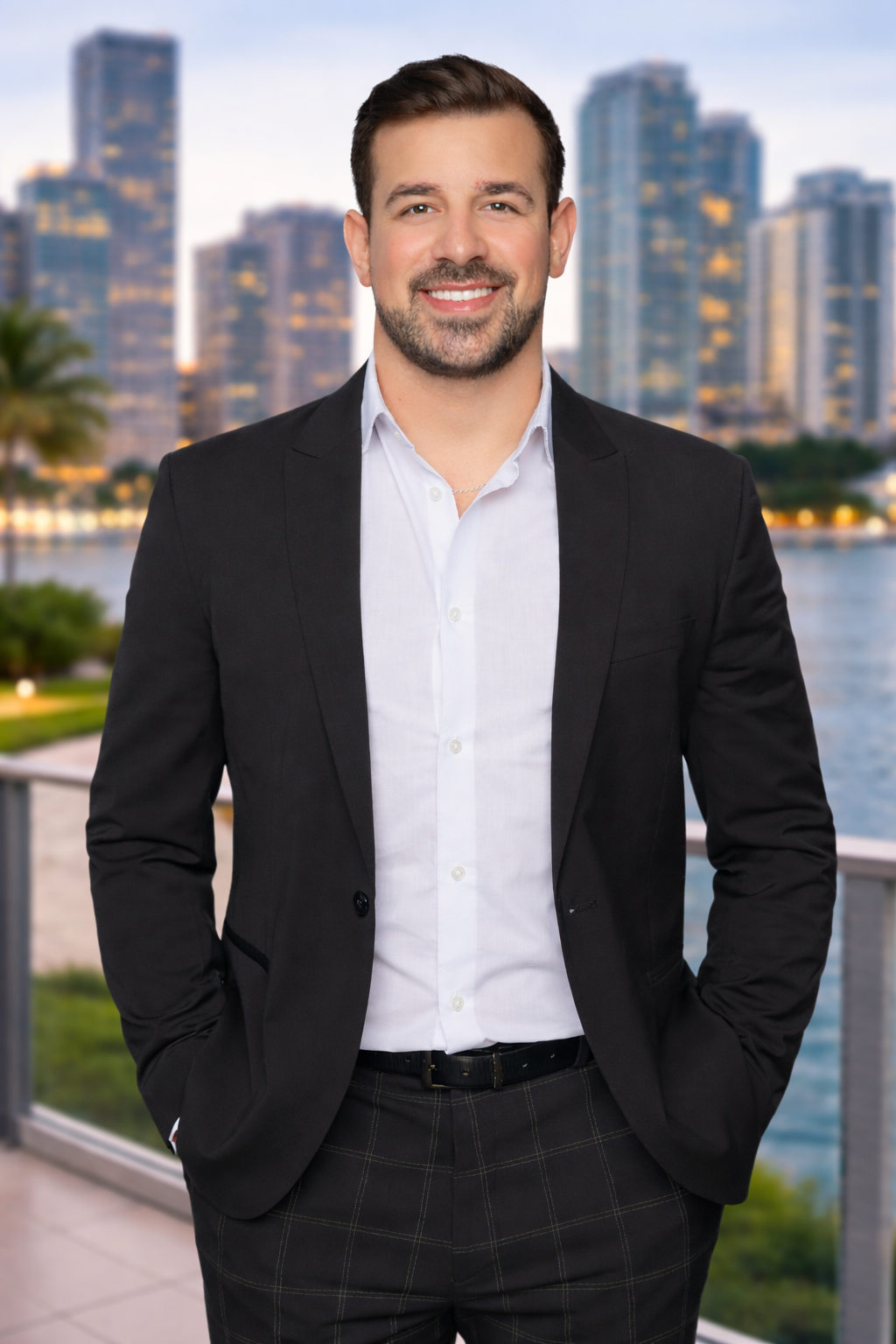
I work with Brazilian clients every week. From first-time buyers in Sunny Isles Beach to repeat investors building portfolios across Brickell and Aventura, Brazilians represent one of the most active and sophisticated international buyer groups in the Miami market. According to the National Association of Realtors (NAR), Brazil consistently ranks among the top three countries of origin for international real estate purchases in South Florida. And that activity is accelerating into 2026.
This guide covers everything a Brazilian buyer needs to know before purchasing property in Miami. Financing, taxes, neighborhoods, currency strategy, legal process, and which buildings are attracting the most Brazilian capital right now. I wrote this because the questions I get from Brazilian clients are specific and practical, and the answers are not always easy to find in one place.
Why Miami Is the Number One Destination for Brazilian Real Estate Investors
The connection between Brazil and Miami runs deeper than geography. Direct flights from Sao Paulo (GRU) and Rio de Janeiro (GIG) put Miami within 8 to 9 hours of Brazil's two largest cities. That proximity creates a practical link that no other U.S. market can match. Brazilian families can maintain a residence in Miami and visit regularly without enduring the 12 to 14 hour flights required to reach New York, Los Angeles, or other major markets.
But convenience alone does not explain the volume. The real driver is currency diversification. Brazilian buyers who convert BRL to USD and invest in Miami real estate are converting a volatile emerging-market currency into a dollar-denominated hard asset. For high-net-worth Brazilians who have watched the real lose significant purchasing power over the past decade, Miami real estate represents a store of value that their domestic currency cannot provide.
Florida's zero state income tax is another major factor. Brazilian investors who earn rental income from Miami properties pay federal income tax but no state income tax. Compare that to New York (up to 10.9 percent state tax) or California (up to 13.3 percent), and the advantage is clear. For rental investors, this translates directly into higher net yields.
The lifestyle component matters too. Miami offers a cultural familiarity that other U.S. cities do not. Portuguese is spoken widely in Sunny Isles Beach, Aventura, and parts of Brickell. Brazilian restaurants, markets, and community organizations are well established. For families relocating children to U.S. schools, the transition is smoother in Miami than almost anywhere else in the country.
The Numbers: Brazilian Buyer Activity in South Florida
According to NAR's 2025 International Transactions Report, Brazil ranks among the top three international buyer origin countries in South Florida, alongside Colombia and Argentina. Foreign buyers collectively spent $4.4 billion on South Florida residential real estate in 2025, a 42 percent increase over 2024. Brazilian buyers represent a significant share of that total.
The typical Brazilian purchase in South Florida falls in the $400,000 to $1.5 million range, though ultra-luxury purchases above $5 million are not uncommon, particularly in Bal Harbour and Fisher Island. Approximately 54 percent of international transactions in South Florida are all-cash deals, and Brazilian buyers skew even higher than that average. Cash purchases eliminate lender requirements, speed up closing, and provide negotiating leverage with sellers.
The Miami Association of Realtors reports that international buyer inquiries from Brazil increased measurably during Q4 2025 and Q1 2026, driven by a combination of the approaching FIFA World Cup 2026 (with matches at Hard Rock Stadium in Miami Gardens), continued BRL volatility, and new pre-construction inventory entering the market at attractive pre-delivery pricing.
Most Popular Neighborhoods for Brazilian Buyers
Sunny Isles Beach: Little Brazil
Sunny Isles Beach is the epicenter of Brazilian life in South Florida. The neighborhood earned the nickname "Little Brazil" for good reason. Portuguese is spoken in shops, restaurants, real estate offices, and schools throughout the area. For Brazilian buyers who want an immediate sense of community and cultural familiarity upon arrival, Sunny Isles is the default choice.
The real estate market in Sunny Isles ranges from older towers along Collins Avenue in the $300,000 to $600,000 range to ultra-luxury new construction above $2 million. Bentley Residences, currently under construction on Collins Avenue, is attracting significant Brazilian interest with its car elevator concept and direct ocean views. The building's over-the-top luxury positioning resonates with Brazilian buyers who want a statement residence.
Brickell: The Financial Hub
Younger Brazilian professionals and entrepreneurs increasingly gravitate toward Brickell. The neighborhood offers urban walkability, proximity to international banks and law firms, fine dining, and a vibrant nightlife. For Brazilians relocating business operations to Miami or establishing a U.S. presence, Brickell provides the infrastructure they need.
Pre-construction projects like Dolce & Gabbana Residences, St. Regis Brickell Residences, and Baccarat Residences Brickell are attracting Brazilian buyers who value branded luxury. These buyers often already own properties in Sunny Isles and are adding Brickell to their portfolio for diversification and rental income potential.
Aventura and Bal Harbour
Brazilian families with children frequently choose Aventura for its top-rated public and private schools, proximity to Aventura Mall, and a suburban feel within an urban setting. Bal Harbour attracts ultra-high-net-worth Brazilian buyers who want proximity to Bal Harbour Shops and a quieter, more exclusive oceanfront environment. Rivage Bal Harbour is one of the newest ultra-luxury developments in the area, drawing interest from Brazilian buyers at the top end of the market.
Pre-Construction vs. Resale: Why Brazilians Prefer Pre-Construction
The deposit structure of Miami pre-construction condos is perfectly aligned with how Brazilian buyers want to deploy capital. Most new developments require 30 to 50 percent in deposits paid in installments over the 2 to 4 year construction period. The remaining balance is due at closing when the building is delivered.
This structure offers three critical advantages for Brazilian buyers specifically. First, no U.S. mortgage is needed during construction. Foreign national mortgage rates in the U.S. run 7.5 to 9 percent in 2026, and the application process requires extensive documentation. By going pre-construction, Brazilian buyers avoid mortgage debt entirely until the building delivers, at which point they can choose to pay cash, refinance at potentially lower rates, or sell at a profit before closing.
Second, the deposit schedule allows Brazilians to convert BRL to USD in multiple tranches over two to four years rather than making one large currency conversion at a single exchange rate. This natural dollar-cost averaging reduces currency risk significantly.
Third, pre-construction units typically appreciate during the construction period. According to Miami Association of Realtors data, pre-construction condos in Brickell and Edgewater have historically delivered 15 to 30 percent appreciation from contract to closing. A Brazilian buyer who puts down $500,000 in deposits on a $1.5 million unit and sees the unit appreciate to $1.8 million by delivery has earned a 60 percent return on deployed capital before ever moving in.
Financing Options for Brazilian Nationals
Brazilian buyers who want mortgage financing in the U.S. have several options, though the process differs from domestic lending. Here is what to expect.
- Down payment: 30 to 50 percent for foreign national loans. Some lenders require 40 percent minimum for condos above $1 million.
- Interest rates: Foreign national mortgage rates currently range from 7.5 to 9 percent, approximately 1 to 2 points above domestic rates.
- No SSN required: You do not need a Social Security Number. Lenders use your passport and ITIN (Individual Taxpayer Identification Number) instead.
- Portfolio lenders: City National Bank, Sabadell, FirstBank Florida, and several credit unions offer foreign national programs. These are portfolio loans held by the bank, not sold to Fannie Mae or Freddie Mac.
- Brazilian bank options: Itau, Bradesco, and BTG Pactual have U.S. operations that can facilitate lending for clients with existing relationships.
- Documentation: Expect to provide two years of income verification (tax returns or bank statements), a letter from your Brazilian bank, proof of funds, and a valid passport.
Many Brazilian buyers prefer all-cash purchases to avoid the complexity and cost of foreign national financing. If you plan to finance, start the pre-qualification process at least 60 days before you plan to make an offer.
Tax Considerations for Brazilian Buyers
Understanding the U.S. tax landscape before you buy prevents costly surprises later. Here are the key tax factors for Brazilian real estate investors in Miami.
FIRPTA withholding (15%): When you sell U.S. real estate as a foreign person, the buyer is required to withhold 15 percent of the gross sale price and remit it to the IRS. This is not an additional tax. It is a prepayment against your U.S. capital gains tax liability. If your actual tax owed is less than the withholding, you file a U.S. tax return to claim a refund. Plan for FIRPTA at the time of purchase, not at the time of sale.
Property taxes: Miami-Dade County property taxes for non-homesteaded properties typically run 1.8 to 2.2 percent of assessed value annually. Unlike Brazil's IPTU, there is no cap on property tax increases for non-homesteaded properties. Budget for this ongoing cost from day one.
No state income tax: Florida has no state income tax, which means rental income and capital gains from your Miami property are taxed only at the federal level. This is a significant advantage compared to states like New York or California.
Estate tax exposure: Non-resident aliens who own U.S. real property in their individual name may face U.S. estate tax with an exemption of only $60,000 (compared to over $13 million for U.S. citizens). Proper entity structuring through a foreign corporation or domestic LLC can mitigate this exposure substantially. This is not optional planning. It is essential.
Brazil tax treaty: Brazil and the U.S. do not have a comprehensive income tax treaty, which means Brazilian buyers must navigate both countries' tax systems carefully to avoid double taxation. Work with a CPA who understands both Brazilian and U.S. tax obligations.
Currency Strategy: BRL to USD Timing
The BRL/USD exchange rate has a direct impact on your effective purchase price. A Brazilian buyer converting R$5 million to purchase a $1 million property will pay a very different amount depending on whether the exchange rate is 5.0 or 5.5 BRL per USD. That difference is R$500,000, or roughly 10 percent of the total cost.
I advise my Brazilian clients to take a disciplined approach to currency conversion. For pre-construction purchases, use the deposit schedule to your advantage. Convert BRL to USD in multiple tranches across the construction timeline rather than converting the full amount at once. This dollar-cost averaging strategy smooths out exchange rate volatility and reduces the risk of converting at an unfavorable rate.
Wire transfers from Brazil require compliance with Banco Central do Brasil regulations. Your Brazilian bank must register the capital outflow, and you will need to provide documentation proving the source of funds. Work with your bank's international desk or a currency broker who specializes in cross-border real estate transactions. Start this process early, because compliance documentation can take two to four weeks.
Legal Process: What Is Different from Brazil
The closing process in Miami differs from Brazilian real estate transactions in several important ways.
- Title insurance: In the U.S., buyers purchase title insurance to protect against any defects in property title. This is a one-time cost paid at closing (approximately 0.5 to 1 percent of the purchase price) and protects you for as long as you own the property. Brazil does not have an equivalent product.
- Real estate attorney: You need a U.S. real estate attorney, particularly for entity structuring (LLC formation), contract review, and FIRPTA planning. Your attorney does not need to be Brazilian, but they must understand cross-border transactions. I work with several attorneys who specialize in representing Brazilian clients.
- Escrow and title company: A neutral third party (title company or escrow agent) holds deposits and manages the closing. This is standard in the U.S. and provides protection for both buyer and seller.
- No cartorio: The U.S. does not have a cartorio system. Deeds are recorded with the county (Miami-Dade County Clerk) and title companies verify ownership through public records searches.
- Closing timeline: Cash closings in Miami typically take 15 to 30 days. Financed purchases take 30 to 60 days. Pre-construction closings follow the developer's delivery schedule.
Buildings Attracting the Most Brazilian Buyers in 2026
Based on my direct conversations with developer sales teams and my own client activity, these are the projects generating the most interest from Brazilian buyers right now.
- Bentley Residences, Sunny Isles Beach: The car elevator, ocean views, and Sunny Isles location make this the most talked-about building among Brazilian buyers. Units from $4.2 million. The Bentley brand carries strong recognition in Brazil.
- Aria Reserve, Edgewater: Two towers with direct bay views and a strong value proposition compared to Brickell pricing. Brazilian buyers appreciate the resort-scale amenities and competitive price per square foot.
- Dolce & Gabbana Residences, Brickell: The D&G brand resonates powerfully with Brazilian luxury consumers. This is a fashion-forward project that attracts buyers who want design and brand recognition in equal measure.
- Six Fisher Island: For ultra-high-net-worth Brazilian buyers, Six Fisher Island represents the pinnacle of Miami residential exclusivity. Limited inventory and a private island setting appeal to families seeking privacy and security.
- Rivage Bal Harbour: Ultra-luxury oceanfront in one of Miami's most exclusive enclaves. Brazilian buyers with children are drawn to the Bal Harbour lifestyle, top schools, and proximity to high-end retail.
- St. Regis Brickell Residences: The St. Regis brand is well known in Brazil through its hotels. The butler service, Marriott Bonvoy integration, and Brickell location attract Brazilian buyers who travel internationally and value brand consistency.
The EB-5 Visa Pathway Through Real Estate Investment
Real estate ownership alone does not qualify you for U.S. residency. However, the EB-5 Immigrant Investor Program offers a pathway to a green card through investment in qualifying projects. The current minimum investment is $800,000 in a qualifying regional center project or $1,050,000 in a direct investment that creates at least 10 full-time U.S. jobs.
Some Miami real estate developments are structured as EB-5 qualifying investments, where a portion of the construction financing comes from EB-5 investor capital. This is a specialized process that operates separately from a standard condo purchase. If the EB-5 pathway interests you, work with an immigration attorney who specializes in investor visas. I can connect you with attorneys who have successfully guided Brazilian families through the EB-5 process.
It is important to note that EB-5 processing times have improved in recent years, but the timeline from investment to green card approval still typically runs 18 to 36 months. This is a long-term strategy, not a quick fix.
How I Help Brazilian Clients
I have been working with international buyers in Miami for years, and Brazilian clients are a core part of my practice. Here is what that looks like in practice.
I work closely with Portuguese-speaking clients and have established relationships with Brazilian attorneys, CPAs, mortgage brokers, and currency specialists in Miami. When a Brazilian buyer contacts me, I do not just show them properties. I coordinate the entire transaction team: the attorney for entity structuring, the CPA for tax planning, the lender for pre-qualification, and the developer for negotiating the best terms on pre-construction units.
My relationships with developer sales teams in Brickell, Sunny Isles, Edgewater, and Bal Harbour give my clients access to priority inventory, early pricing, and the ability to select specific units before they are released to the general market. For pre-construction purchases, this early access can mean the difference between getting the best floor plan and view line or settling for what is left.
"Brazilian buyers are among the most informed and strategic international clients in the Miami market. They do their research, they understand currency dynamics, and they think in terms of multi-generational wealth. My job is to make sure the transaction itself matches that level of sophistication."
Gerardo Gonzalez, Licensed Real Estate Agent at Compass
Frequently Asked Questions
Can Brazilian citizens buy real estate in Miami without a visa?
Yes. There is no visa requirement for purchasing real estate in the United States. Brazilian nationals can buy property in Miami regardless of immigration status. You will need a valid passport, an ITIN (Individual Taxpayer Identification Number) for tax purposes, and a U.S. bank account. Many Brazilians purchase through a U.S. LLC for tax and estate planning benefits.
What is the typical down payment for a Brazilian buyer?
For pre-construction condos, expect 30 to 50 percent in deposits spread across the construction timeline, with the balance at closing. For resale properties with mortgage financing, foreign national loans typically require 30 to 50 percent down. All-cash purchases are common among Brazilian buyers, with over 50 percent of international transactions in South Florida closing without financing.
What is FIRPTA and how does it affect me?
FIRPTA requires that 15 percent of the gross sale price be withheld at closing when a foreign person sells U.S. real estate. This is a prepayment against your U.S. capital gains tax liability, not an additional tax. If your actual tax owed is less than the withholding, you file a return to claim a refund. Plan for FIRPTA at the time of purchase by structuring ownership properly.
Which Miami neighborhoods are most popular with Brazilian buyers?
Sunny Isles Beach (known as "Little Brazil") is the most popular due to its large Brazilian community and Portuguese-speaking services. Brickell attracts younger professionals and entrepreneurs. Aventura is popular with families for its schools. Bal Harbour draws ultra-high-net-worth buyers seeking exclusivity and high-end retail access.
Can buying Miami real estate help me get a U.S. green card?
Purchasing real estate alone does not qualify you for a green card. However, the EB-5 Immigrant Investor Program offers a pathway through investment of $800,000 in a qualifying regional center project or $1,050,000 in a direct investment creating at least 10 jobs. Some Miami developments are structured as EB-5 qualifying investments. This requires specialized immigration counsel.
How do I transfer money from Brazil to buy property in Miami?
Wire funds through international bank transfers, complying with Banco Central do Brasil regulations and U.S. anti-money laundering laws. Register the capital outflow with Brazil's central bank through your bank, convert BRL to USD, and wire to a U.S. title company account. For pre-construction, use the deposit schedule to convert in multiple tranches and reduce currency risk. Start the process early as compliance documentation can take two to four weeks.
Related Articles
- Foreign Buyers Spent $4.4 Billion on South Florida Real Estate in 2025
- Latin American Investors in Miami 2026: Where Capital Is Flowing
- Brickell vs. Edgewater vs. Sunny Isles: Which Neighborhood for Pre-Construction in 2026?
- HB 913 and the Pre-Construction Advantage in Miami