New York City reclaimed the U.S. lead in million-dollar listings over Miami in April 2026, posting 11,580 against Miami's 10,373, according to Realtor.com. I read this as New York's predictable spring inventory surge, not a Miami retreat, since Miami's count climbed from under 4,000 in early 2022 to 11,595 by April 2025. Treat one month of listings counts as supply timing, not demand, and watch Miami's flatter year-round curve instead.
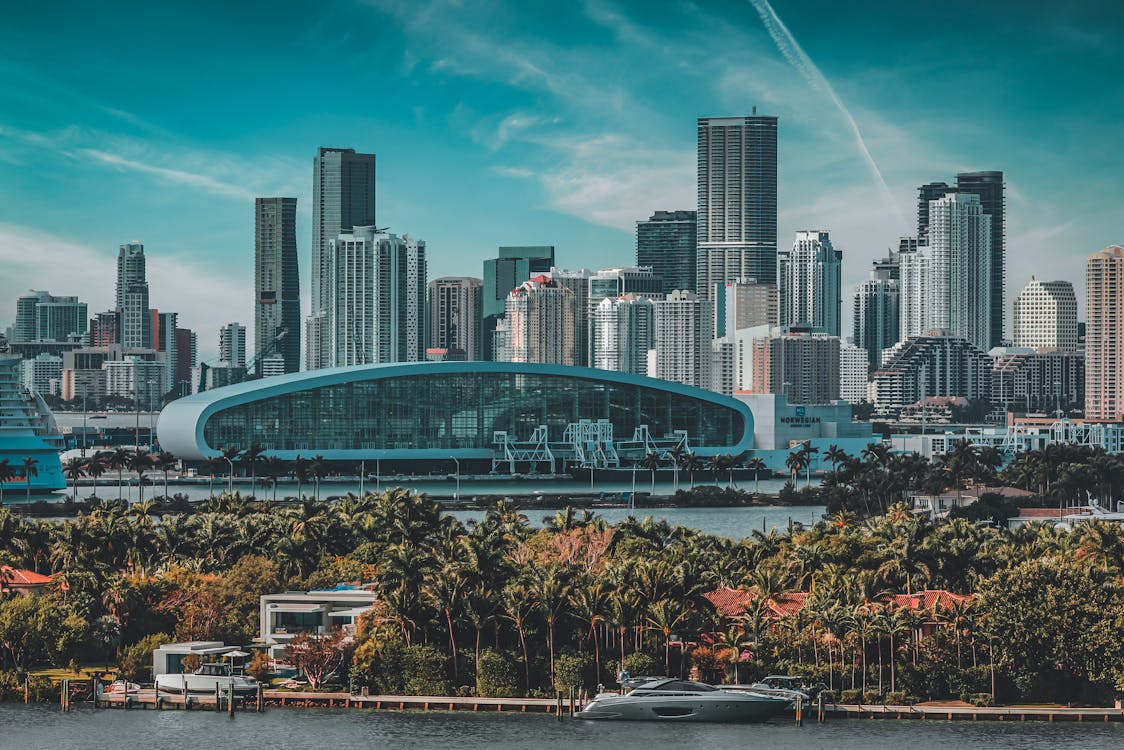
The headline making the rounds this month is that New York City overtook Miami in million-dollar listings. The Realtor.com April 2026 Luxury Housing Report shows New York at 11,580 active million-dollar listings against Miami's 10,373, a 1,207-listing lead after several months in which Miami had inched in front. I have spent years walking buyers through Brickell, Edgewater, and the barrier islands, so let me explain what this number actually measures and what it does not. A listings count is a snapshot of supply on a given day, and New York's supply predictably balloons every spring. Read against Miami's longer arc, from below 4,000 listings in early 2022 to 11,595 by April 2025, this is a seasonal blip, not a turning point. For the broader picture, see my Miami pre-construction buyer guide and the pre-construction vs. resale data analysis.
What the April Numbers Actually Say
Here is the data without the spin. According to the Realtor.com April 2026 Luxury Housing Report, New York City finished April with 11,580 active million-dollar listings, ahead of Miami's 10,373, a difference of 1,207. That reversed the prior several months, when Miami had quietly edged in front. In December 2025 Miami led by 415 listings. By March 2026 the gap had narrowed to 221 in Miami's favor, and in April it swung 1,207 the other way. On its face that looks like momentum shifting north.
It is not. New York's luxury inventory follows a sharp seasonal rhythm. Sellers there time their listings to the spring buyer window, so the count builds through April and May, peaks in May or June, then drops through fall and winter. That spring surge consistently produces New York's highest annual listing counts. April is exactly when New York looks strongest on a supply-count basis, every single year. Comparing the two metros in April is like comparing a swimmer mid-stroke to one resting between laps.
Miami's curve is structurally different and, frankly, more interesting. Its luxury inventory holds far steadier across the calendar because its buyer base is less tied to the school year or the weather. When you measure two markets that fill their inventory on different schedules, the month you pick decides the winner. That is why I tell clients to ignore single-month listings-count headlines and look at the trend line underneath, which I break down in my market reports archive.
| Month | Miami count | NYC count | Lead |
|---|---|---|---|
| December 2025 | 10,591 | 10,176 | Miami +415 |
| January 2026 | 10,513 | 9,216 | Miami +1,297 |
| February 2026 | 10,669 | 9,483 | Miami +1,186 |
| March 2026 | 10,532 | 10,311 | Miami +221 |
| April 2026 | 10,373 | 11,580 | NYC +1,207 |
The Real Story: Miami Built a Year-Round Luxury Market From Almost Nothing
Step back from April and the trajectory is striking. In early 2022, Miami's active million-dollar listings count sat below 4,000. By April 2025 it had reached 11,595, essentially matching New York's seasonal peak. That is not a market that got lucky in one quarter. It is a metro that roughly tripled the depth of its luxury inventory in three years, according to Realtor.com. New York, by contrast, has carried one of the deepest million-dollar inventories in the country for decades. For Miami to draw even with it on supply, then trade the lead back and forth month to month, is the genuinely new development here.
The reason Miami's curve stays flat through the seasons comes down to who is buying. Realtor.com notes that Miami's luxury buyers skew more heavily toward cash purchasers, international buyers, and retirees, groups that are less anchored to the school calendar or weather cycles that drive seasonality in markets like New York. A retiree relocating from the Northeast or a buyer in Sao Paulo or Mexico City is not waiting for the spring listing season. That steady, structural demand keeps Miami's inventory active in January as readily as in May, which is exactly why the metro holds up through the winter months when New York draws down.
This matches what I see on the ground. Miami's international demand remains the strongest in the country: Realtor.com's Q1 2026 international demand report named Miami the top U.S. metro for overseas home shoppers. That demand base is why I treat a single-month listings-count swing as noise. The durable signal is the three-year climb from under 4,000 to over 11,000, and the breadth of the buyer pool sustaining it. For where that demand concentrates by neighborhood, see my Miami neighborhoods overview.
How the National Luxury Backdrop Frames Miami's Position
The listings-count story sits inside a softer national luxury price picture, and the two should not be confused. Per Realtor.com, the national entry point for luxury, the 90th-percentile listing price, was $1,274,423 in April 2026. That was up 2.0 percent from March on the usual spring firming, but down 1.9 percent year over year, the 25th consecutive month of annual decline. High-end luxury, the 95th percentile, held near $2.0 million, and ultraluxury, the 99th percentile, came in at $5,711,785. The national share of million-dollar listings eased to 13.5 percent.
So nationally, luxury prices are still drifting below year-ago levels even as inventory builds seasonally. Against that backdrop, Miami's demand looks resilient rather than frothy. Miami-Dade total home sales rose for the eighth consecutive month in April 2026, up 5.6 percent year over year, according to Miami Realtors. The truly telling figure is at the top: Miami-Dade single-family sales of $1 million and up jumped 19.83 percent year over year in April, from 233 to 264 transactions. That is closings, not listings, which is the demand-side counterweight to a one-month supply count.
Put the pieces together and the picture is coherent. National luxury pricing is cooling modestly, New York's spring supply surge briefly lifted its listings count above Miami's, and Miami's actual luxury transaction volume kept climbing. A buyer reading only the "NYC passes Miami" headline would miss that Miami's million-dollar closings accelerated in the same month. For how I separate listing-count noise from transaction signal, see my guide to evaluating a Miami condo's financial health.
What This Means If You Are Buying or Selling in Miami Right Now
For buyers, the practical read is that Miami's luxury inventory is deep and stays deep year-round, so you are not forced to compete in a narrow spring window the way you might in the Northeast. With more than 10,000 active million-dollar listings on the market in April, selection is broad across Brickell, Edgewater, Sunny Isles, and the islands. That depth, paired with national luxury pricing drifting modestly lower year over year, gives well-prepared buyers room to negotiate on resale product, even as new-construction pricing holds firmer. I tell clients the listings-count headline is a distraction; the real question is which specific building and floor fits your use case and budget.
For sellers, the lesson is the opposite of panic. Miami's $1 million-and-up single-family closings rose nearly 20 percent year over year in April, so demand at the top is intact, but you are listing into a market with thousands of competing million-dollar listings. Pricing to the comparable set and presenting the unit well matter more than ever. Here is the buyer-side checklist I run through before anyone makes an offer in this market:
- Read trend, not month: a single-month listings count is supply timing. Track Miami's multi-year climb from under 4,000 to over 11,000 listings and the closings data, per Realtor.com and Miami Realtors.
- Separate listings from sales: NYC led on April listings count, but Miami's $1M+ single-family closings rose 19.83 percent year over year. Closings measure demand; counts measure supply.
- Use the year-round depth: Miami's flat seasonal curve means broad selection in winter as well as spring. You do not have to rush a spring-only window. See the pre-construction vs. resale analysis.
- Foreign buyer planning: international demand leads the country here. FIRPTA withholding applies on resale even with no gain, and LLC ownership can manage estate exposure. My foreign national guide covers the full sequence.
"Every spring the headlines say New York passed Miami in luxury listings, and every spring it is the same seasonal supply surge. The number that matters is the one nobody puts in a headline: Miami went from under 4,000 million-dollar listings to over 11,000 in three years, and our $1 million closings are still climbing. That is a market that got structurally deeper, not one that peaked."Gerardo Gonzalez, Licensed Real Estate Agent at Compass
Frequently Asked Questions: Miami vs. NYC Luxury Listings
Related Articles
- When Miami first passed NYC in million-dollar listings: the January 2026 data
- Miami's $5M-plus luxury sales jumped 25 percent in April 2026
- Coastal Miami luxury inventory hit a three-year low in April 2026
- Foreign buyers set a Miami record in 2026: where the demand comes from
Additional Frequently Asked Questions

Prefer to talk? Call me at (305) 964-8614 or WhatsApp.
Data sources: Realtor.com April 2026 Luxury Housing Report (Miami vs. NYC million-dollar listings counts, national luxury price thresholds, seasonal and structural analysis, published May 12, 2026) and Realtor.com Q1 2026 International Demand Report; Miami Realtors (Miami-Dade total home sales and $1M-plus single-family sales for April 2026). Information is compiled from sources deemed reliable but not guaranteed; readers should verify current figures with their own advisors.
Market data as of May 2026. This article is for informational purposes only and does not constitute financial or investment advice.