Wynwood, Design District & Midtown: Miami's Emerging Luxury Condo Neighborhoods 2026
Wynwood, the Design District and Midtown price 30 to 50 percent below Brickell. A two-bedroom costing $1.2 million in Brickell runs $700,000 to $850,000 here, developable land is $80 to $120 per buildable square foot against $150 to $200 in Brickell, and new two-bedroom units run $650,000 to $950,000.
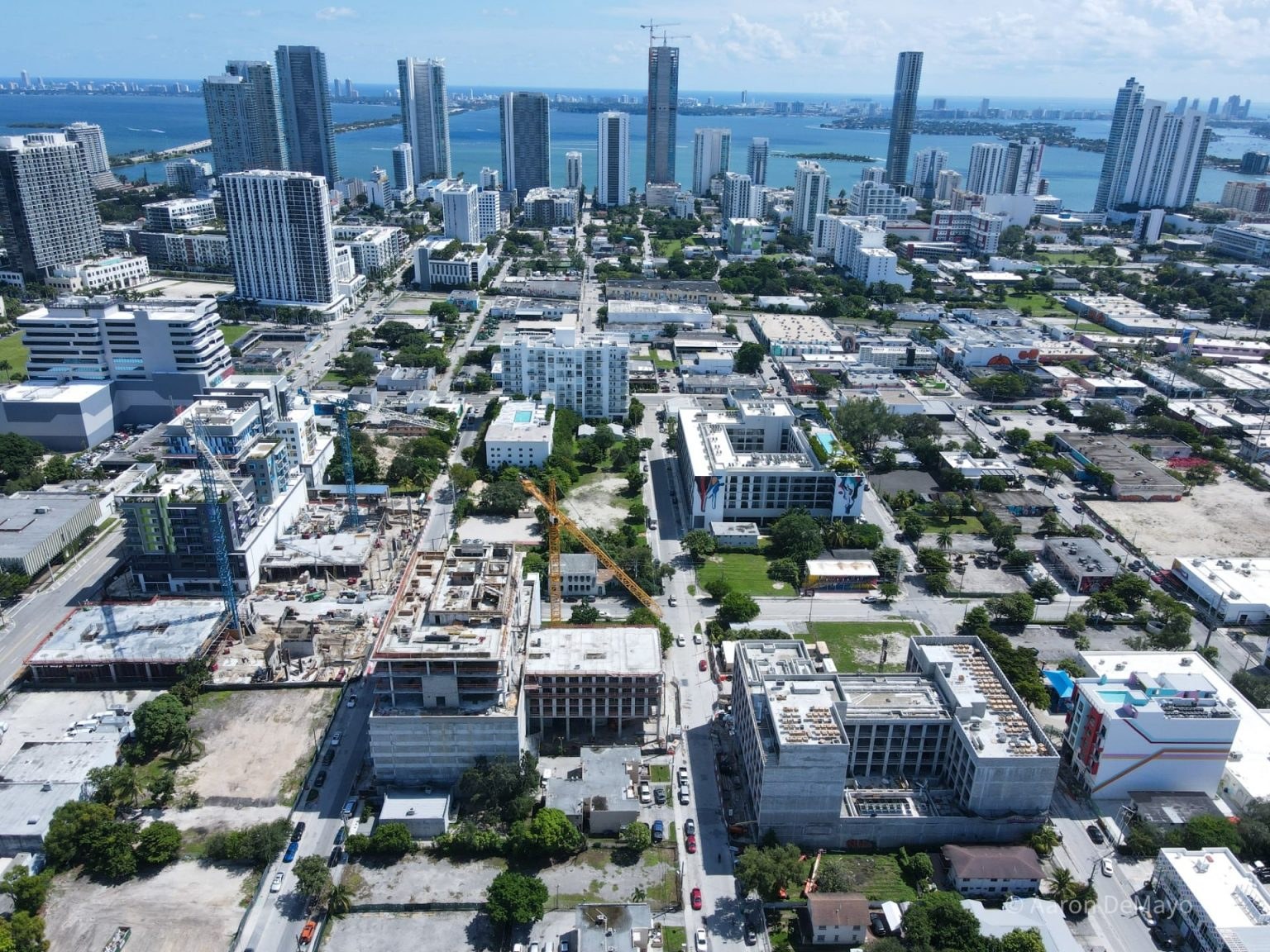
Every cycle in Miami real estate follows the same pattern. Capital floods the established corridors first, then spills into adjacent neighborhoods that offer better pricing, more space, and ground-floor appreciation potential. In the 2010s, that spillover went from Brickell into Edgewater. In 2026, the next wave is flowing north and west into Wynwood, the Design District, and Midtown. I have been tracking these three neighborhoods closely for the past 18 months, and the data tells a clear story: these areas are no longer "up and coming." They are arriving.
What makes this cycle different from the speculative surges of the past is the infrastructure. Wynwood has a Business Improvement District, a zoning overlay that encourages mixed-use development, and a growing residential population. The Design District has a globally recognized luxury retail corridor that generates foot traffic year-round. Midtown has transit connectivity, new residential product, and a central position that links everything together. The fundamentals are real. The question is timing, pricing, and which specific buyer profiles these neighborhoods serve best.
I wrote this piece to give you the same framework I use when advising clients who are considering these neighborhoods. No hype. Just data, context, and direct recommendations based on what I see on the ground every day. If you are still evaluating your first Miami pre-construction purchase, start with the 2026 Miami pre-construction buyer's guide for a complete walkthrough of contracts, deposits, and due diligence.
The Next Frontier: Why Now
According to the Miami Downtown Development Authority's 2025 annual report, residential permit filings in the Wynwood and Midtown corridors increased 47% year-over-year, compared to 12% growth in Brickell during the same period. That is not a random spike. It reflects a structural shift in where developers see demand and where they can still acquire land at prices that make new construction economics work.
Wynwood, Design District, and Midtown are emerging, which means the split there is sharper. The genuinely scarce, well-built units hold while speculative stock can soften, so be selective.
Brickell is built out. Land parcels large enough for tower development are scarce, and the ones that remain command $150 to $200 per buildable square foot. In Wynwood and Midtown, developers can still acquire sites at $80 to $120 per buildable square foot. That cost difference flows directly into buyer pricing. It is why you can buy comparable new construction in these neighborhoods for 30 to 50 percent less than Brickell. If you have never bought new construction in Florida, my step-by-step Miami pre-construction buying process walks through reservation, contract, deposit milestones, and closing so you know what to expect at each stage.
According to U.S. Census Bureau migration data, Miami-Dade County added 42,000 net new residents in 2025, with the 25-to-39 age cohort representing the largest share of domestic in-migration. These are exactly the buyers who gravitate toward Wynwood's creative energy and Midtown's urban walkability over Brickell's corporate density or Sunny Isles' suburban beach format.
Wynwood: From Arts District to Residential Destination
Ten years ago, Wynwood was warehouses, street art, and a handful of galleries. Five years ago, it was restaurants, breweries, and weekend tourists. Today, it is a mixed-use neighborhood with serious residential development underway. The transformation has been fast, and the next phase is the one that creates real value for condo buyers. A chunk of that value sits in the newer hospitality-licensed towers, which I list in my rundown of Miami buildings that allow short-term Airbnb-style rentals.
Key Developments
Diesel Wynwood is the project that put Wynwood on the luxury residential map. The fashion brand's first residential venture brings industrial-chic design, a rooftop pool overlooking the Wynwood Walls, and unit pricing that starts around $550 per square foot for studios and one-bedrooms. Two-bedroom units range from $650,000 to $950,000. For a branded residential product, that pricing is remarkable when you consider that branded towers in Brickell start at $1,600 per square foot and go up to $3,669.
NoMad Wynwood brings the boutique hotel brand into the residential market with a hospitality-infused condo concept. The project targets the same demographic that fills the NoMad hotels in New York and London: design-conscious professionals who want thoughtfully designed common spaces, F&B programming, and a social atmosphere built into the building itself. Pricing ranges from $500 to $650 per square foot, with most units in the $400,000 to $800,000 range.
Rose Wynwood takes a different approach, focusing on larger residential units designed for full-time living rather than pied-a-terre or investment use. Two and three-bedroom floor plans dominate the unit mix, with pricing from $600 to $700 per square foot. The project targets families and remote workers who want to live in Wynwood rather than just visit on weekends.
Wynwood at a Glance
- Price range: $500-$700/sq ft for new construction
- Walk Score: 89 (according to Walk Score, "Very Walkable")
- Key projects: Diesel Wynwood, NoMad Wynwood, Rose Wynwood
- Buyer profile: Creative professionals, tech workers, ages 28-42
- Rental yield potential: 5.5-7.0% gross (short-term rental demand strong)
- Risk level: Moderate. Neighborhood in active transition
Wynwood's Walk Score of 89 puts it in the "Very Walkable" category, according to Walk Score data. That is competitive with Brickell (92) and significantly higher than Edgewater (72) or Sunny Isles (54). For younger buyers who prioritize walkability to restaurants, galleries, and nightlife, Wynwood delivers.
Design District: Where Fashion Meets Real Estate
The Design District is unlike any other neighborhood in Miami. It was purpose-built as a luxury retail destination, and it has succeeded beyond initial projections. LVMH invested heavily in the district, and today the roster includes Louis Vuitton, Dior, Prada, Gucci, Hermes, Cartier, and dozens of other luxury brands. According to the Miami DDA, the Design District generates over $2 billion in annual retail revenue from just 18 square blocks.
That retail ecosystem creates something no developer can manufacture: ambient luxury. When you live in the Design District, your daily environment includes world-class architecture, public art installations, and a street-level experience that feels more like Paris or Milan than typical Miami. That matters for property values because it attracts a buyer who is willing to pay a premium for context and environment, not just square footage and views.
Residential development in the Design District is still in its early stages. The neighborhood was zoned primarily for retail and commercial use, and the first residential projects are boutique in scale. Think 30 to 60 units rather than 300-unit towers. That scarcity is intentional and it supports pricing. Expect per-square-foot pricing in the $700 to $900 range for the first wave of residential product, still below Brickell branded towers but reflecting the premium location.
Design District at a Glance
- Price range: $700-$900/sq ft (projected for new residential)
- Retail ecosystem: LVMH, Dior, Louis Vuitton, Prada, Hermes, Gucci
- Annual retail revenue: $2B+ across 18 blocks (Miami DDA)
- Buyer profile: Fashion-conscious, design-oriented, high net worth
- Development scale: Boutique (30-60 units per project)
- Risk level: Low-moderate. Established retail, limited residential track record
The Design District's limitation is practical. Daily-life infrastructure (grocery stores, pharmacies, dry cleaners) is sparse. The neighborhood was built for shopping, dining, and gallery visits, not for full-time residential living. Early residents will need to drive or walk to adjacent Midtown or Buena Vista for everyday needs. That will change as residential density grows, but it is a real consideration today.
Midtown: The Connector
Midtown sits between Wynwood to the west and Edgewater to the east, giving it proximity to both without fully committing to either identity. It is the most practical of the three neighborhoods for day-to-day living, with established retail at Midtown Miami (Target, Homegoods, restaurants), residential density from earlier development cycles, and direct access to I-95 and Biscayne Boulevard.
Key Developments
The Standard Residences Midtown is the anchor project redefining the neighborhood. The Standard brand, known for its hotels in New York, London, and Bangkok, is bringing its hospitality-forward approach to residential. The project includes co-working spaces, a rooftop pool and lounge, wellness programming, and the social atmosphere that defines the Standard brand. Pricing sits in the $550 to $700 per square foot range, with one-bedrooms starting around $400,000 and two-bedrooms from $650,000.
Midtown Park adds green space and residential product to the neighborhood core. The project integrates a public park with residential towers, creating the kind of neighborhood infrastructure that drives long-term property value. Access to green space consistently ranks as a top-three priority for Miami condo buyers in recent surveys, and Midtown Park delivers it in a neighborhood that previously lacked it.
Midtown at a Glance
- Price range: $550-$700/sq ft for new construction
- Walk Score: 85 ("Very Walkable")
- Key projects: The Standard Residences Midtown, Midtown Park
- Buyer profile: Young professionals, value investors, remote workers
- Rental yield potential: 5.0-6.5% gross
- Risk level: Low-moderate. More established than Wynwood, less than Brickell
Price Comparison: The Value Gap Is Real
Numbers cut through narrative. Here is what your dollar buys across these emerging neighborhoods compared to established markets.
| Metric | Wynwood | Midtown | Design District | Brickell |
|---|---|---|---|---|
| Price per sq ft (new) | $500-$700 | $550-$700 | $700-$900 | $762-$3,669 |
| 1 BR entry point | $350K-$500K | $400K-$550K | $550K-$750K | $550K-$750K |
| 2 BR entry point | $650K-$950K | $650K-$900K | $850K-$1.2M | $850K-$1.3M |
| Savings vs Brickell | 35-50% | 30-40% | 10-25% | Baseline |
| Walk Score | 89 | 85 | 82 | 92 |
The savings are not marginal. A buyer with $800,000 can access a two-bedroom in Wynwood or Midtown with modern finishes, branded amenities, and a walkable location. That same budget gets a one-bedroom or small two-bedroom in Brickell, often in an older building without comparable amenity packages. The square footage gap is 20 to 40 percent in favor of the emerging neighborhoods.
How These Neighborhoods Compare to Edgewater
Edgewater is the closest comparison point because it went through the same transition that Wynwood, the Design District, and Midtown are beginning now. Five years ago, Edgewater was the "value alternative to Brickell." Today, projects like EDITION Residences Edgewater command $975 to $1,050 per square foot, Aria Reserve delivers 782 units with bay views at $750 to $806 per square foot, Villa Miami brings a boutique luxury format, and Edge House targets the ultra-premium tier.
The lesson from Edgewater is instructive. Buyers who entered during the early development phase (2018 to 2021) captured 40 to 60 percent appreciation on their pre-construction purchases. Edgewater's maturation from "value play" to "established luxury corridor" happened in roughly five years. Wynwood, the Design District, and Midtown are at the beginning of that same arc.
The key difference: Edgewater has bayfront views, which create a natural price floor and ceiling. Wynwood and Midtown do not have waterfront. Their value proposition is walkability, culture, and lifestyle rather than views. That means their appreciation curve may follow a different trajectory, driven more by neighborhood maturation than by view premium expansion.
Demographics: Who Is Moving In
According to U.S. Census Bureau data, the demographic profile of Wynwood and Midtown has shifted dramatically since 2020. The median age in the Wynwood zip code (33127) dropped from 38 to 33 between 2020 and 2025. Household income in the same area rose 28%, reflecting an influx of higher-earning professionals replacing the previous demographic mix.
Three groups are driving demand in these neighborhoods:
- Tech workers: Miami's tech ecosystem has grown substantially since 2020, with companies like Citadel, Microsoft, and dozens of startups establishing operations. Many of these workers are 25 to 35, earn $120,000 to $250,000, and prefer Wynwood's creative energy over Brickell's corporate atmosphere.
- Creative industry professionals: Architects, designers, gallery owners, and media professionals have always gravitated to Wynwood and the Design District. As residential product becomes available, this population is converting from renters and visitors to buyers.
- Remote workers from the Northeast: New York, Boston, and Philadelphia transplants who want urban walkability in Miami but cannot justify Brickell pricing for comparable space. Midtown and Wynwood deliver the neighborhood feel they are accustomed to at 30 to 40 percent less.
Infrastructure: What Is Built and What Is Coming
Infrastructure separates speculation from fundamentals. Here is what supports (and limits) each neighborhood.
Brightline station proximity: The MiamiCentral Brightline station sits approximately 1.5 miles from Midtown and 2 miles from Wynwood. While not walkable for most residents, it puts Fort Lauderdale 30 minutes away and Orlando 3.5 hours away by rail. For part-time residents and frequent travelers, this connectivity adds measurable value.
The Underline: This 10-mile linear park and urban trail, built beneath the Metrorail, connects Brickell to Dadeland and passes through the Midtown corridor. Phase 2 completion in 2025 added bike paths, fitness stations, and landscaped green space directly adjacent to Midtown residential developments. According to Walk Score, properties within a quarter mile of The Underline see a 5 to 8 percent pricing premium compared to similar properties farther away.
Wynwood BID improvements: The Wynwood Business Improvement District has invested over $15 million in streetscape improvements, lighting, security, and public art since 2015. Sidewalk widening, dedicated bike lanes, and improved drainage are ongoing. These are the municipal-level investments that signal long-term commitment to neighborhood quality.
Transit connectivity: The Miami Trolley runs through Midtown and connects to the Omni Metromover station, which links to Brickell, Downtown, and the Health District. Bus routes along Biscayne Boulevard and NW 2nd Avenue provide additional coverage. Full rapid transit (rail or BRT) to Wynwood remains a planning-stage project, which is one of the neighborhood's infrastructure gaps.
Investment Thesis: Early-Stage Appreciation vs Established Brickell
The core investment argument for these neighborhoods is straightforward: you are buying into appreciation potential that Brickell has already priced in. When Brickell trades at $762 to $3,669 per square foot, much of the neighborhood premium is already captured in the entry price. When Wynwood trades at $500 to $700 per square foot, there is room for the neighborhood premium to grow as development density, retail infrastructure, and residential population increase.
Investment Comparison
- Wynwood/Midtown projected appreciation (5-year): 12-18% annually (early cycle)
- Edgewater realized appreciation (2020-2025): 10-15% annually
- Brickell projected appreciation (5-year): 5-8% annually (mature cycle, supply pressure)
- Wynwood short-term rental yield: 5.5-7.0% gross (Art Basel, events, tourism)
- Midtown long-term rental yield: 5.0-6.5% gross
- Brickell rental yield: 4.5-5.5% gross
Wynwood's short-term rental economics are particularly strong. Art Basel alone drives occupancy above 95% for two weeks in December, with nightly rates 2 to 3 times the annual average. Year-round, Wynwood's restaurant and nightlife scene creates consistent weekend demand that supports premium short-term rental pricing. Buyers should verify HOA policies on short-term rentals before purchasing, as some projects restrict stays under 30 days. Before signing on a new Wynwood or Midtown project, walk through my framework for evaluating a Miami condo building's financial health so you can read the reserve study, budget, and developer track record the same way an underwriter would.
"I tell my clients the same thing I told Edgewater buyers in 2019: the best time to enter an emerging luxury market is before the branded towers finish construction and reset the price floor. Wynwood and Midtown are at that exact inflection point. The branded product is announced, construction is underway, and pricing has not yet adjusted to reflect the neighborhood's trajectory. That window closes."
Gerardo Gonzalez, Licensed Agent at Compass
Risks: What Could Go Wrong
Optimism without risk acknowledgment is not analysis. Here are the real concerns.
Construction noise and disruption: Wynwood and Midtown have active construction across multiple sites simultaneously. Residents in delivered buildings will deal with noise, dust, and traffic disruption for the next 3 to 5 years. This is the cost of buying early in a development cycle. It resolves over time, but it affects daily quality of life in the interim.
Neighborhood still in transition: Wynwood's nightlife corridor generates noise that can carry into residential areas, particularly on weekends. The Design District has limited grocery and daily-needs retail. Midtown's public spaces are improving but remain a work in progress. None of these neighborhoods feel "finished" the way Brickell or Coral Gables do. Buyers need to be comfortable living through the build-out phase.
Fewer established amenities: Schools, medical facilities, parks, and community services are less developed than in mature neighborhoods. Families with young children should weigh this carefully. Single professionals and couples will feel the gap less acutely.
Flood zone considerations: Parts of Wynwood sit in FEMA-designated flood zones, which affects insurance costs. Newer construction is built to current flood elevation standards, but buyers should request FEMA zone verification and insurance estimates before committing. My true cost of owning a Miami luxury condo guide breaks down insurance, property taxes, and HOA fees so you have the full ownership cost before you sign. Edgewater and Brickell face similar exposure, so this is not unique to Wynwood, but it is a cost factor.
Resale liquidity: These neighborhoods have limited resale transaction history for new luxury product. That makes it harder to accurately project exit pricing and timelines. Brickell has decades of resale data. Wynwood has almost none for the current generation of luxury residential product. This favors buyers with longer hold periods (5+ years) who can wait for the market to establish comparables. International buyers considering these neighborhoods should also review the complete guide for foreign nationals buying Miami real estate, which covers financing, tax structure, and entity setup options.
Which Buyer Profile Fits Each Neighborhood
After advising clients across all three neighborhoods, here is how I match buyer profiles to locations.
Wynwood is for the creative professional or tech worker under 42 who wants walkable nightlife, gallery culture, and a neighborhood that reflects their personal brand. If you work remotely, value art and food culture over ocean views, and plan to hold for 5 to 7 years, Wynwood's price point and appreciation trajectory make sense. Diesel Wynwood and NoMad Wynwood are the projects to watch.
The Design District is for the fashion-forward, high-net-worth buyer who wants to live within the luxury retail ecosystem. This buyer shops at Louis Vuitton and Dior, values architecture and design, and wants a boutique living experience rather than a tower. Budget starts at $700,000 and scales quickly. This is a lifestyle buy, not primarily an investment play.
Midtown is for the value-oriented young professional or investor who wants central positioning without waterfront premiums. If you want walkable access to Wynwood nightlife, Design District retail, and Edgewater bayfront without committing to any single neighborhood's premium, Midtown is the practical choice. The Standard Residences Midtown is the benchmark project.
If you want waterfront views and established luxury: Edgewater remains the stronger choice. EDITION Residences, Aria Reserve, Villa Miami, and Edge House offer bayfront product with proven developer track records and growing resale data.
If you want urban density and corporate proximity: Brickell remains the answer. Pay the premium for walkability, established retail, and the deepest resale market in Miami.
Frequently Asked Questions
Is Wynwood a good place to buy a luxury condo in 2026?
Wynwood has evolved from a pure arts and nightlife district into a legitimate residential market. New developments like Diesel Wynwood, NoMad Wynwood, and Rose Wynwood are introducing branded luxury product to the neighborhood. Pricing sits 30 to 50 percent below comparable new construction in Brickell, offering early-stage appreciation potential. The risk is that Wynwood is still in transition, with construction activity and fewer established residential amenities than mature neighborhoods. Buyers with a 5 to 7 year hold horizon and tolerance for neighborhood evolution stand to benefit most.
How do Wynwood condo prices compare to Brickell?
Wynwood new construction prices range from approximately $500 to $700 per square foot, compared to Brickell's $762 average and up to $3,669 per square foot for branded ultra-luxury projects. A buyer who would spend $1.2 million on a two-bedroom in Brickell can get comparable square footage in Wynwood for $700,000 to $850,000. The gap reflects Wynwood's earlier position in the development cycle, not lower build quality. As the neighborhood matures, that gap is expected to narrow.
What luxury developments are coming to the Design District?
The Design District is seeing its first wave of luxury residential development, driven by the retail ecosystem that LVMH, Dior, Louis Vuitton, Prada, and other fashion brands have built in the area. Several boutique residential projects are in the planning and pre-construction pipeline. The neighborhood's advantage is its established luxury identity through retail, which now attracts residential developers looking to capitalize on the brand association. Buyers should expect boutique-scale projects with design-forward architecture rather than tower-scale development.
Is Midtown Miami a good investment compared to Edgewater?
Midtown sits geographically and price-wise between Wynwood and Edgewater. Projects like The Standard Residences Midtown offer pricing below Edgewater developments like EDITION Residences and Aria Reserve while providing proximity to both neighborhoods. For investors, Midtown offers strong rental demand from young professionals and creative industry workers who want walkable access to Wynwood nightlife and Design District retail without paying Edgewater bayfront premiums. The tradeoff is that Midtown lacks direct waterfront views that drive top-tier pricing in Edgewater.
What are the risks of buying in Wynwood or the Design District?
The primary risks are neighborhood transition and infrastructure maturity. Wynwood still has active construction zones, limited grocery and daily-needs retail, and noise from the nightlife corridor. The Design District has minimal residential infrastructure since it was built primarily as a retail destination. Both areas lack established condo association track records and resale comparables that buyers find in Brickell or Edgewater. Flood zone considerations and insurance costs should also be evaluated, as parts of these neighborhoods sit in FEMA-designated zones.
Which buyer profile fits Wynwood vs Design District vs Midtown?
Wynwood suits creative professionals, tech workers, and younger buyers (28 to 42) who want an arts-driven lifestyle with nightlife and gallery access. The Design District attracts fashion-conscious, design-oriented buyers who value the luxury retail ecosystem and boutique living. Midtown fits young professionals and value-oriented investors who want central positioning between multiple neighborhoods without waterfront premiums. All three neighborhoods attract buyers who are priced out of Brickell but want to stay within the urban core. Browse all Miami luxury neighborhoods to compare these emerging areas against established markets like Brickell, Edgewater, and Sunny Isles.
Related Articles
- Brickell vs Miami Design District: Price Per Square Foot Compared
- Brickell vs Edgewater vs Sunny Isles: Where to Buy Pre-Construction in Miami 2026
- Aria Reserve North Tower: Delivery Update and Buyer Guide 2026
- Brickell Buyers Market: Inventory Analysis 2026
- Latin American Investors and Miami Real Estate in 2026
Frequently Asked Questions
Interested in Wynwood, Design District, or Midtown? I can walk you through the active projects and match you to the right one.
Contact Gerardo Gonzalez for a Personalized TourPrefer to talk? Call me at (305) 964-8614
Explore All 15 Miami Pre-Construction Projects for 2026 →
Data sources: U.S. Census Bureau American Community Survey (Miami-Dade County), Miami Downtown Development Authority Annual Report 2025, Miami Association of Realtors Q1 2026 Market Report, and publicly available neighborhood walkability rankings. Information compiled from sources deemed reliable but not guaranteed; readers should verify current terms with their own advisors.
Market data as of April 2026. This article is for informational purposes only and does not constitute financial or investment advice.