Miami Home Prices Rose 2.27% in June 2026, But Fell in Real Terms
According to S&P Dow Jones Indices (August 25, 2026), the Miami Case-Shiller index rose 2.27% year over year in June 2026, the best result of any Sun Belt metro. What I keep pointing out is that inflation ran 3.5% in the same month, so Miami values actually slipped about 1.2% in real terms. Buy for a five year hold, not a two year flip.
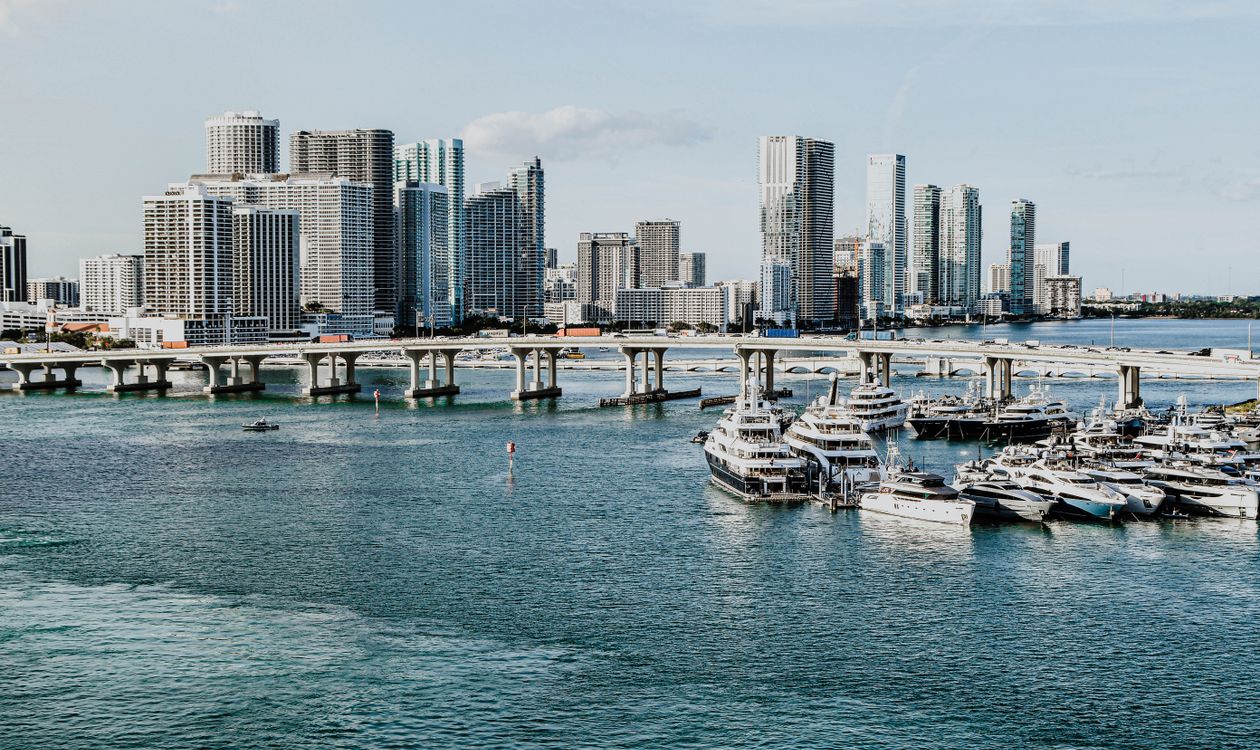
S&P Dow Jones Indices released the June 2026 Case-Shiller results on August 25, and Miami came in at 451.98 on the index, up 2.27% from June 2025 and up 0.32% from May. On its own that reads as a solid month. Set against the 3.5% inflation rate S&P cited in the same release, it reads differently: Miami homeowners gained a little over 2% in dollars and lost roughly 1.2% in purchasing power. That gap, not the headline, is the number I walk clients through before they sign anything. The framework I use is in the Miami pre-construction buyer's guide.
What the June Case-Shiller Numbers Actually Say About Miami
The Case-Shiller index tracks repeat sales of the same homes, so it strips out the mix problem that makes a median price misleading when the type of home selling changes month to month. For June 2026, S&P Dow Jones Indices reported the Miami index at 451.98. That is a 2.27% annual gain, a 0.32% monthly gain, and a 0.61% gain in the prior month. The US National index rose 1.52% over the same year, so Miami outperformed the country by about three quarters of a percentage point.
The context S&P attached to those numbers is the part most coverage skipped. Rebecca Kaufman, Associate Director of Commodities at S&P Dow Jones Indices, noted that inflation cooled to 3.5% in June from 4.2% in May, and that home prices continue to decline in real terms even as the pace of that erosion slowed. Nationally, real home prices have now fallen for thirteen consecutive months.

Run the subtraction across the Sun Belt and the picture gets clearer. I built the table below from the metro-level table in the S&P release, subtracting the 3.5%% June inflation rate from each metro's nominal annual change to get an approximate real change.
| Metro | Index Level | Nominal YoY | Approx. Real YoY |
|---|---|---|---|
| Miami, FL | 451.98 | +2.27% | -1.2% |
| Atlanta, GA | 252.71 | +0.27% | -3.2% |
| Dallas, TX | 297.16 | -0.66% | -4.2% |
| Phoenix, AZ | 326.26 | -0.88% | -4.4% |
| Tampa, FL | 374.42 | -1.19% | -4.7% |
| Las Vegas, NV | 300.00 | -1.90% | -5.4% |
| US National | 336.66 | +1.52% | -2.0% |
Source: nominal figures and index levels from the S&P Cotality Case-Shiller June 2026 release (August 25, 2026). Real column is the nominal change less the 3.5% June inflation rate cited in that release, rounded to one decimal.
Miami Is the Last Major Sun Belt Metro Still Positive
Every other large Sun Belt market in the 20-city index went negative on a nominal basis. Tampa fell 1.19%, Phoenix 0.88%, Dallas 0.66%, and Las Vegas 1.90%. Atlanta held on at 0.27%, which is a rounding error. Miami's 2.27% is the only Sun Belt result that would look like growth on a chart, and it is close to eight percentage points better than the worst reading in the country, Seattle at negative 1.95%.
That ranking matters more than the size of the gain. Twelve months ago Florida markets were being written off as a single block, with Tampa and Miami discussed interchangeably. The June data separates them by 3.5 percentage points inside the same state. The reasons are the ones I see in my own deal flow: Miami absorbs international and out-of-state capital that never reaches Tampa, and a large share of it closes without a mortgage, so a rate environment near 7% does not gate it. Tampa's buyer pool is far more locally financed and far more sensitive to insurance costs.
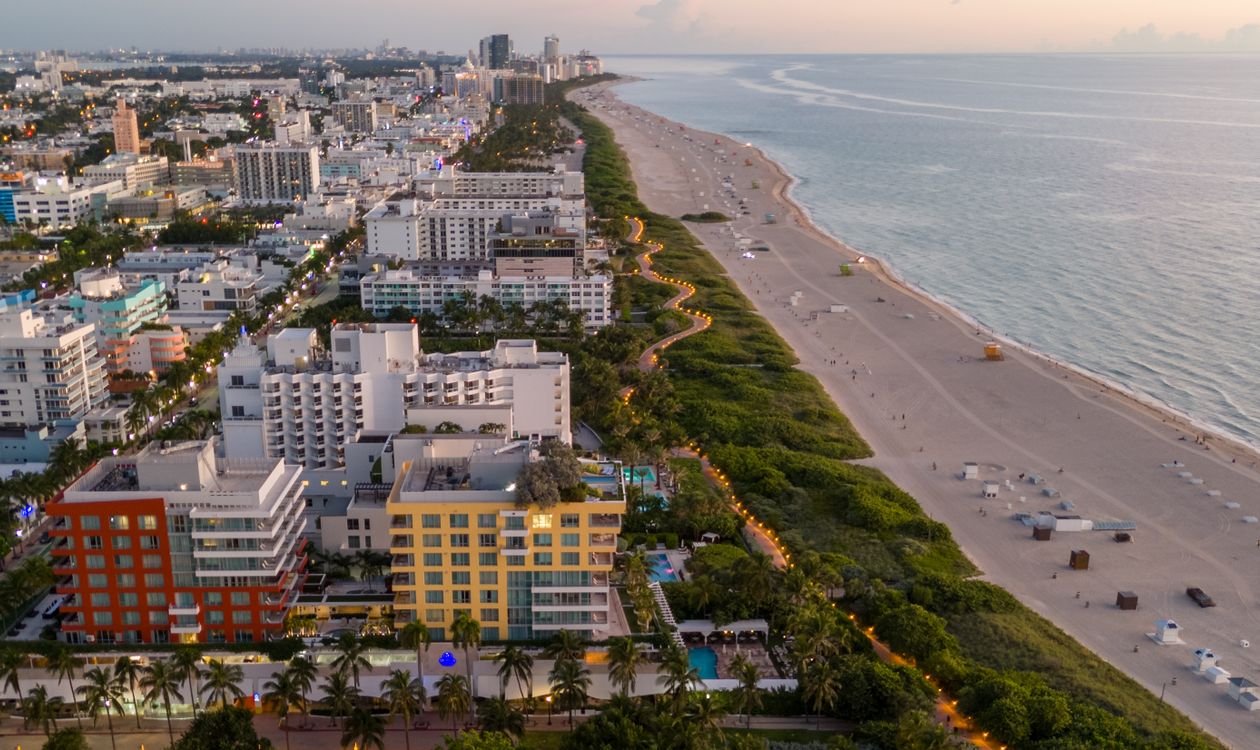
Sales Keep Rising for an 11th Straight Month While Prices Barely Move
The second data set worth reading alongside Case-Shiller came from MIAMI REALTORS on August 17, 2026. Total Miami-Dade home sales rose 8.6% year over year in July, to 1,935 closings from 1,782, the eleventh consecutive month of year-over-year increases. Single-family sales rose 5.6%, from 861 to 909. MIAMI REALTORS notes the county is now on pace for its highest annual transaction count since 2024.
Volume up 8.6% and prices up 2.27% is not a contradiction. It is what a healthy, functioning market looks like after a stalled one. Sellers who spent 2025 holding out for 2022 pricing have adjusted, buyers have met them, and deals are clearing. What is not happening is rapid appreciation, and any Miami seller still underwriting on a double-digit annual gain is working from a number the index no longer supports.
Here is what I tell buyers when they ask me whether this is a good entry point. A market where transaction volume is climbing and prices are flat in real terms is the easiest market to negotiate in that I have worked, because sellers want to close and are no longer anchored to a ceiling. The mistake I watch people make is treating flat real prices as a reason to wait. Waiting costs rent, and it does nothing about carrying costs, which are the actual variable in Miami. Run those in the true cost of owning a Miami luxury condo guide before you decide.
My Advice: Underwrite on Holding Period and Carrying Costs, Not Appreciation
When nominal gains run near 2% and inflation runs at 3.5%, appreciation stops being a plan. Three things change in how I structure a purchase in this market.
- Extend the holding period. A five year minimum, not two or three. At a real return near negative 1%, a short hold has no cushion for transaction costs, and Miami closing plus resale friction runs well above that.
- Model carrying costs before price. Insurance, HOA reserves, and SB 4-D structural assessments move a Miami condo's true annual cost far more than a 2% index change does. A building with a funded reserve is worth paying more for than one with a lower sticker price.
- Buy the building, not the market. A metro index blends every property type in Miami-Dade. Use the condo building financial health framework, and price against verified recent comparables in your exact building and line.
Foreign national buyers should read the real-terms number differently. If your home currency has held up against the dollar, a flat US real market is a better entry than a hot one, because you are not paying a premium for momentum you did not create. The foreign national buyer guide covers financing and entity structuring, which should be settled before price is.
"A 2.27% gain against 3.5% inflation means Miami homeowners made money on paper and lost a little in purchasing power. That is not a bad market, it is a normal one, and normal markets reward the buyer who underwrites carrying costs and a five year hold instead of betting on appreciation. The clients I worry about are the ones still modeling 2021 numbers." Gerardo Gonzalez, Licensed Agent at Compass
Frequently Asked Questions
How much did Miami home prices rise in June 2026?
S&P Dow Jones Indices reported the Miami Case-Shiller index at 451.98 in June 2026, up 2.27% year over year and 0.32% from May. That was the strongest annual gain of any Sun Belt metro in the 20-city index, and it beat the 1.52% national result.
Did Miami home prices really go up after inflation?
No. Inflation ran 3.5% in June 2026 according to S&P Dow Jones Indices, so Miami's 2.27% nominal gain works out to roughly a 1.2% decline in real terms. S&P noted national home prices have now fallen in real terms for thirteen straight months, though the pace of erosion slowed.
How does Miami compare with Tampa, Dallas, and Phoenix?
Miami was the only major Sun Belt metro still positive in June 2026. Case-Shiller showed Tampa down 1.19% year over year, Phoenix down 0.88%, Dallas down 0.66% and Las Vegas down 1.90%. Miami's 2.27% gain put it ahead of every one of them.
If prices are flat, why are Miami-Dade sales still rising?
MIAMI REALTORS reported total Miami-Dade home sales up 8.6% year over year in July 2026, to 1,935 closings from 1,782, an eleventh consecutive monthly increase. Volume is recovering because sellers are meeting the market on price, not because values are climbing quickly.
What does a low real-return market mean for a Miami buyer?
It means your holding period matters more than your entry price. When a nominal gain near 2% trails 3.5% inflation, a two or three year flip has no cushion. I underwrite Miami clients on a five year minimum and on carrying costs, not on appreciation.
Related Articles
- Miami Luxury Home Prices Up 14.2%: Redfin Ranks Miami #2 in the US
- Miami Condo Inventory Falls for a Fifth Straight Month
- Miami Condo HOA Fees in 2026: What Buyers Need to Know
- South Florida Housing Market Data 2026
Buyer Mechanics: Deposits, Financing, Closing Costs

Gerardo Gonzalez
Licensed Real Estate Agent, Luxury Dade Group at Compass | Tri-county South Florida
Specializing in Miami pre-construction and luxury condos. About Gerardo Gonzalez
A market with rising volume and flat real prices is the easiest one to negotiate in, if you know the building. I can walk you through verified recent comparables for the exact building and line you are considering, plus the carrying-cost picture that actually decides the return.
Contact Gerardo Gonzalez for a Private ConsultationPrefer to talk? Call me at (305) 964-8614
Explore All Top Miami Pre-Construction Projects for 2026 →
Data sources: S&P Dow Jones Indices, "S&P Cotality Case-Shiller Index Reports Annual Gain in June 2026" (August 25, 2026), and MIAMI REALTORS, "Miami-Dade Total Home Sales Rise for 11th Consecutive Month" (August 17, 2026). Real-terms figures in the table are calculated by subtracting the 3.5% June 2026 inflation rate cited in the S&P release from each metro's nominal annual change. Information compiled from sources deemed reliable but not guaranteed; readers should verify current terms with their own advisors.
Case-Shiller data covers June 2026, released August 25, 2026. Miami-Dade sales data covers July 2026, released August 17, 2026. Last verified August 28, 2026. This article is for informational purposes only and does not constitute financial or investment advice.