According to Miami Realtors (April 28, 2026), Miami-Dade's luxury threshold (top 5% of sales) reached $4.1 million in Q1 2026, up 28% from $3.2 million in Q1 2025. Luxury single-family transactions rose 19.6% year-over-year to 752 sales. March 2026 marked the seventh consecutive month of year-over-year home sales growth. Spring buyer-intent searches are up 23% (Google Trends, April 2026). For full context, see the Miami pre-construction buyer guide.
Watch: Miami's $4.1M Luxury Floor and What Q1 2026 Data Means for Buyers
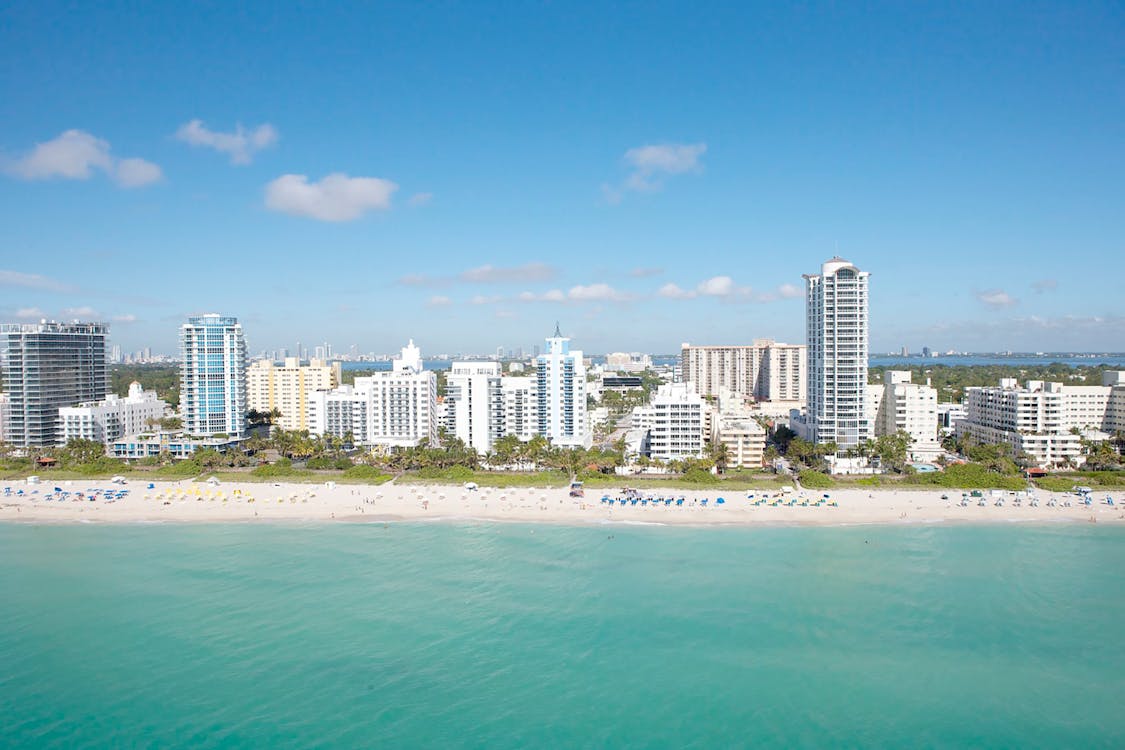
On April 28, 2026, Miami Realtors published Q1 data that should stop every serious buyer in their tracks. The luxury price floor in Miami-Dade County, defined as the entry point for the top 5 percent of all residential sales, jumped to $4.1 million. One year ago that number was $3.2 million. That is a 28 percent increase in 12 months. And the ultra-luxury tier (top 1 percent) moved from $10.4 million to $13.6 million, a 31 percent surge, driven in part by global executives relocating to South Florida. If you are researching the true cost of owning a Miami luxury condo, this data changes the math fundamentally.
I work with buyers at every tier in Coconut Grove, and the spring 2026 pipeline is unlike anything from the past two years. Inventory in the $3 to $5 million range is thinning. Pre-construction reservations are running 14 percent above Q4 2025 (Miami Association of Realtors). CEO relocations are not a background story anymore. They are moving prices in real time, and the effects are spreading from Brickell into Edgewater, Coconut Grove, and Coral Gables.
The Numbers: How Miami's Luxury Market Changed in 12 Months
According to Miami Realtors (April 28, 2026) and the Q1 2026 South Florida luxury report (April 23, 2026), Q1 2026 produced the most significant 12-month shift in Miami's luxury thresholds on record. Transaction volume is not just up. The definition of "luxury" itself moved by hundreds of thousands of dollars, pricing out buyers who were competitive just a year ago. The table below shows exactly where things stand versus Q1 2025.
| Metric | Q1 2025 | Q1 2026 | Change |
|---|---|---|---|
| Luxury threshold (top 5%) | $3.2M | $4.1M | +28% |
| Ultra-luxury threshold (top 1%) | $10.4M | $13.6M | +31% |
| Luxury SF transactions | 628 | 752 | +19.6% |
| Luxury condo transactions | 435 | 504 | +15.9% |
| Avg luxury condo sale price | $2.82M | $2.92M | +3.4% |
Sources: Miami Realtors (April 28, 2026); RISMedia luxury report (April 23, 2026). SF transaction counts for Q1 2025 estimated from 7th-consecutive-month growth baseline.
Why Global CEOs Are Choosing Miami in Spring 2026
According to Miami Realtors (April 28, 2026), Q1 2026 saw major record purchases by executives including Facebook, Google, and Starbucks leadership. This is not a celebrity trend. These are sitting CEOs and founders making primary or secondary residence decisions with eight-figure price tags. Each purchase sends a signal to the next tier of wealth: Miami is where serious people are planting their flags.
The April 28 report named the three transactions that reset the ceiling. Each reflects a structural shift in what global capital treats as a permanent home rather than a vacation property.
- Mark Zuckerberg, Indian Creek: $170 million, the all-time South Florida single-family record. Indian Creek Village, known locally as the "Billionaire Bunker," sits on a private island between Miami Beach and Bal Harbour. The purchase signals that the top tier of tech wealth has graduated from secondary homes to primary estate compounds.
- Sergey Brin, Allison Island (Miami Beach): $51 million. The Google co-founder chose a gated island community with direct Intracoastal water access, 12 minutes from Bal Harbour Shops and 8 minutes to the Design District.
- Howard Schultz, former Starbucks CEO: $44 million, the second-largest condo transaction in South Florida in Q1 2026. The condo format rather than a single-family estate reflects a growing CEO preference for managed, services-rich vertical living.
What connects the three is permanence. The 2021 wave was remote-work relocation; the 2026 wave is business relocation, arriving with company headquarters, long-term hiring plans and a public footprint that changes how neighborhoods operate. In 2025 alone South Florida recorded 361 residential sales above $10 million, the highest total since 2021, and that volume at the ultra-luxury tier is what pushes the threshold calculation upward.
The reasons are consistent across every conversation I have with executive-level buyers. Here is what I hear every time:
- Zero Florida state income tax versus California (13.3%), New York (10.9%), or Illinois (4.95%). For a CEO earning $50M+ annually, the annual saving is material, not marginal.
- Miami International Airport offers 100+ nonstop routes, including direct flights to London, Madrid, Bogota, Sao Paulo, and Mexico City. No other Sun Belt city competes on global connectivity.
- Time zone advantage: Miami overlaps New York business hours in the morning and Latin American hours in the afternoon. For executives running global businesses, this is operationally valuable.
- Corporate infrastructure: Hedge funds, private equity firms, and major banks have opened Miami offices since 2020. The Brickell corridor now supports full executive workflows without requiring New York travel.
- Year-round climate: 12 months of warmth, deep-water boating access, and proximity to the Caribbean and Bahamas create a lifestyle that northern cities simply cannot offer.
The result is a buyer class that can purchase without financing, at prices that reflect long-term value judgments rather than near-term market sentiment. According to NAR international buyer data, international capital inflows into South Florida exceeded $4.4 billion in the most recent 12-month period, and the CEO migration trend is adding domestic ultra-high-net-worth demand on top of that baseline.
What a $4.1 Million Floor Means for Pre-Construction Buyers Right Now
When the luxury threshold rises 28 percent in a year, a specific chain of consequences follows. First, resale inventory in the $3 to $5 million range gets absorbed faster, because fewer listings qualify as "undervalued" relative to the new floor. Second, pre-construction product that comes to market at or below that floor becomes comparatively attractive, because the new buyer entering at $4.1 million today is buying below where the threshold will sit in 12 to 18 months if the trend holds.
According to Miami Association of Realtors Q1 2026 data, pre-construction reservation volume is running 14 percent above Q4 2025. Branded product is outperforming non-branded by 11 to 18 percent on price per square foot. That gap is not coincidental. CEO buyers and UHNW buyers who have done their research gravitate toward buildings with globally recognized names, because those names carry resale liquidity in any market cycle.
The practical implication for buyers is this: the window between a rising floor and rising pre-construction prices is closing. Projects like St. Regis Brickell Residences and Mandarin Oriental Residences on Brickell Key are priced relative to today's resale comp structure. When those comps move, pricing adjusts. Buyers who understand the pre-construction deposit structure and commit now are locking into pricing that will look favorable against Q3 and Q4 2026 resale data. Buyers waiting for a pullback are competing against a CEO migration trend that shows no sign of reversing.
Which Neighborhoods Win When the Price Floor Rises
A rising luxury floor does not lift all neighborhoods equally. The benefits concentrate in submarkets where scarcity is structural: limited waterfront, low condo inventory relative to demand, or proximity to where executives are already buying. Right now that list is short and specific.
Brickell is the primary condo beneficiary. It is the only Miami neighborhood where you can walk to work, have a car service to MIA in 20 minutes, and access 40 floors of amenities without owning a car. CEO buyers who want proximity to business infrastructure without a Coconut Grove estate choose Brickell. According to our neighborhood analysis, Brickell absorption rates in the $2 to $5 million condo tier are the strongest in Miami-Dade for the third consecutive quarter.
Coconut Grove and Coral Gables are the primary single-family beneficiaries. Buyers who want large lots, mature tree canopy, and a quieter pace than Brickell move south, and my guide to luxury condos in Coconut Grove covers the tower alternative for buyers who want the neighborhood without the estate. The luxury SF threshold in the Grove is tracking well above the Miami-Dade average. Inventory of waterfront estates above $10 million is measured in weeks, not months. Coral Gables attracts families with children who want quality schools and gated community options alongside executive-level finishes.
Edgewater and Bay Harbor Islands are the secondary beneficiaries. Edgewater offers Biscayne Bay views and proximity to Brickell and Wynwood without Brickell's price per square foot. Bay Harbor Islands is the most undersupplied luxury pocket in Miami-Dade: waterfront product trades within days of listing because the barrier to entry is not price, it is availability. For buyers who want strong building financial health and low SB 4D exposure, Bay Harbor's newer inventory is one of the best positions in the market.
My Recommendation: How to Position in This Market
I have been advising clients on Miami pre-construction for years. The Q1 2026 data from Miami Realtors is the clearest threshold reset I have seen in that time. Here is my direct take on what to do with it.
If you are a foreign national or international investor watching Miami from overseas, the CEO relocation data is the signal you have been waiting for. When Zuckerberg and Brin make permanent moves, they bring company infrastructure, employees and capital that sustains demand for years. This is not a celebrity purchase, it is a market anchor. Review the complete foreign national buyer guide and the international buyer tax guide by country of origin before you contact me, so we can move fast when the right unit comes available.
If you are already based in South Florida and comparing pre-construction options, the threshold shift means one thing: your negotiating power on new launches has compressed. Developers now price at the new threshold, not the old one. The window for below-threshold pre-construction pricing in Brickell and Edgewater has largely closed. Aventura, Bay Harbor Islands and Coconut Grove still have pre-construction pricing that lags the new threshold by 12 to 18 months. Those are the neighborhoods to watch right now.
If your budget is $3M to $5M, you are entering the market at exactly the threshold inflection point. A unit you buy today in this range will cross into the top-5% luxury tier as the next threshold reset occurs, likely in 2027. That reclassification is a genuine value driver for resale. See the full analysis on evaluating condo building financial health and the SB-4D special assessments complete guide before committing to any specific project. The buildings in this price tier that survive the 2026 reserve compliance deadlines will reset their valuation premium against 1990s and early-2000s stock that gets hit with seven-figure assessments.
Frequently Asked Questions
Related Articles
- Foreign Buyers Spent $4.4 Billion on South Florida Real Estate in 2025
- Tech Billionaires Are Buying Miami: Larry Page, Brin, Zuckerberg
- Brickell vs Edgewater vs Sunny Isles: Where to Buy Pre-Construction in 2026
- Why Latin American Investors Are Betting Big on Miami Pre-Construction