South Florida set its highest-ever number of $20 million-plus condominium sales in 2025, according to the Miami Association of Realtors, with about 361 sales above $10 million, the most since 2021. I am watching trophy demand decouple from the broad market: 82 percent of $1M-plus Miami condo sales were all-cash, so the top tier shrugs off rates while mid-market supply climbs past 13 months. If you want a true trophy residence, secure the specific line now, scarcity, not the cycle, sets that price.

There are two Miami condo markets right now, and they are moving in opposite directions. The one most headlines describe is softening: condo inventory has climbed to roughly 12,500 active listings, about a 13-month supply per Miami Realtors data, and that hands negotiating power to buyers in the mid-market. The other market, the trophy tier above $10 million and especially above $20 million, just set records. I want to explain why these two things are true at the same time, because confusing them is the most expensive mistake a luxury buyer or seller can make in 2026.
The short version: the top of the Miami market does not run on mortgage rates or local inventory cycles. It runs on global cash. When 82 percent of $1M-plus condo sales close all-cash, a quarter-point Fed move is noise. So while a $1.5 million Brickell unit competes against thirteen months of supply, a $25 million full-floor residence on Brickell Key competes against almost nothing comparable. Here is what the 2025 data shows and what it means for buyers and sellers at the top.
The 2025 Record, in Numbers
According to the Miami Association of Realtors, South Florida retained its position as the nation's leading ultra-luxury condominium hub in 2025, recording its highest-ever number of $20 million-plus condo transactions. The region also posted near-record activity in the $10 million-plus tier across both condos and single-family homes. In total, South Florida logged roughly 361 sales above $10 million in 2025, the highest annual count since the pandemic-era surge of 2021.
A $20M-plus trophy record next to a cooling broad market is the two-speed split in one sentence. The very top is pulling away while ordinary inventory sits, so know which tier your unit is in.
Put that in context. The all-time record for ultra-luxury sales was 444 in 2021, set during a once-in-a-generation wealth migration. 2026 is projected to land near 426, just shy of that peak. This is not a speculative spike fading; it is a high plateau holding three years after the surge that created it. For a segment that many expected to cool sharply once rates rose, holding within striking distance of the all-time record is the real headline.
The $20 million-plus condo record matters specifically because it is the hardest tier to fill. There are only so many full-floor residences, branded penthouses, and waterfront estates-in-the-sky that even exist, and the deepest concentration of them sits in the South Beach penthouse market. Setting a transaction record in that band means demand is reaching deep into genuinely scarce inventory, not just clearing entry-luxury product. That is the signal that separates a healthy top end from a churning mid-market.
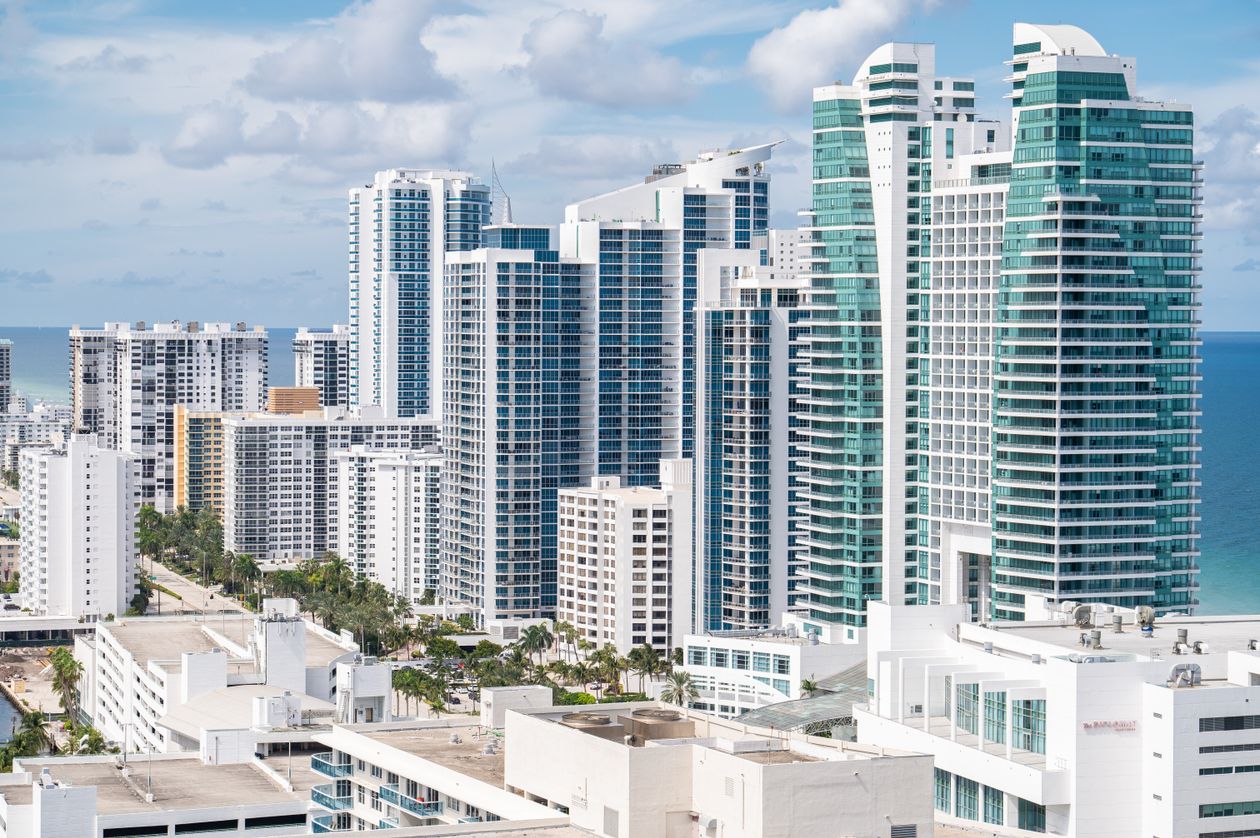
Why the Top Decouples From the Broad Market
The single most important fact about Miami's luxury condo market is the cash share. According to Miami Association of Realtors data, 82 percent of Miami condo sales priced at $1 million and above closed all-cash in 2025. In the trophy tier above $10 million, that share climbs even higher; these are global ultra-high-net-worth families and family offices, not financed buyers. When the purchase is cash, the cost of money is irrelevant. A buyer writing a $22 million check does not care whether the 30-year mortgage is 6 percent or 7 percent, because there is no mortgage.
That is why the broad-market story and the trophy-market story can both be true. Below roughly $2 million, a meaningful slice of buyers are rate-sensitive and financing-dependent, so as supply rose to about 13 months they paused or pushed for concessions. Above $10 million, the buyer pool is insulated from rates entirely, and the constraint flips from financing to supply. There simply are not enough irreplaceable residences to satisfy the capital that wants them.
Inventory tells the same story in reverse. The 12,500 active condo listings that pressure the mid-market are overwhelmingly standard units in standard buildings. Almost none of that supply is a full-floor residence at an oceanfront branded tower or a private-island estate. So the headline "13-month supply" describes a market the trophy buyer is not even shopping in. The two tiers share a zip code, not a market.
This decoupling is structural, not a 2026 quirk. Miami has spent a decade building the infrastructure that ultra-wealthy global buyers require: branded residences, private clubs, world-class restaurants, and a no-state-income-tax base that keeps capital here once it lands. That foundation is what lets the top tier hold its footing when rate-sensitive demand below it softens.
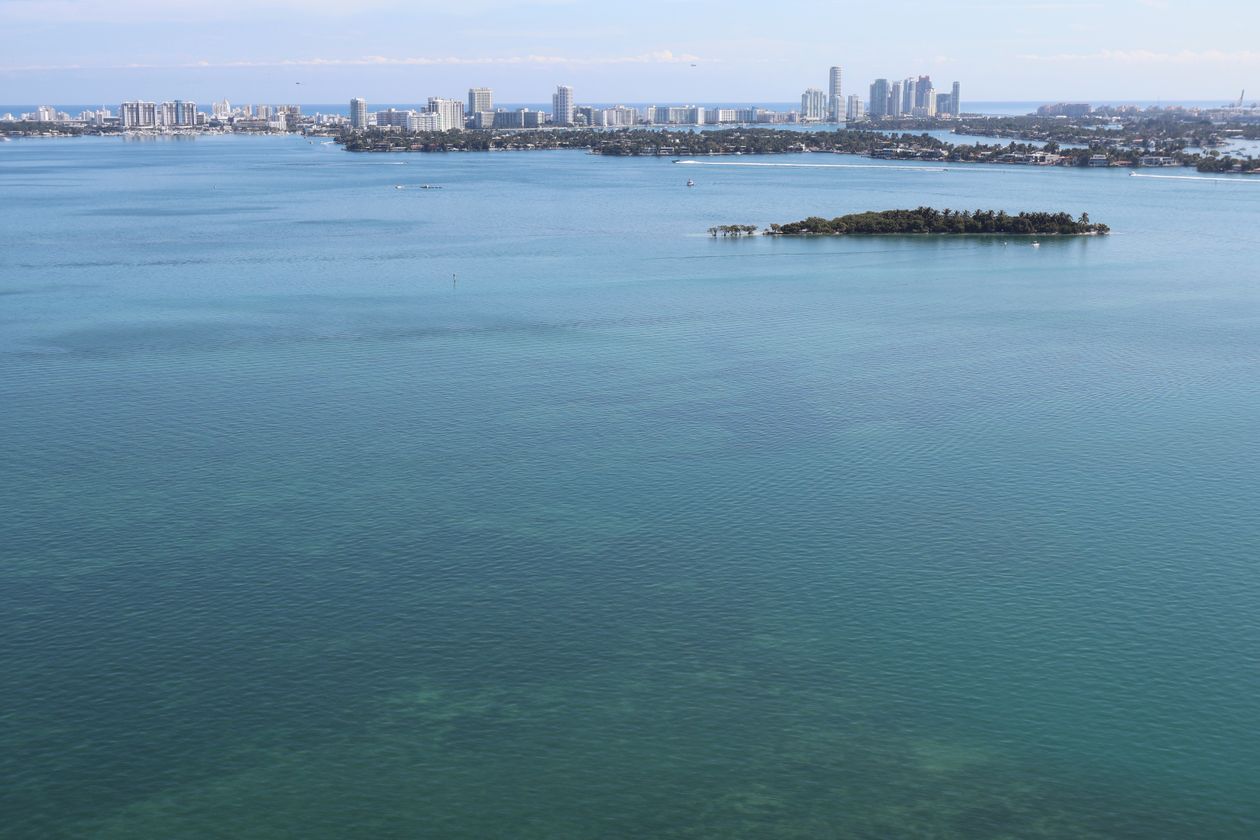
Where the Foreign Capital Concentrates
Foreign buyers are the engine of the trophy tier. Industry reporting cited by Miami Realtors found international buyers purchased roughly 49 percent of all new-construction condo units in South Florida over an 18-month span ending mid-2025, with buyers from about 73 different countries represented. At the very top, that international demand is not spread evenly; it clusters in a handful of irreplaceable submarkets.
The clearest concentration points are the islands and the branded waterfront. Brickell Key, Fisher Island, Indian Creek, and the Sunny Isles Beach oceanfront draw the bulk of $20 million-plus condo activity because they pair scarcity of land with the privacy and security global buyers pay premiums for. A residence at the new Residences at Mandarin Oriental on Brickell Key, where pricing climbs toward $100 million at the top, is a different asset class from a standard Brickell tower a mile away.
Branding compounds the scarcity. When a tower carries a name like Waldorf Astoria, Aston Martin, or St. Regis, it creates a category of one in its neighborhood, and global buyers treat the brand as both a quality guarantee and a resale moat. That is why branded product has outperformed unbranded inventory through the broad-market softening. The buyers who set the 2025 record were not chasing price per square foot; they were buying the specific address that cannot be replicated.
For Latin American buyers in particular, currency and stability drive the trade as much as lifestyle. A Miami trophy condo is a hard-asset hedge held in dollars, in a stable jurisdiction, with no state income tax. When capital wants out of volatility at home, the top of the Miami market is one of the first places it lands, and it lands in cash.
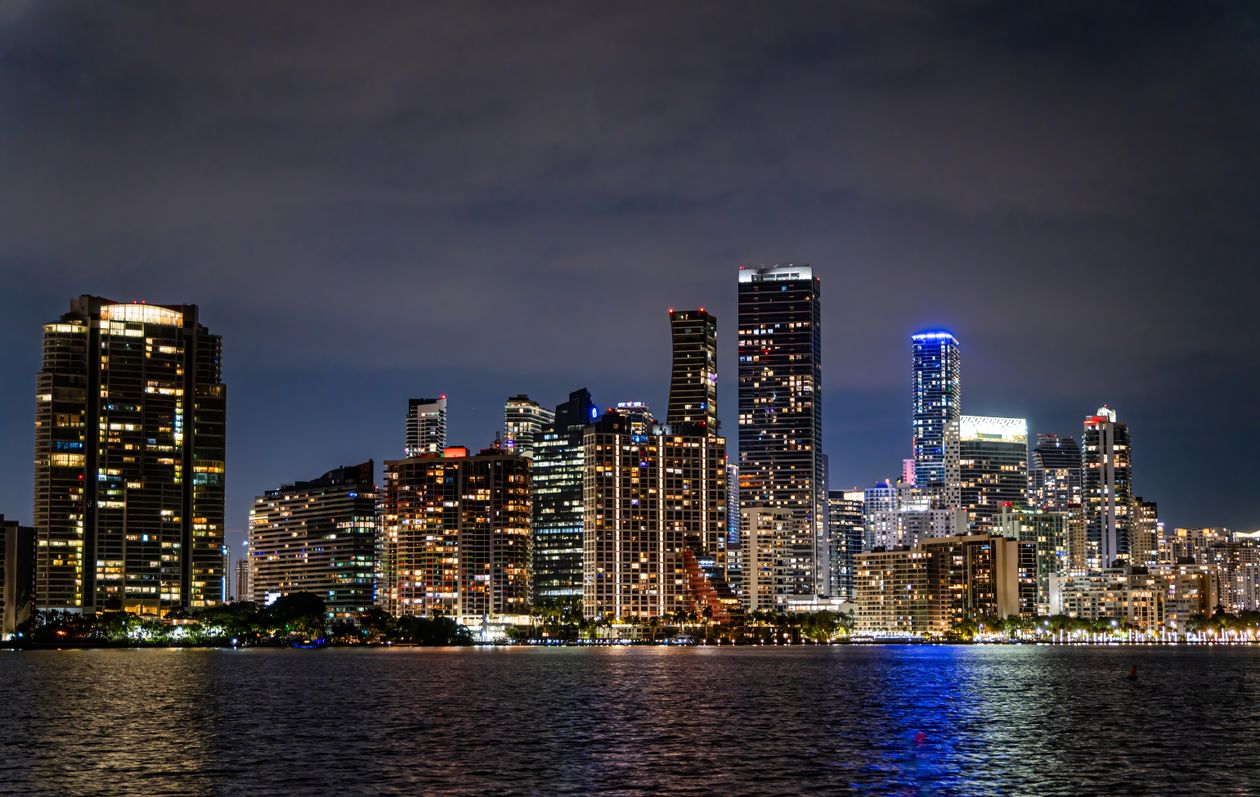
Two Markets, Side by Side
The clearest way to see the split is to put the broad condo market and the trophy tier next to each other. They share a city, but almost nothing else about how they price, who buys, or what drives demand.
| Factor | Broad Condo Market | Trophy Tier ($10M+) |
|---|---|---|
| Supply | ~13 months, rising | Structurally scarce |
| Financing | Rate-sensitive, often financed | 82%+ all-cash |
| Buyer | Local and domestic, end-user | Global UHNW, family offices |
| Negotiating power | Tilting to buyers | Holds with sellers on best lines |
| 2025 trend | Softening, more negotiation | Record $20M+ sales |
Read across any row and the two columns disagree. That is the entire point: a buyer or seller who reads broad-market headlines and applies them to a $20 million residence is working from the wrong playbook. The Q1 2026 market report tracks both tiers so you can see where your specific price band actually sits.
What It Means for Buyers and Sellers
The decoupling changes the right move depending on which market you are actually in. A few practical takeaways from how I am advising clients in 2026:
- Trophy buyers: Compete on certainty, not price. The best full-floor and branded penthouse lines sell off reserve lists before public release, so relationships with the sales teams matter more than waiting for a discount that the scarce top inventory will never offer.
- Mid-market buyers: Press your advantage. With supply near 13 months below $2 million, this is a genuine buyer's window for negotiating price, closing credits, and developer incentives on standard inventory.
- Trophy sellers: Hold your number on irreplaceable product. A true waterfront or branded residence is not competing with the 12,500-listing overhang; pricing it to that fear leaves money on the table.
- Investors: Branded and waterfront product has shown the strongest resale resilience through the softening, because the brand and the location are the moat. Read the pre-construction buyer's guide before committing deposits.
The mistake I see most often is treating Miami as one market. It is not. Before you make any decision above $10 million, confirm you are pricing against the trophy tier and not the broad-inventory headline.
What surprises people at the $20 million tier is how little the headline number tells you. The broad market can cool all it wants and the top holds, because a trophy price is set by the specific residence and its provenance, not by the neighborhood or the inventory chart. When I advise a buyer here, I zero in on the exact floor, the line, and whether the view can ever be built out, because at this level two units in the same tower are not the same asset, and the irreplaceable one is what defends the price.
"Clients call me worried about Miami condo headlines, and my first question is always: at what price? Below two million, yes, you have room to negotiate right now. At the top, the residence you actually want is competing with almost nothing comparable, and waiting for a discount on irreplaceable inventory is how buyers lose it. The two markets are not the same trade."
Gerardo Gonzalez, Luxury Dade Group at Compass
How I Help Buyers and Sellers at the Top
Working in the trophy tier is a different job from a standard condo sale. The residences trade quietly, often before public listing, and the buyers expect discretion and speed. Here is what I bring to clients on either side of a $10 million-plus transaction.
I am bilingual in English and Spanish and work with Portuguese-speaking clients regularly, which matters because most of my luxury buyers come from Latin America and conduct a cash, cross-border purchase in their own language. I have direct relationships with the sales teams at every major branded and waterfront development in Miami, so I hear about reserve-list releases and off-market full-floor lines before they reach the open market.
For sellers of irreplaceable product, I price against the trophy tier, not the broad-inventory overhang, and position the brand and location as the moat they are. For cross-border buyers, I coordinate with cross-border CPAs and title companies on the all-cash wire logistics and Geographic Targeting Order compliance that every Miami-Dade luxury closing requires. If you are buying or selling above $10 million, contact me directly and I will tell you honestly which of Miami's two markets your residence is actually in.
Related Articles
- Miami Now Has More Million-Dollar Listings Than New York City
- Seaway at the Surf Club: A Surfside Ultra-Luxury Sellout
- Brickell Hits a Buyer's Market: What the Inventory Build Means
- The Complete Buyer's Guide to Miami Pre-Construction 2026
- The Miami $5M+ Ultra-Luxury Condo Market Report
Frequently Asked Questions