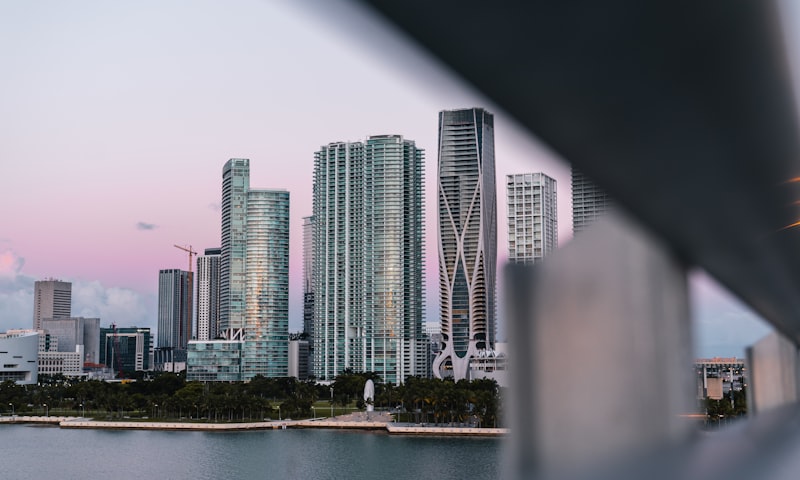
On April 23, 2026, Israeli and U.S. investors paid $45 million for 72 units at Adam Neumann's Flow House at Miami Worldcenter, roughly $625,000 per unit and about 15 percent of the 466-unit building. According to The Real Deal, Pulse International arranged the transaction via Markondo. Block purchases at this scale confirm institutional conviction in Miami's downtown pre-construction market. For full context on how to evaluate projects like this, see my Miami pre-construction buyer guide.
Seventy-two units. One transaction. Forty-five million dollars. On April 23, 2026, a group of Israeli and U.S. investors acquired nearly 15 percent of Adam Neumann's Flow House at Miami Worldcenter in a single block purchase, according to The Real Deal. Pulse International's Rena Kliot arranged the deals and pooled buyers via Markondo, a platform that aggregates investor demand before developer inventory runs out. I have been tracking institutional capital movement in downtown Miami, and this deal is one of the clearest signals I have seen that the pre-construction Miami market is being validated at scale. What individual buyers should take from it is the subject of this post.
What Happened: The $45 Million Block Purchase at Flow House, Miami Worldcenter
Flow House sits at 697 North Miami Avenue, inside Miami Worldcenter, a 27-acre mixed-use development in downtown Miami. The building is 40 stories, 466 units total, and was launched by Adam Neumann's real estate company Flow in fall 2024. In April 2025, Neumann secured a $155 million construction loan to fund the build. On April 23, 2026, The Real Deal reported that Israeli and U.S. investors had acquired 72 units in one block transaction for a combined $45 million.
Honestly, I read a $45M block buy as a vote on Worldcenter the district, not a green light on Flow House the building. Neumann's first development has no delivery track record, so I tell buyers to price in that risk, not just the discount.
The deal was structured through Pulse International, led by Rena Kliot, using a platform called Markondo that pools individual investors to reach block purchase pricing thresholds. The 72 units represent roughly 15 percent of the total building. At $625,000 average per unit, the institutional buyers are paying a price that is consistent with, and in some configurations slightly below, current retail asks for comparable inventory at Miami Worldcenter. According to Miami Realtors, total Miami-Dade home sales rose 6.6 percent year-over-year in March 2026, the seventh consecutive month of gains.
- 72 units acquired in one transaction on April 23, 2026
- $45 million total, averaging $625,000 per unit
- Represents 15 percent of Flow House's 466-unit inventory
- Building address: 697 North Miami Avenue, inside Miami Worldcenter
- Transaction arranged by Pulse International via the Markondo platform
- Adam Neumann secured a $155M construction loan for the project in April 2025
How Flow House Compares to Other Miami Worldcenter Pre-Construction Projects
Miami Worldcenter has multiple active pre-construction projects. Understanding where Flow House sits in the competitive landscape is the first thing I walk through with clients who contact me about the development. The block purchase at $625,000 per unit is meaningful context for pricing comparisons.
According to Miami Realtors March 2026 data, Miami-Dade $1 million-plus condo sales climbed 9.77 percent year-over-year, indicating that institutional buyers at the $625,000 average price point are entering slightly below the luxury threshold where demand is strongest. That creates a margin of safety on the investment thesis.
| Project | Starting Price | Short-Term Rental | Status (Apr 2026) |
|---|---|---|---|
| Flow House | From ~$475K | Permitted | Under construction |
| 501 First (Worldcenter) | From ~$550K | Full flexibility | TCO received Jan 2026 |
| The Crosby (Worldcenter) | From ~$600K | No restrictions | TCO expected 2026 |
| Waldorf Astoria Residences | From ~$1.2M | Hotel-managed program | Under construction |
Why Institutional Capital Is Moving Into Downtown Miami Right Now
The Flow House block purchase did not happen in a vacuum. It happened because downtown Miami in 2026 is a fundamentally different investment destination than it was five years ago. The Brightline intercity rail now connects downtown Miami to Fort Lauderdale, West Palm Beach, and Orlando, expanding the metro's effective radius. Miami Worldcenter itself represents a $6 billion redevelopment of 27 acres that sat largely underdeveloped for decades. The project now includes Whole Foods, a Marriott Marquis hotel, and over one million square feet of retail and entertainment, all within walking distance of the properties in question.
Institutional investors do not buy based on amenities alone. They buy when they can model exit scenarios. At $625,000 per unit in a building inside Miami Worldcenter, the exit scenarios are clear: rent to the growing downtown Miami renter base at rates that justify the true cost of owning a Miami luxury condo, or sell into a resale market where retail buyers have validated pricing at comparable or higher levels. Both scenarios work, which is why a group of sophisticated Israeli and U.S. investors committed $45 million in a single transaction.
The broader data supports the thesis. According to Miami Realtors, Miami-Dade sales priced at $5 million and above climbed 27 percent year-over-year in March 2026. Total inventory decreased 7.9 percent year-over-year in the same period. These numbers do not coexist with a market that is cooling. They describe a market where supply is tightening and high-conviction buyers are moving before prices move further. For a detailed look at how to evaluate a Miami condo building's financial health before buying, I've put together a complete due-diligence guide that pairs with my SB-4D special assessments guide for any building you are evaluating in a pre-2012 structure.
What Individual Pre-Construction Buyers Should Do With This Information
Block purchases like the Flow House deal are a leading indicator, not just a news item. When institutional buyers pay $45 million for 15 percent of a single building, they are making a statement about where they expect the market to move. Individual buyers who read those signals correctly and act before the next wave of demand get priced in are the ones who build real returns in pre-construction real estate.
Here is how I advise clients to respond to this specific signal, and the step-by-step Miami preconstruction buying process is the framework I use with every client. First, understand that institutional block pricing is typically 5 to 15 percent below retail. The retail buyers who come in after the block purchase close are paying the price the institutional group validated, not the price they got. If Flow House's retail pricing is near $700,000 for comparable units, the block buyers just told the market those units are worth it at $625,000. That is a floor, not a ceiling.
Second, platforms like Markondo are not exclusive to institutional buyers. Individual investors can join pooled purchase groups to access similar pricing structures. I work with several of these platforms and can connect buyers to active opportunities before inventory is exhausted. For international buyers considering Miami pre-construction for the first time, the block purchase model reduces exposure to individual negotiation dynamics and lets you enter at an institutionally validated price. Cross-border buyers should also review the Miami real estate tax guide for international buyers by country before signing a reservation agreement.
Third, the competitive landscape matters. Flow House is inside Miami Worldcenter, but so are 501 First, The Crosby, and the Waldorf Astoria Residences. Each project has different price points, rental policies, and delivery timelines. The block purchase confirms demand for the Worldcenter submarket broadly, not just for one specific building. Buyers who evaluate the full competitive set will find the best risk-adjusted entry point within the complex.
"Institutional buyers pay $625,000 per unit at Miami Worldcenter and pre-construction price floors get validated by the market, not by developer brochures. When a group of Israeli and U.S. investors acquires 15 percent of a building in one transaction, that tells me the fundamentals I have been pointing to since 2023 are showing up in the data in a way that individual buyers can still act on."Gerardo Gonzalez, Licensed Real Estate Agent at Compass
Frequently Asked Questions