LuxuryDade read FEMA's National Flood Insurance Program policy file and found zero federal flood policies on any Florida building of ten floors or more, Miami-Dade included. That is not a loophole but a ceiling, because the federal program caps building coverage at $250,000 per unit. Ask for the association's flood declarations page and elevation certificate before your inspection period ends, not after.
What was measured, over what scope: every National Flood Insurance Program policy FEMA records for Miami-Dade County (census GEOID prefix 12086) with an effective date in calendar 2025, and every Miami-Dade claim with a date of loss from January 1, 2020 onward. Source: the FEMA OpenFEMA datasets NFIP Redacted Policies v3 and NFIP Redacted Claims v3, read directly from the OpenFEMA API. Last verified October 14, 2026. Next scheduled refresh: January 2027, once the 2026 policy year is complete. These are federal program records only; they do not describe private flood policies, which is the whole point of the finding below.
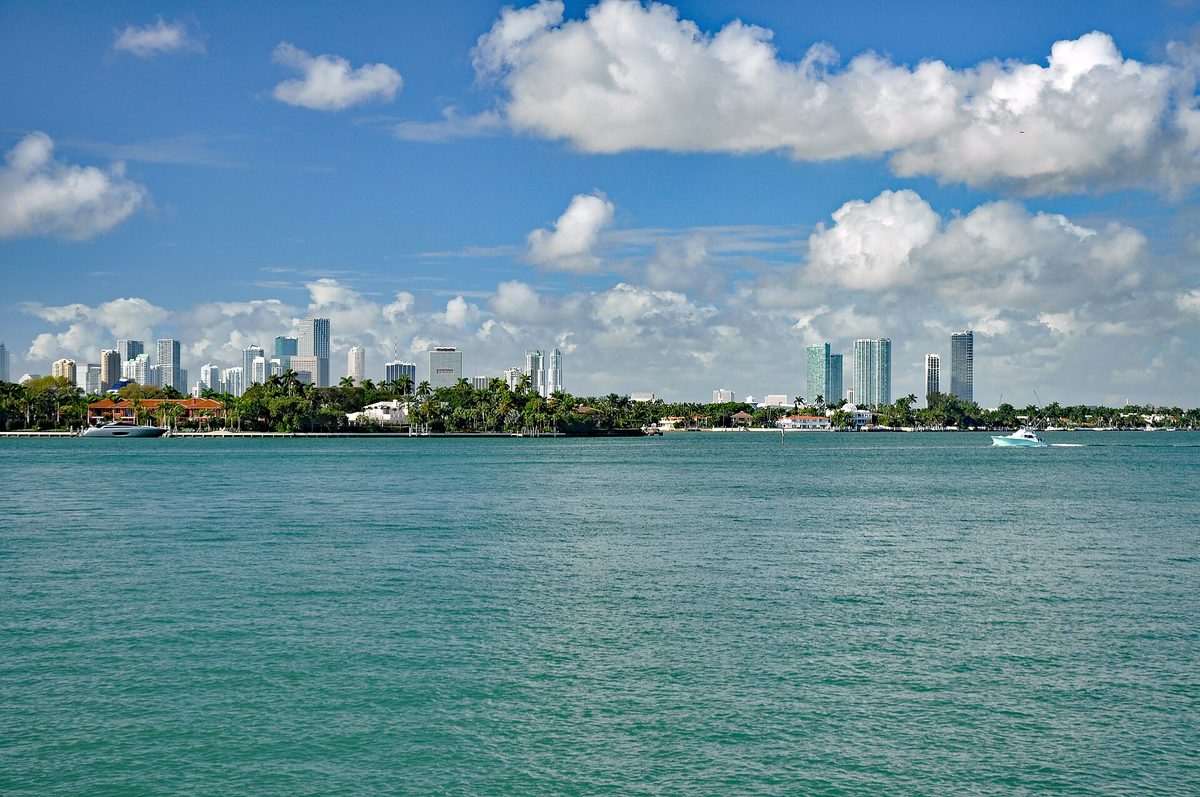
Flood is the question every Miami condo buyer asks last and should ask first. The honest answer is not on a brochure, it is in a federal file, so I read it. FEMA publishes every National Flood Insurance Program policy and every claim it has paid, and the Miami-Dade records say something most buyers have never been told: the federal program is effectively absent from the high-rise market. This guide lays out what the file shows, what zone your building is likely in, what unit owners actually pay, and what to ask the association before your inspection period runs out. The companion pieces are my Miami condo insurance guide and my guide to reading a building's financial health.
What FEMA's Own File Says About Miami High-Rises
Of the 181,143 National Flood Insurance Program policies FEMA records for Miami-Dade County with an effective date in calendar 2025, not one covered a building of ten floors or more. Only four covered a high-rise condominium association. Widen the query to the entire state of Florida and the count for buildings of ten floors or more is still zero. The full source is the FEMA NFIP Redacted Policies dataset, which anyone can re-run.
- 181,143 Miami-Dade policies with a 2025 effective date, across every property type.
- 6,968 of them were condominium unit-owner policies, and every single one sat in a building of three floors or fewer.
- 4,607 were low-rise condominium association policies; only 4 were high-rise association policies.
- 435 policies in the whole county covered a building of four floors or more.
- 0 policies in Miami-Dade, and 0 in Florida, covered a building of ten floors or more.
That is not a gap in the data. It is the design of the program. Read the next two sections together and the whole picture falls into place: the zone tells you the hazard, and the coverage cap tells you why a Brickell or Edgewater tower cannot use the federal program to solve it.
The Flood Zones Miami Condos Actually Sit In
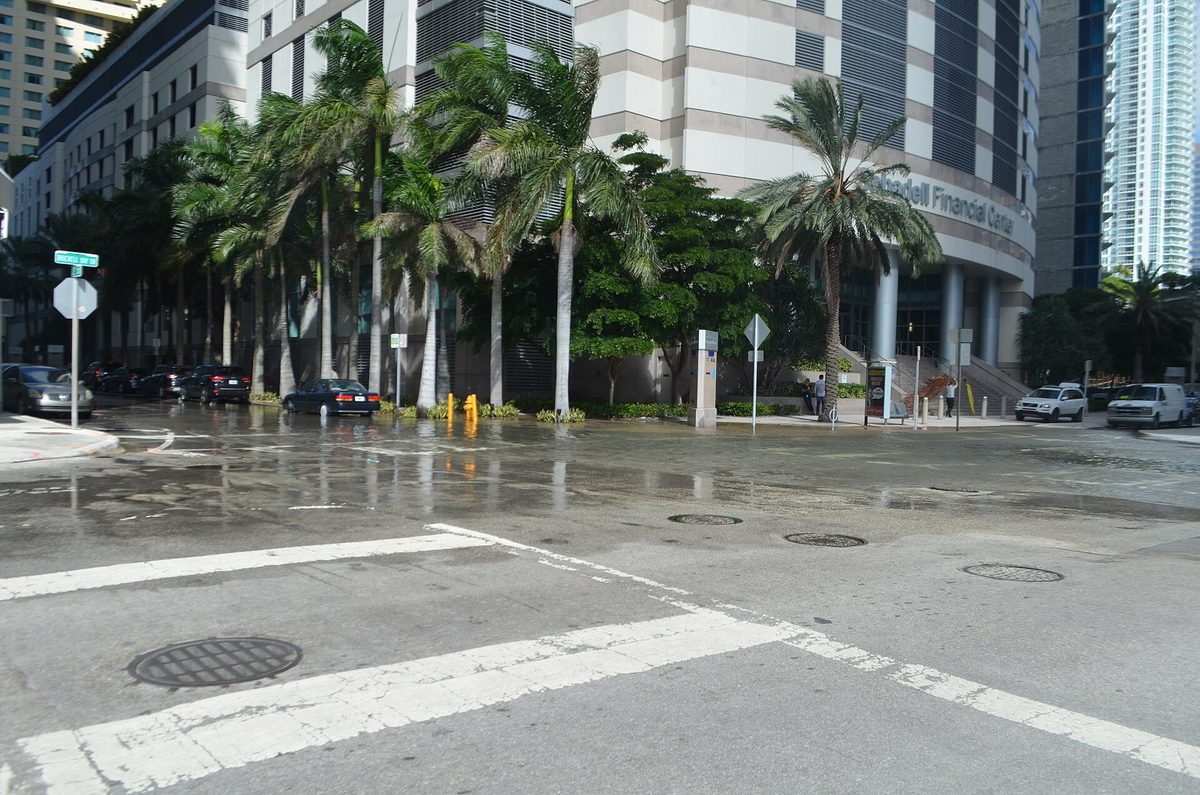
A flood zone is FEMA's hazard rating for the ground a building stands on, published on the Flood Insurance Rate Map and defined in FEMA's flood zone glossary. Here is how Miami-Dade's 6,968 condominium unit-owner policies for the 2025 policy year break down by the zone FEMA rated them in.
| Rated zone | Policies | Share | What the zone means |
|---|---|---|---|
| AE | 4,027 | 57.8% | High-risk Special Flood Hazard Area with a published base flood elevation |
| AH | 1,785 | 25.6% | High-risk area of shallow ponding, usually one to three feet deep |
| X | 912 | 13.1% | Outside the high-risk area; coverage is optional, not unavailable |
| VE | 154 | 2.2% | Coastal high-hazard area exposed to wave action |
| AHB | 83 | 1.2% | Shallow-ponding area carried on an older map revision |
| A and B | 7 | 0.1% | Legacy ratings with no detailed study or a moderate-risk designation |
Two numbers matter here. First, more than 83 percent of Miami-Dade condo unit policies sit in a high-risk A zone, so a lender will usually require coverage. Second, 912 policies sit in zone X, where coverage is optional, which means a meaningful number of owners buy it anyway. Zone is a property-level fact, so never assume it from the neighborhood: two towers on the same street in Brickell can carry different ratings.
What a Miami Condo Unit Owner Actually Pays
Flood insurance for a condo unit is far cheaper than buyers expect, because the unit owner is not insuring the tower. Across all 6,968 Miami-Dade condominium unit-owner policies effective in calendar 2025, FEMA records the following. Premium is the risk charge; policy cost adds the federal policy fee, the HFIAA surcharge and the reserve fund assessment.
| Measure | Median | Mean |
|---|---|---|
| Annual premium | $360 | $532 |
| Total annual policy cost | $597 | $782 |
| Building coverage carried | $140,000 | not comparable |
| Contents coverage carried | $43,000 | not comparable |
The mean sits well above the median in both rows, which tells you the spread is driven by a minority of units carrying much more coverage. One figure in that file is the hinge of this entire guide: 1,934 of the 5,770 Miami-Dade condo unit policies that carry building coverage sit at exactly $250,000, and not one sits above it. That is the federal ceiling, and it is why the carrying-cost math in my true cost of owning a Miami luxury condo breakdown treats flood as an association line, not an owner line.
Why the Federal Program Stops at Your Tower's Front Door
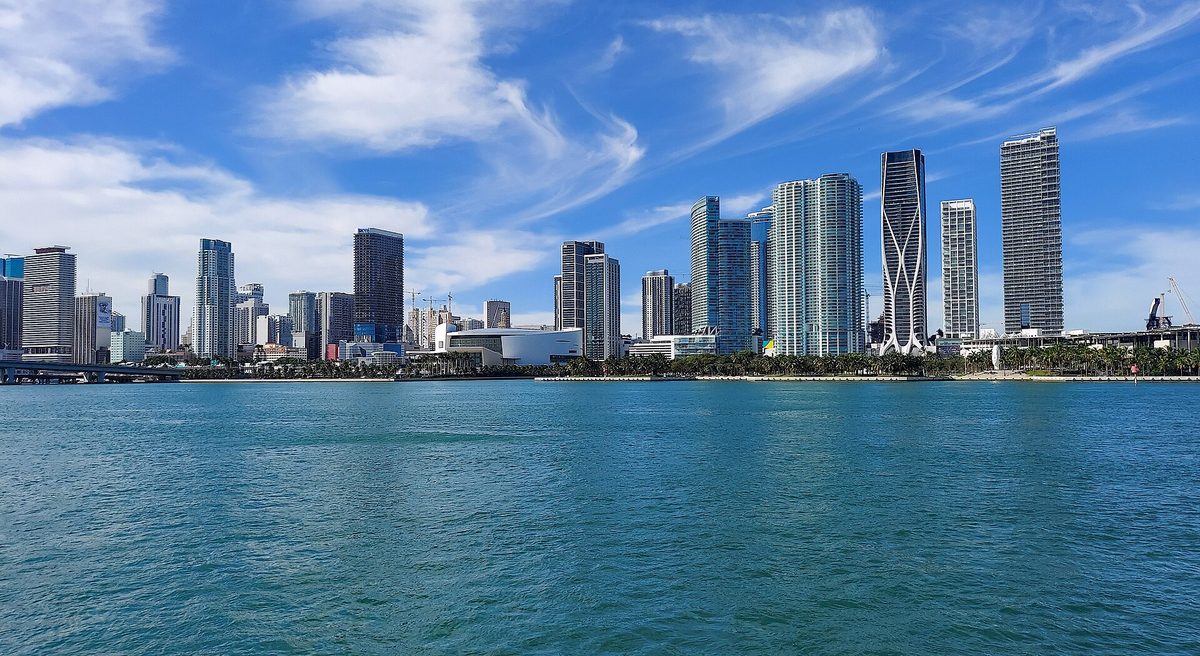
The National Flood Insurance Program was built for houses, and its residential building limit is $250,000. For a condominium association the program offers a Residential Condominium Building Association Policy, but the building limit is still $250,000 multiplied by the number of units, which falls far below replacement cost for a modern Miami tower. So associations buy private flood coverage instead, usually bundled into the master property policy, and the federal file never sees it. FEMA's own flood insurance program pages and its Risk Rating 2.0 methodology describe the program; the policy file shows who actually uses it.
What that leaves a high-rise unit owner with is a short, specific list:
- The structure is the association's problem. Its master policy, private or federal, covers the building and the common areas.
- Your interior and contents are yours. A unit-owner flood policy covers what is inside your walls, and the median Miami-Dade owner carries $43,000 of contents coverage.
- Loss assessment is the real exposure. If the association's flood loss exceeds its coverage, the shortfall comes back to owners as an assessment, exactly the mechanism described in my SB 4-D and special assessments guide.
- Your lender decides whether it is optional. In a high-risk A or V zone, a federally backed mortgage requires flood coverage on the collateral.
What Miami-Dade Flood Claims Actually Cost
FEMA recorded 3,267 Miami-Dade flood claims with a date of loss from January 1, 2020 onward. 2,272 of them were paid, for a total of roughly $137.6 million, at a median payment of $24,986. The year-of-loss split is lopsided: 1,526 claims in 2020, 864 in 2024, 349 in 2022 and 332 in 2023. Source: the FEMA NFIP Redacted Claims dataset.
Split by who filed, the gap between a unit owner and a building is the number worth remembering:
- Condominium unit owners: 149 claims, 84 paid, median payment $6,878.
- Low-rise condominium associations: 244 claims, 136 paid, median payment $118,181.
- High-rise condominium associations: 16 claims, 10 paid, median payment $365,877.
A unit claim is a carpet-and-drywall event. A building claim is a six-figure event, and in a Miami tower that loss lands on a private policy and then, if it runs past the limit, on the owners. That is the same chain that drives the fee trend in my Miami condo HOA fee benchmarks.
How to Check a Building Before You Close
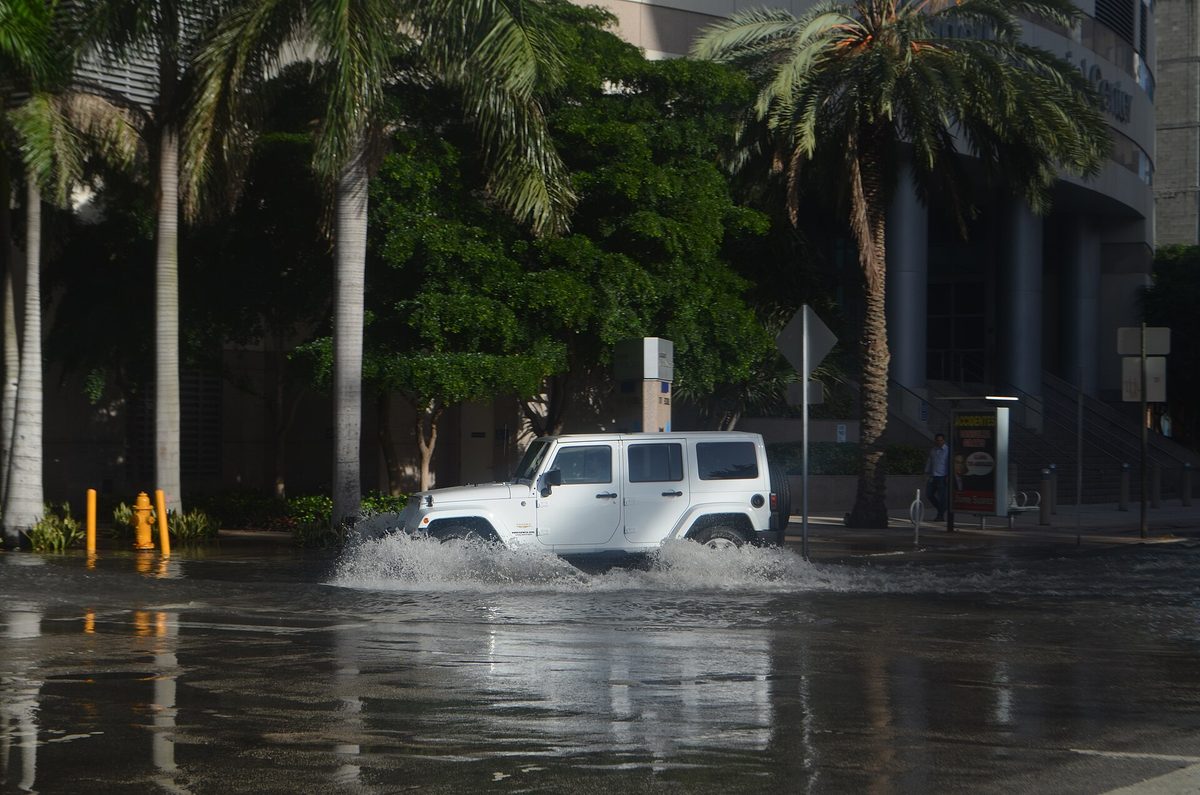
This takes about an hour and it belongs inside your inspection period, not after it. Run it in this order.
- Pull the zone and base flood elevation. Search the building address on FEMA's flood map resources and write down the zone letter and the elevation.
- Ask the association for the flood declarations page. You want the carrier, the limit, the deductible and whether the policy is federal or private. If it is private, ask for the limit against the building's insured value.
- Ask for the elevation certificate. A building with its lowest floor well above base flood elevation prices and claims very differently.
- Read the loss history. Ask the board, in writing, for every flood or water claim in the last ten years and how each was funded.
- Check the reserve and inspection file at the same time. Waterproofing, the garage and the ground floor are where flood exposure and structural exposure meet, which is why I pair this with the milestone inspection record.
- Price your own policy before you remove the financing contingency. At a Miami-Dade median of $597 a year all-in, it is rarely the deal-breaker, and knowing the number beats guessing at it.
What I Tell Buyers About Flood Risk in Miami
My advice on flood is that the zone letter is the least useful thing on the page. Almost every waterfront building I work in is in a high-risk A zone, so the letter sorts nothing. What sorts buildings is the association's private flood limit against replacement cost, the deductible, and the elevation of the lowest occupied floor. When a buyer asks me whether a building is "in a flood zone," I answer with the declarations page, because the zone tells you the hazard and the declarations page tells you who pays. I would rather own a unit in an AE-zone tower with a fully insured structure and a documented elevation than a zone X building with a thin master policy and a board that has never priced the gap.
The second thing I say is about the number that is missing. Because the federal program insures no Florida high-rise, nothing in a public file tells you how well your tower is covered. You have to ask. That is why I treat the flood declarations page as a standard document request on every waterfront contract, the same way I treat the budget and the reserve study in my step-by-step buying process. On Fisher Island and the barrier islands I ask for it before I write the offer.
"Buyers ask me if a building is in a flood zone. That is the wrong question in Miami, because almost every waterfront tower is. The question is what the association's flood limit is against replacement cost, what the deductible is, and how high the lowest occupied floor sits. The zone tells you the hazard. The declarations page tells you who pays."Gerardo Gonzalez, Licensed Real Estate Agent at Compass
Frequently Asked Questions

Ready to Work with Gerardo?
Book a 30-minute call. I pull the flood zone, the elevation certificate and the association's flood declarations page on any building you are weighing, and tell you where the real exposure sits. No pitch, just analysis.
Book a ConsultationPrefer to talk? Call me at (305) 964-8614 or WhatsApp.