Brickell luxury condos trade near $937 per square foot against 1,178 active listings; the Design District has two for-sale projects and one resale ever, at $3,328. In Brickell I price a unit off comps; in the Design District I am pricing off two sales offices. If you need a resale exit inside five years, that comp gap should decide it.

Most price-per-square-foot comparisons in Miami put two mature markets side by side. This one does not, and that is the whole point. Brickell is a built-out financial district with roughly 1,178 active condo listings, a 92-day median time on market, and a price ladder that runs from about $751 per square foot on the broad market up past $3,000 in the branded tier. The Miami Design District, four miles north, has 275 for-sale condo units in total, spread across exactly two unbuilt projects, and recorded the first condo listing in its history in July 2026. Comparing them on price alone misses the real difference: in Brickell the market tells you what a unit is worth, and in the Design District a sales office does. This page lays out both sets of numbers, then explains what the missing comp set actually costs a buyer. For a broader frame, see our Miami pre-construction buyer guide and the Q1 2026 market report.
The Verdict: A Price Ladder vs a Price Discovery
These two markets are not two versions of the same purchase. Brickell is a price ladder. You can buy in at roughly $751 per square foot on the broad market, at about $937 in the luxury tier, near $1,650 in pre-construction, or above $2,500 in a branded tower, and at every one of those rungs there are closed sales underneath you telling an appraiser and a future buyer what the unit is worth. The Miami Design District is a price discovery. It has 275 for-sale condo units in existence, both projects unbuilt, entry pricing that implies roughly $1,762 per square foot at Kempinski, and one resale listing in the neighborhood's entire history, a $9.985 million asking price that works out near $3,328 per square foot, per PROFILEmiami. Nothing has closed. So the honest comparison is not which neighborhood is more expensive, it is which kind of risk you are being paid to take. Brickell asks you to accept competition and supply. The Design District asks you to accept that no one knows the exit price yet.
My position on this is straightforward, and it is the same advice I give whether a client walks in with $2 million or $10 million: the Design District is a legitimate buy for someone with a long horizon and a specific reason to want that address, and it is the wrong buy for anyone who needs to know what the unit resells for. That is not a knock on the product. It is a statement about what a market with zero closed comps can and cannot promise you.
| Metric | Brickell | Miami Design District | Source |
|---|---|---|---|
| Broad market price per sq ft | ~$751 (median list) | No resale market exists | realtor.com June 2026 |
| Luxury tier price per sq ft | ~$937 | ~$1,762 implied (Kempinski entry) | Miami Realtors / developer |
| Pre-construction average per sq ft | ~$1,650 | ~$1,995 implied (Fouquet's entry) | Developer pricing |
| Top of market per sq ft | $2,500-$3,000+ (branded) | ~$3,328 (only listing ever) | PROFILEmiami |
| Entry price, cheapest new unit | ~$1.1M (Cipriani, Baccarat) | $1.8M (Fouquet's) | Developer pricing |
| Closed resale comps available | Thousands, decades deep | Zero | MLS / public record |
Price Per Square Foot: What Each Market Actually Charges
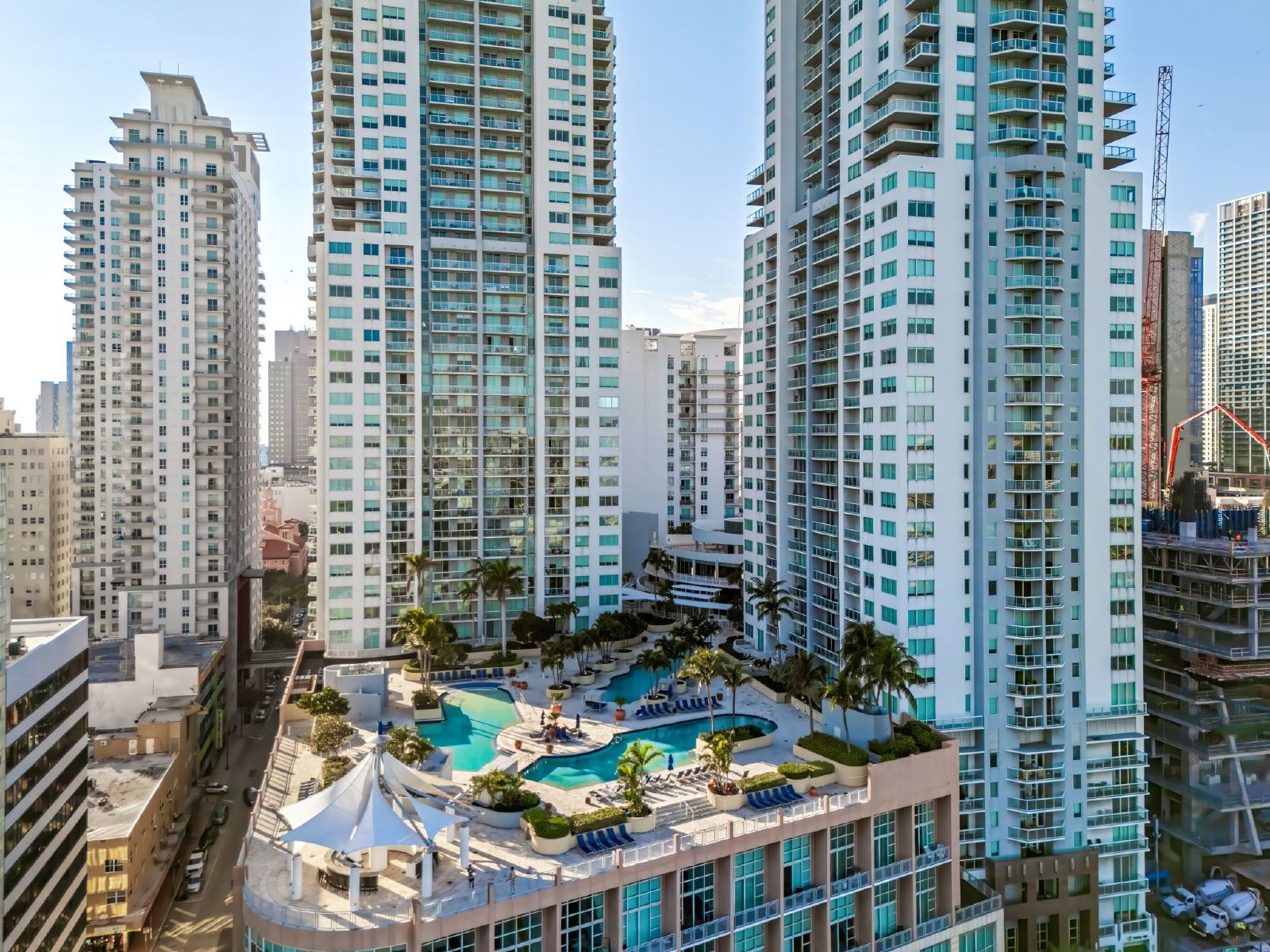
Start with Brickell, because it is the one with real numbers. The broad Brickell condo market showed a median list price near $740,000 at about $751 per square foot, a median sold price of $612,500, and a 92-day median time on market in June 2026, per realtor.com data. Step up into the luxury tier and the figure moves to roughly $937 per square foot. Pre-construction across the neighborhood averages closer to $1,650, and the branded ceiling, the St. Regis, Cipriani and Baccarat tier, runs $2,500 to $3,000 or more. That is a spread of about four times from the bottom rung to the top, inside one neighborhood, all of it evidenced by closed sales.
The Design District has no equivalent stack, so every number is derived from a developer price list rather than a transaction. Kempinski Residences opens at $3.7 million for a two-bedroom of roughly 2,100 square feet, which implies about $1,762 per square foot. Miami Design Residences by Fouquet's opens at $1.8 million against a smallest floor plan near 902 square feet, implying roughly $1,995. And the district's single resale listing, the $9.985 million four-bedroom at Fouquet's spanning close to 3,000 square feet, asks about $3,328. Note what that means: the Design District's cheapest implied price per square foot still lands above Brickell's pre-construction average, and its entry price of $1.8 million is higher than the $1.1 million entry at Cipriani or Baccarat Brickell. There is no value tier here, by design.
Supply: 1,178 Brickell Listings vs 275 Design District Units
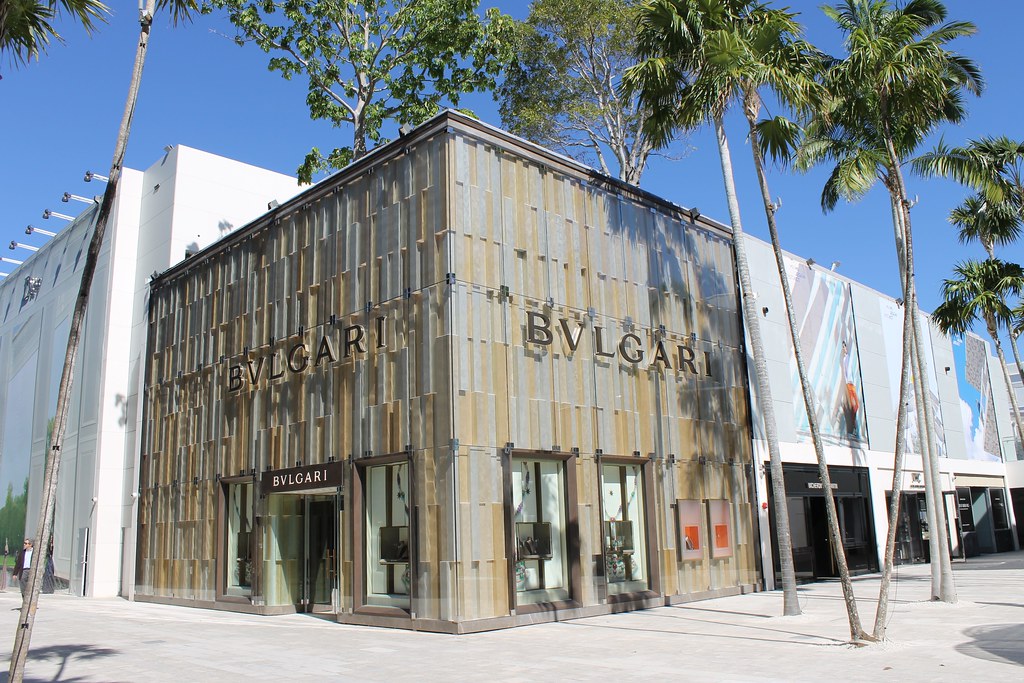
The supply gap is the mechanism behind every price difference above. Brickell is a market where you compete with other buyers to get in and with other sellers to get out. The Design District is a market where 275 units, total, will ever carry the address in this cycle. Here is the entire for-sale universe on each side.
- Miami Design Residences by Fouquet's: 143 residences in a 25-story tower at 39 NE 39th Street connected to an 85-key Fouquet's hotel, the first residential development in the Design District and the only Florida project by 2023 Pritzker laureate David Chipperfield, with interiors by Paris studio RDAI. One to four bedrooms, roughly 902 to 4,728 square feet, from $1.8 million, delivery targeted 2030, per The Real Deal and Florida YIMBY.
- Kempinski Residences Miami Design District: 132 residences across two 20-story towers at 3801 and 3883 Biscayne Boulevard by DaGrosa Capital Development Partners, Kempinski Group's first branded residences in the United States, architecture by Arquitectonica with Rockwell Group interiors. Two to four bedrooms, roughly 2,100 to 3,687 square feet, from $3.7 million, delivery targeted Q4 2029.
- That is the entire for-sale district: 275 units, two addresses, both unbuilt. There is no third project, no resale inventory, and no closed sale to reference. A buyer choosing the Design District is not choosing among options, they are choosing between two sales offices.
- Brickell's depth is the opposite problem: roughly 1,178 active condo listings in June 2026 and a branded pre-construction bench that includes St. Regis Residences from $1.5 million (est. 2027), Cipriani Residences from $1.8 million (Summer 2027), Baccarat Residences Brickell from $1.8 million (est. early 2028), and 619 Brickell, Nobu Residences from $3 million (est. 2031). You will never struggle to find a comparable unit; you will struggle to stand out when you sell.
- The trade in one line: Brickell gives you liquidity and competition. The Design District gives you scarcity and uncertainty. Both are real, and they cost different things.
| Development | Area | Units | Entry Price | Delivery |
|---|---|---|---|---|
| Miami Design Residences by Fouquet's | Design District | 143 | From $1.8M | 2030 target |
| Kempinski Residences | Design District | 132 | From $3.7M | Q4 2029 target |
| St. Regis Residences Miami | Brickell | Branded high-rise | From $1.5M | 2027 est. |
| Cipriani Residences Miami | Brickell | Branded high-rise | From $1.8M | Summer 2027 |
| Baccarat Residences Brickell | Brickell | Branded high-rise | From $1.1M | 2028 est. |
| 619 Brickell, Nobu Residences | Brickell | Branded high-rise | From $3M | 2031 est. |
| Brickell existing resale | Brickell | ~1,178 active listings | ~$612,500 median sold | Available now |
The Comp Problem: Why a Design District Appraisal Is Harder
This is the part of the comparison that rarely makes it into a pricing article, and it is the part that actually costs buyers money. Appraisals, lender underwriting, and your eventual resale all run on the same fuel: comparable closed sales. An appraiser valuing a Brickell unit can pull dozens of closings in the same building, often on the same line and within a few floors, and produce a number a lender will lend against without argument. An appraiser valuing a Design District condo has nothing in the neighborhood to pull, because nothing has ever closed there. They have to reach into adjacent submarkets, which means the valuation is anchored to Edgewater, Midtown, or Wynwood pricing rather than to the premium the Design District sales offices are asking.
Two practical consequences follow. First, appraisal-gap risk at closing is real: if the appraisal lands below the contract price, the buyer covers the difference in cash or renegotiates, and in a district with no comps that gap is harder to predict in advance. Second, the resale exit is genuinely harder to price for the first wave of owners, because the person selling unit number four in the building is establishing the comp set rather than relying on it. The first several closings in each tower will define the market for everyone who follows.
None of this makes the Design District a bad purchase. It makes it a purchase with a different shape of risk than the sales presentation suggests. The buyers I have seen do well in situations like this are the ones who go in expecting to hold through delivery and several years past it, and who are not counting on a financeable appraisal to make the math work.
Who Should Buy Where
The decision is not about taste. It is about your time horizon and whether you need the market to agree with your price. Here is how I sort buyers between the two.
- Choose Brickell if you need liquidity or financing certainty: roughly 1,178 active listings and a 92-day median time on market mean an appraiser can value your unit, a lender will lend against it, and a buyer exists when you want out. This is the default answer for anyone with a horizon under five years.
- Choose Brickell if the unit needs to earn: much of the Brickell stock allows 30-day-minimum leasing, and the professional tenant base supports real rental income. Neither Design District project delivers before Q4 2029, so there is no income at all for at least three years.
- Choose the Design District if the address is the point: a Chipperfield tower with RDAI interiors above a Fouquet's hotel, or Kempinski's first US branded residences a block from Cartier and Hermes, are genuinely unrepeatable products. If that specific combination is what you want, Brickell does not offer a substitute at any price.
- Choose the Design District only if you can hold long: through a 2029 or 2030 delivery and several years past it, while the first closings establish the comp set. A buyer who might need to sell in 2031 is taking a risk the pricing does not compensate.
- Foreign and out-of-state buyers: both draw international capital, and Miami-Dade remains a top destination for it. Build the ownership structure before signing either contract. See the LLC structuring for foreign buyers guide.
For the Brickell side, see the Brickell luxury condos guide and the Brickell pre-construction guide. For the Design District side, see the Miami Design Residences by Fouquet's and Kempinski Residences building pages.
Carrying Costs and the 2029-2030 Delivery Gap
Carrying costs are where the two purchases stop resembling each other entirely, because one of them has no carrying costs yet. Buy a Brickell resale and you inherit a real operating budget, a real reserve study, and a real HOA figure you can read before you write the offer. Brickell luxury stock generally runs $1.40 to $3.50 per square foot monthly depending on the building and amenity load. Add Miami-Dade property tax near 2 percent of assessed value plus condo insurance, and you can model the true annual cost to the dollar on day one.
Buy in the Design District and you are funding a deposit ladder for three to four years against a projected HOA that has never been tested by an actual operating year. New branded condos in Miami generally budget roughly $1.00 to $1.75 per square foot monthly at delivery, and hotel-connected buildings sit at the top of that range because the service model is the product: a Fouquet's-run residence is paying for Fouquet's-level staffing. Neither project delivers before Q4 2029. That is the real cost nobody puts on the price sheet, three to four years of capital committed with no occupancy, no income, and no ability to inspect what you bought.
On the flip side, both Design District projects are new construction, which means neither carries the Florida SB 4-D Milestone Inspection and Structural Integrity Reserve Study catch-up risk that sits under older buildings. That is a genuine advantage over an aging Brickell tower, and it is the strongest structural argument for the pre-construction side of this comparison. Brickell resale buyers need to do that homework themselves: I pull the reserve study, milestone inspection report, and operating budget before any client writes a resale offer. For the full pre-purchase check, see the SB 4-D special assessments guide and the true cost of owning a Miami luxury condo.
How They Stack Up Against the Wider Miami Market
Placing both against their neighbors shows how unusual the Design District really is. Every other luxury submarket in Miami-Dade has a resale layer. The Design District is the only one on this list where the condo market begins in 2029.
| Submarket | Character | Luxury Pricing | Resale Market | Best For |
|---|---|---|---|---|
| Brickell | Urban financial district | ~$937 PSF luxury, ~$751 broad | Deep, ~1,178 listings | Liquidity, financing, rental income |
| Miami Design District | Luxury retail and gallery | ~$1,762-$3,328 PSF implied | None, first delivery 2029 | Architecture, long-hold, the address |
| Edgewater | Bayfront urban | Rising branded | Established and growing | Newer bayfront towers, walkable |
| Coconut Grove | Low-rise waterfront village | Premium, limited supply | Established, tightly held | Families, greenery, boating |
| Bal Harbour | Direct oceanfront | ~$1,036 PSF (condo) | Blue-chip, liquid | The Shops, scarce land |
For deeper apples-to-apples comparisons on new branded inventory, see the Cipriani vs St. Regis Brickell comparison, the Brickell vs Sunny Isles Beach comparison, and the Edgewater vs Coconut Grove comparison.
Investment Outlook: Absorption Risk vs Discovery Risk
Both markets carry risk. They just carry different ones, and buyers routinely price only the risk they can see. Brickell's risk is absorption. It is a deep market with a steady pipeline of new towers, roughly 1,178 active listings, and a 92-day median time on market, against a Miami-Dade backdrop where existing condo inventory ran about 12.3 months of supply in mid-2026 per Miami Realtors, which is a buyer's market by any standard definition. Appreciation in Brickell depends on demand absorbing that supply, not on scarcity. The upside is that you can always transact; the downside is that you are one of many sellers when you do.
The Design District's risk is discovery. Supply is genuinely scarce, 275 units in a district that will not build many more, and the product is unrepeatable. But scarcity only converts into price when a market proves what buyers will pay, and that proof does not exist yet. The first wave of closings in 2029 and 2030 will either validate the current $1,762 to $3,328 per square foot range or reset it. A buyer today is underwriting a thesis, not a track record. That can work out very well, and it is not the same thing as a safe purchase.
My honest read: Brickell is the better risk-adjusted buy for most people, and the Design District is the better buy for a specific person who knows exactly why they want it. If a client cannot articulate why the Design District specifically, rather than a branded Brickell tower at a lower entry with a financeable appraisal, then the answer is Brickell. That is not a preference, it is what the comp data supports.
How I Underwrite the Two
The work is genuinely different on each side, so I do not run the same process twice. For a Brickell resale I pull the comp set by building, floor and line, because two units in the same tower can be very different investments, then I read the reserve study, the milestone inspection report, and the operating budget before a client writes anything. For Design District pre-construction there is no comp set to pull, so the diligence shifts entirely onto the developer: the financial package, the escrow agent, the surety bond, and the deposit schedule line by line, plus a hard look at delivery track record given a 2029 or 2030 target. On both sides I run a base case, an appreciation case, and a downside case, and on the Design District the downside case includes the appraisal landing short.
The question I ask every client considering the Design District is the one that decides it: what is your realistic holding period? If the answer is under seven years, I will usually steer toward a branded Brickell tower instead, because you get most of the design and service quality with an exit the market can actually price. If the answer is fifteen years or forever, the calculus changes and the Design District becomes defensible.
"In Brickell the market tells me what a unit is worth. In the Design District a sales office does, and those are not the same thing. That gap is not a reason to avoid the Design District, it is the reason your holding period has to be long enough that you never need a comp to defend your price."Gerardo Gonzalez, Licensed Real Estate Agent at Compass
Want a private shortlist across both Brickell and the Design District matched to your budget, timing, and holding period? Reach out for a 30-minute consultation. I will send you the top opportunities with full developer due diligence and a side-by-side comparison within 48 hours.
Frequently Asked Questions
Is Brickell or the Miami Design District more expensive per square foot?
The Design District is more expensive, and it has no cheap tier at all. Brickell luxury condos trade near $937 per square foot, with the wider Brickell market closer to $751 per square foot on list price and pre-construction averaging about $1,650. The Design District's only two for-sale projects start at $3.7 million for a roughly 2,100-square-foot Kempinski residence, an implied $1,762 per square foot, and its first and only resale listing asked $9.985 million for close to 3,000 square feet, about $3,328 per square foot. Brickell spans a ladder from roughly $750 to $3,000 per square foot; the Design District starts near the top of that ladder.
How many condos are for sale in the Miami Design District?
275 units, total, across exactly two projects, and neither is built yet. Miami Design Residences by Fouquet's carries 143 residences in a 25-story David Chipperfield tower at 39 NE 39th Street, from $1.8 million, targeting 2030. Kempinski Residences Miami Design District carries 132 residences across two 20-story towers at 3801 and 3883 Biscayne Boulevard, from $3.7 million, targeting Q4 2029. For comparison, Brickell had roughly 1,178 active condo listings in June 2026. The Design District is not a small market, it is a market that does not have a resale layer yet.
Does the Miami Design District have a condo resale market?
No. The first condo listing in the neighborhood's history hit the market in July 2026, a $9.985 million residence at Miami Design Residences by Fouquet's, and it was reported as the district's first-ever condo listing. There is no resale comp set, no absorption history, and no track record of what a Design District condo actually resells for. That is the central difference from Brickell, where roughly 1,178 active listings and a 92-day median time on market give an appraiser and a buyer real comparables to price against.
Why does the missing comp set matter when buying in the Design District?
Because appraisals, lender underwriting, and your resale exit all run on comparable sales. In Brickell an appraiser can pull dozens of closed sales in the same tower and on the same line. In the Design District there are no closed condo sales to pull, so value is anchored to the developer's price list and to nearby neighborhoods rather than to the district itself. That raises appraisal-gap risk at closing and makes a short-horizon resale genuinely harder to price. It does not make the purchase wrong, it makes the holding period the decision.
What are the two Design District condo projects and what do they cost?
Miami Design Residences by Fouquet's: 143 residences in a 25-story tower connected to an 85-key Fouquet's hotel at 39 NE 39th Street, architecture by 2023 Pritzker laureate David Chipperfield with RDAI interiors, one to four bedrooms from roughly 902 to 4,728 square feet, priced from $1.8 million, delivery targeted 2030. Kempinski Residences Miami Design District: 132 residences across two 20-story towers at 3801 and 3883 Biscayne Boulevard by DaGrosa Capital Development Partners, Kempinski's first branded residences in the United States, two to four bedrooms from roughly 2,100 to 3,687 square feet, priced from $3.7 million for a two-bedroom, $4.5 million for a three-bedroom and $5 million for a four-bedroom, delivery targeted Q4 2029.
Who should buy in Brickell versus the Miami Design District?
Buy Brickell if you need liquidity, a financeable appraisal, rental income, or occupancy sooner than 2029. Roughly 1,178 active listings, a 92-day median time on market, and a deep branded tier from St. Regis, Cipriani and Baccarat mean you can price a unit, finance it, rent it, and sell it. Buy the Design District if you want a specific architectural and retail address, can hold through a 2029 or 2030 delivery, and are not depending on a resale comp to justify the price. In practice that is a design-driven second-home or long-hold buyer, not an investor underwriting yield.
What are the carrying costs and delivery risk on Design District pre-construction?
Both Design District projects deliver in 2029 or 2030, so a buyer signing in 2026 is funding a deposit ladder for three to four years before a single night in the residence and before any HOA figure is tested against reality. New branded condos in Miami generally budget roughly $1.00 to $1.75 per square foot monthly at delivery, and hotel-connected buildings sit at the top of that range because the service model is the product. Add Miami-Dade property tax near 2 percent of assessed value plus condo insurance. Brickell resale, by contrast, gives you a real operating budget and a real reserve study to read before you offer, which is the entire advantage of buying into an existing building.
Brickell vs Miami Design District: Expert Q&A
About the author: Gerardo Gonzalez is a licensed real estate agent at Compass, specializing in South Florida luxury and pre-construction real estate. Luxury Dade Group at Compass. (305) 964-8614 | [email protected]
Related guides: Brickell luxury condos | Brickell pre-construction | Waterfront Brickell condos | Miami Design Residences by Fouquet's | Kempinski Residences Design District | SB 4-D special assessments guide | LLC structuring for foreign buyers | Q1 2026 Miami pre-construction report
Brickell or the Design District? Let's Decide Together
Book a 30-minute call. I walk you through the Brickell comp set for any building you are considering, the developer due diligence on Fouquet's and Kempinski, and a side-by-side scenario built around your actual holding period. No pitch, just numbers.
Book a ConsultationPrefer to talk? Call me at (305) 964-8614 or WhatsApp.