Miami-Dade condo median prices fell 2.35 percent year over year to $415,000 in May 2026 while existing-condo supply hit 12.9 months, per MIAMI REALTORS. That resale softness is exactly why pre-construction still works here, but only when the developer can actually finish the building. Underwrite the sponsor before the floor plan, and never commit deposits you cannot leave parked for three years.

Clients ask me this exact question every week, usually after reading a launch brochure that only shows the upside. The short version is that Miami pre-construction is neither a sure thing nor a trap in 2026: it is a leveraged bet on one specific developer finishing one specific building on time, into a resale market that is currently softer than the sales center implies. Below is the whole picture, including the parts that argue against buying. If the verdict lands in your favor, my ranked best Miami pre-construction condos for 2026 shows the towers I would actually put money into, and my pre-construction versus resale data analysis runs the head-to-head math on the alternative.
The 2026 Verdict, Stated Plainly
Pre-construction in Miami is a good investment in 2026 for a buyer with a long hold, staged capital, and the discipline to underwrite the developer. It is a bad investment for everyone else, and the gap between those two groups is wider this year than it was in 2024. The reason is that the two halves of the Miami condo market have separated. Existing condos are in a buyer's market at 12.9 months of supply, with the median price down 2.35 percent year over year to $415,000 in May 2026 per MIAMI REALTORS. New construction is not competing in that pool, because it is not delivered yet, but it eventually has to close into it.
So the honest framing is not "is pre-construction good" but "is this specific tower, at this specific price, from this specific sponsor, still worth it when it delivers into a softer resale floor." That question has a different answer building by building. My map of new construction in Miami-Dade sets out the major towers neighborhood by neighborhood with a verified status on each, which is where I start that comparison.
What Actually Changed in Miami This Year
Four things moved in 2026, and all four matter to a pre-construction decision. None of them show up in a sales center presentation.
| What changed | The number | Why it matters to a pre-construction buyer |
|---|---|---|
| Existing condo prices softened | Median down 2.35 percent year over year to $415,000, May 2026 | Your exit at delivery is priced off resale, not off the launch sheet |
| Condo supply is a buyer market | 12.9 months of existing-condo inventory | You will have competition when you resell, even from your own building |
| Luxury demand held up | $1M and up sales rose 14.7 percent year over year in May 2026 | The top of the market, where most pre-construction sits, is the healthy half |
| Condo lending tightened | Fannie Mae and Freddie Mac ended the limited review option for many condo loans on August 3, 2026 | Buyers of older resale stock lose financing options, which pushes them toward new product |
The financing point deserves emphasis, because it is the strongest structural argument for new construction right now. Only 21 of 2,397 South Florida condo buildings are approved for FHA loans, roughly 0.9 percent, per HUD figures cited by MIAMI REALTORS. A brand-new, fully compliant building that closes clean is one of the few places a financed buyer can go without a milestone-inspection surprise. My guide to the Florida condo milestone inspection law explains what that surprise costs on the resale side.
Where the Return Actually Comes From
Pre-construction has three real return sources and two that get oversold. Buyers lose money when they underwrite the oversold ones.
- Real: the contract-to-delivery window. You lock a price today and pay the balance in two to four years. If Miami keeps appreciating, that spread is yours. Miami-Dade condo prices have risen 265 percent since 2011, from $113,800 to $415,000, per MIAMI REALTORS.
- Real: avoided assessment risk. A post-2023-code building carries near-zero structural assessment exposure in its first decades. That is worth real money against a 1980s tower facing an SB 4-D bill, which my SB 4-D special assessments guide quantifies.
- Real: currency and global positioning. Miami still buys 58 square meters of prime property per $1M against 34 in New York and 33 in London, per the Knight Frank 2026 Wealth Report. For an offshore buyer that relative value is the trade.
- Oversold: the assignment flip. Most Miami towers restrict assignment for the first 18 to 24 months and charge a fee when they allow it. My assignment fees guide walks the actual cost.
- Oversold: rental yield. There is no yield until delivery. You are carrying dead capital for the whole build, which is the single most common thing buyers forget to price.
The thing I tell buyers about return math is to run it after the carry, not before. A 20 percent paper gain over three years on capital that earned nothing while it sat in escrow is a very different number than 20 percent on capital you deployed the day you closed. The 30-year fixed mortgage was 6.44 percent in May 2026 per Freddie Mac, which tells you what safe money costs right now, and that is the bar your deposit has to clear.
The Deposit Math Nobody Shows You Up Front
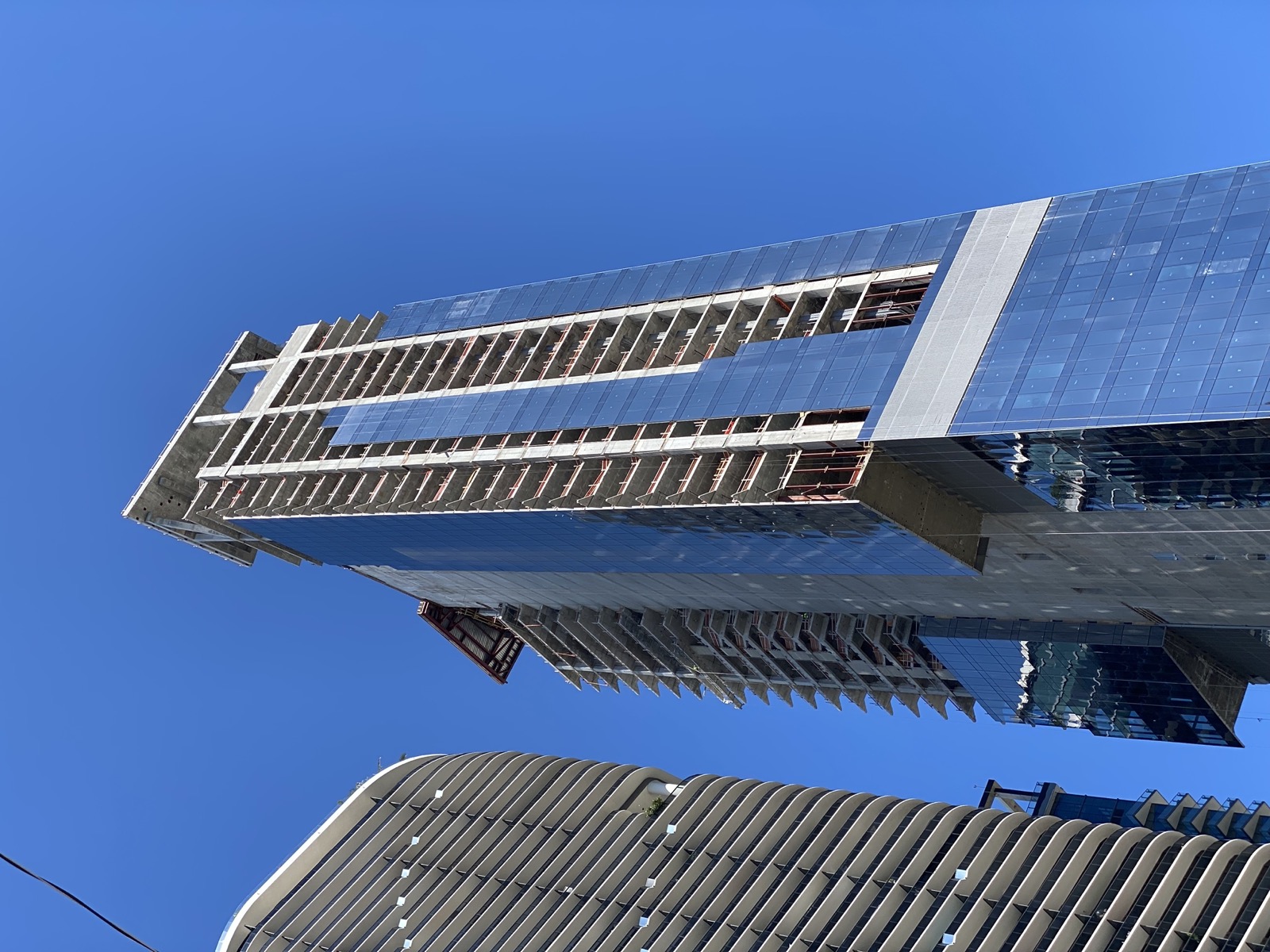
This is where most of the disappointment lives. A Miami branded tower typically stages 30 to 50 percent of the purchase price across four or five construction milestones, with the balance due at closing. Here is what that looks like on a real contract size.
| Milestone | $2M contract, 40 percent staged | When |
|---|---|---|
| Reservation and contract | $200,000 | Signing, refundable only during the Florida rescission period |
| Groundbreaking | $200,000 | Typically 6 to 12 months in |
| Structural top-off | $200,000 | Typically 18 to 30 months in |
| Pre-delivery milestone | $200,000 | Typically 30 to 42 months in |
| Closing balance | $1,200,000 | At certificate of occupancy |
That is $800,000 committed and illiquid before you own anything. If your liquidity picture changes and you cannot fund a milestone, you are in default, and the developer keeps what you paid. My guide on what happens when you default on a Miami pre-construction deposit covers the mechanics, and the 2026 deposit schedule report shows how the structures compare across towers.
"I will not let a client sign a pre-construction contract they can only fund if everything else in their life goes right. The deposit schedule has to survive a bad year, because over a four-year build most people get one."Gerardo Gonzalez, Licensed Real Estate Agent at Compass
The Risk That Decided 2026: The Sponsor, Not the Market
Every downside conversation about pre-construction defaults to "what if prices fall." That is not what has actually hurt Miami buyers this cycle. What hurt them is developers who could not finish. The Real Deal reported in August 2026 on a portfolio of Miami projects tied to one high-profile developer showing signs of distress, including construction that stalled when financing fell through, with a rescue deal being the thing that would preserve buyers' deposits.
The mirror image is also true and just as instructive. The Real Deal reported in June 2026 that Florida developers paid off a combined $115 million in construction loans on Miami condo towers that were nearly sold out. Same market, same year, opposite outcomes. The variable was the sponsor.
My advice on this is the single most useful thing in this guide: underwrite the developer before you ever look at the floor plan. Ask what they have delivered in South Florida in the last ten years, who is providing the construction financing and whether it has actually closed, and how much of the building is already under contract. A developer who will not answer those three questions in writing has told you the answer. My developer due diligence guide is the checklist I run.
The Supply Question Cuts Both Ways
Southeast Florida ranked first in the United States for multifamily construction as of Q4 2025, with 36,290 units under way, roughly 9 percent added to existing stock, per MIAMI REALTORS research. Buyers read that headline two ways and both are partly right.
The bearish read: more supply pressures rents and pressures resale pricing at exactly the moment your tower delivers. That is real, and it is the main reason I will not underwrite a pre-construction purchase on a two-year flip.
The bullish read: most of that 36,290 is rental multifamily, not for-sale luxury condo, and the two compete for construction labor and materials rather than for buyers. Heavy construction activity also means cost pressure, which is precisely the environment where a thinly capitalized sponsor slips a schedule. So the supply number is less a price signal than a sponsor-stress signal, and that is how I read it. The supply and absorption series I read that from sits in our South Florida housing market data report.
Nationally the backdrop is calm rather than distressed: existing-home sales rose 3.2 percent year over year and the median existing-home price hit $429,300, the 35th straight month of annual gains, per NAR. Miami is not fighting a national downturn. It is digesting its own delivery cycle. The current pipeline is tracked on our South Florida development watch.
Who It Works For, and Who It Does Not
Pre-construction is a good investment for you if:
- Your hold horizon is five years or longer, measured from delivery, not from signing
- You can fund every milestone from capital you have already set aside, without selling something else
- You are buying a floor and line with a real view, not the cheapest interior unit in the building
- You want post-2023 structural compliance and a clean financing path
- The developer has delivered comparable South Florida product in the last decade
It is a bad investment for you if:
- You need liquidity inside three years
- You are counting on rental income to carry the position
- Your plan is to assign the contract before closing
- You are buying the launch discount rather than the specific unit
- You cannot get a straight answer about the construction loan
How I Underwrite a Project Before a Client Signs
I run the same five checks on every tower, in this order, and I stop at the first failure rather than talking myself past it.
- Sponsor. Delivered South Florida projects in the last ten years, and any litigation or foreclosure history.
- Capital stack. Is the construction loan closed, and who is the lender.
- Absorption. Percentage under contract, and whether the developer will show it.
- The unit itself. Floor, line, exposure, and what the same stack resells for in the nearest comparable building.
- Your own math. Deposit schedule stress-tested against a bad personal year, plus the full carry to delivery, which my true cost of owning a Miami luxury condo guide breaks out.
If you want that run on a specific building, book a 30-minute call and I will pull the sponsor history, the absorption picture, and the resale comps for the exact line you are considering. If you are still narrowing neighborhoods, the Brickell pre-construction guide and the Edgewater pre-construction guide are the two deepest markets to start with.
Last verified August 2026 against MIAMI REALTORS May 2026 Miami-Dade statistics, MIAMI REALTORS Q4 2025 multifamily construction research, and The Real Deal reporting from June and August 2026.
Frequently Asked Questions
Is Miami pre-construction a good investment in 2026?
Selectively. It works when the sponsor is capitalized and the unit is a floor and line people actually want. It does not work as a blanket bet: Miami-Dade existing-condo supply sat at 12.9 months in May 2026, a buyer's market, and the condo median fell 2.35 percent year over year to $415,000 according to MIAMI REALTORS. New product competes against a soft resale floor at delivery.
How much money do I have to put down before closing?
Most Miami branded towers stage 30 to 50 percent of the purchase price across four or five construction milestones, with the balance at closing. On a $2M contract that is $600,000 to $1M committed, non-refundable after rescission, sitting in escrow for two to four years and earning you nothing.
What is the single biggest risk right now?
The developer, not the market. The Real Deal reported in August 2026 on Miami projects tied to one high-profile developer showing signs of distress, including stalled construction and financing that fell through. A stalled tower freezes your deposit and your timeline at the same time.
Can I lose my deposit?
Yes. Florida escrow rules protect deposits in specific circumstances, but they do not protect you from a project that stalls for years, from a delivery that misses your own liquidity window, or from your own inability to fund a later milestone. Read the escrow and default clauses with a Florida real estate attorney before you sign.
Does the delivery wave hurt or help pre-construction buyers?
Both. Southeast Florida ranked first in the United States for multifamily construction with 36,290 units under way as of Q4 2025 per MIAMI REALTORS research, roughly 9 percent added to existing stock. More supply pressures rents and resale, and it also means construction cost and labor competition, which is exactly when weak sponsors slip.
Is financing a problem for Miami condos in 2026?
For resale, badly. Only 21 of 2,397 South Florida condo buildings are approved for FHA loans, about 0.9 percent, according to HUD figures cited by MIAMI REALTORS, and Fannie Mae and Freddie Mac eliminated the limited review option for many condo loans starting August 3, 2026. New construction that closes clean is partly insulated from that.
Who should not buy pre-construction this year?
Anyone who needs the money back inside three years, anyone who needs rental income from day one, and anyone whose whole thesis is flipping the contract before closing. Assignment is restricted at most towers and the resale exit at delivery is currently a buyer's market.
Frequently Asked Questions

Ready to Work with Gerardo?
Book a 30-minute call. I walk you through specific buildings, units, and numbers relevant to your situation. No pitch, just analysis.
Book a ConsultationPrefer to talk? Call me at (305) 964-8614 or WhatsApp.