Miami preconstruction condos use a staged deposit ladder in 2026: roughly 10 percent at contract signing, 10 percent at groundbreaking, and 10 percent at top-off, with roughly 30 percent of price committed before closing, per Haute Living's Haute Residence. Gerardo Gonzalez has walked buyers through dozens of these contracts, and the part that surprises people is not the down payment, it is that deposits above the first 10 percent fund the building itself under Florida Statute 718.202. Read the offering circular and confirm which dollars are escrow-protected before you wire anything.

Buying a Miami preconstruction condo is nothing like buying a resale unit. There is no single down payment at a closing table. Instead you commit a series of staged deposits over the two to four years it takes to build the tower, and by the time you get the keys you have usually placed roughly 30 percent of the purchase price, Haute Residence reports. The schedule is written into the purchase agreement, and it is one of the most negotiated and least understood parts of the whole transaction.
This is also where buyers lose money fastest if they do not read carefully. Deposits above the first 10 percent can be spent by the developer to build the project under Florida Statute 718.202, so that money is not sitting safely in escrow waiting for you. Default after the rescission window and the developer can keep everything you have paid as liquidated damages. The breakdown below is the exact deposit map I walk through with every off-plan buyer before they sign, so the staircase holds no surprises.
- The Standard 10/10/10 Deposit Ladder Explained
- Deposit Milestones: Contract, Groundbreaking, Top-Off, Closing
- Escrow Protection Under Florida Statute 718.202
- Luxury vs Standard Towers: How the Schedule Changes
- Foreign Buyers, Wires, and Financing the Closing Balance
- Default, Rescission, and What Happens to Your Deposit
- What You Can and Cannot Negotiate on a Deposit Schedule
- Gerardo's Deposit Playbook by Buyer Type
- Frequently Asked Questions
Deposit structure is only half the decision. The other half is whether the purchase makes sense at all, which I work through in is Miami pre-construction a good investment in 2026.
The Standard 10/10/10 Deposit Ladder Explained
The most common Miami preconstruction deposit schedule is a staged ladder, not a single down payment. A typical structure runs 10 percent at contract signing, 10 percent at groundbreaking, and 10 percent at the structural top-off, with the remaining balance of roughly 70 percent paid at closing when the unit delivers, according to Haute Living's Haute Residence monthly read on South Florida pre-construction. The exact percentages and trigger dates vary by tower, but the staircase shape is consistent across the market.
Why does Miami work this way when a resale buyer puts down 5 to 20 percent at one closing table? Because the developer is financing a building that does not exist yet. Pre-sale deposits replace, or at least reduce, the bank construction loan. The staged model is the same on every preconstruction contract I put in front of a buyer: a 10 to 20 percent contract deposit to reserve the unit, then additional deposits tied to construction milestones. Your money and the building rise together.
The practical effect is that your capital is committed years before you own anything. On a $2 million unit with a 40 percent total deposit, that is $800,000 wired out over the construction period, often two to four years, before a single closing document is signed. That long commitment is the central fact every off-plan buyer has to plan around, and it is why I tell clients to map the full deposit calendar against their own liquidity before they fall in love with a floorplan.
The biggest misunderstanding I fix is the idea that a preconstruction deposit is like a down payment. It is not. It is staged capital that helps build the tower, and most of it is at work long before you get keys. Treat the deposit schedule as the real contract.
Gerardo Gonzalez, Licensed Real Estate Agent at Compass
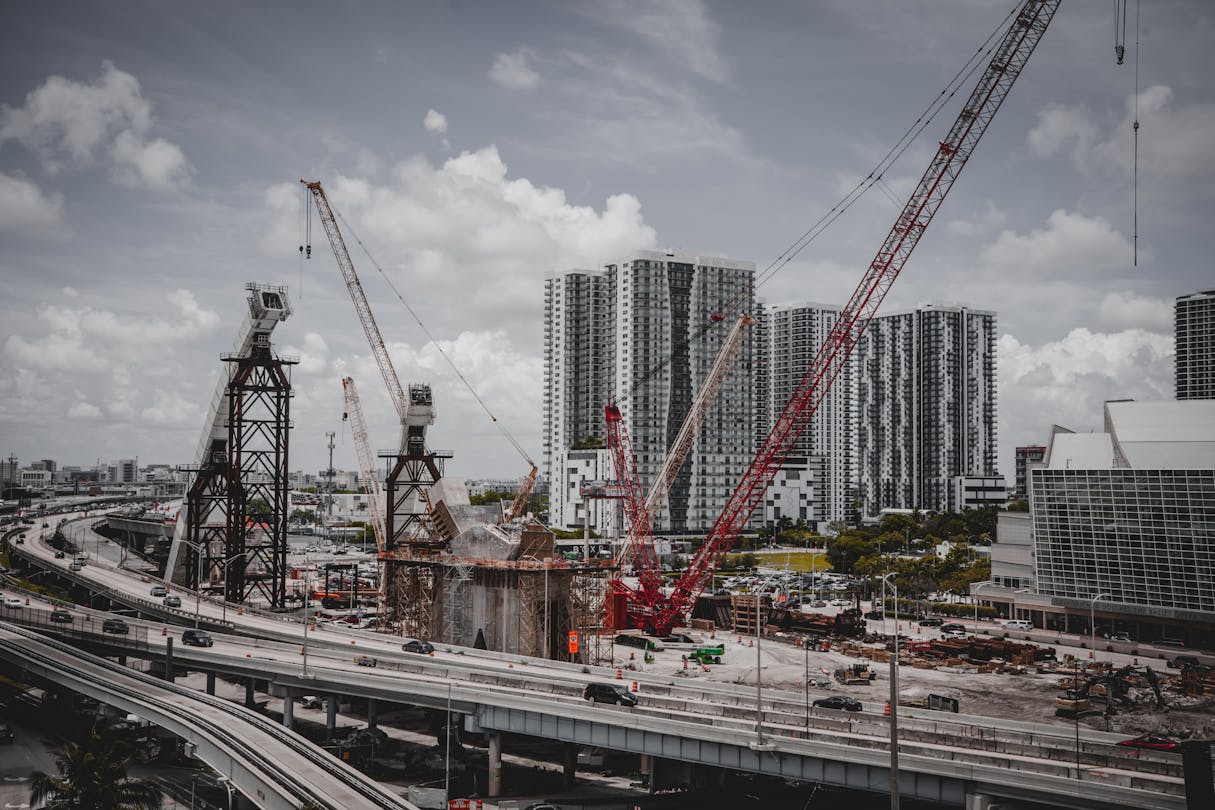
Deposit Milestones: Contract, Groundbreaking, Top-Off, Closing
Each deposit in a Miami preconstruction contract is tied to a specific milestone, not a calendar date you pick. The reservation deposit comes first, often a refundable 5 to 10 percent placed when you sign a reservation agreement, before the binding purchase contract. When the purchase agreement is executed, that converts into the first hard contract deposit, typically 10 percent under the current convention Haute Residence describes.
From there the deposits track construction. A groundbreaking deposit, commonly another 10 percent, comes due when the site moves from planning into active construction, per the same Haute Residence read. A top-off or structural-completion deposit, often a third 10 percent, is triggered when the building reaches its full height. The final and largest payment, the balance of roughly 70 percent, is wired at closing once the certificate of occupancy is issued and your unit is ready.
Here is the milestone map I hand buyers so they can see the whole staircase at once. Treat the percentages as the common case, not a guarantee, because every developer writes its own schedule into the purchase agreement.
| Milestone | Typical Deposit | Running Total | What Triggers It |
|---|---|---|---|
| Reservation | 5-10% (often refundable) | 5-10% | Sign reservation agreement |
| Contract signing | 10% | 10% | Execute binding purchase contract |
| Groundbreaking | 10% | 20% | Site enters active construction |
| Top-off | 10% | 30% | Building reaches full height |
| Closing | ~70% balance | 100% | Certificate of occupancy issued |
Escrow Protection Under Florida Statute 718.202
This is the part most buyers skip and later regret. Under Florida Statute 718.202, a condominium developer must hold the first 10 percent of your deposits in escrow. Deposits above that first 10 percent can be released to the developer and used to fund actual construction, provided the developer meets the statute's disclosure and, in some cases, surety-bond or alternative-assurance requirements. So when you wire your groundbreaking and top-off deposits, that money is generally not sitting in a protected escrow account, it is buying concrete and steel.
That distinction is the single most important thing to verify before you sign. The offering circular and purchase agreement spell out exactly which deposits stay in escrow and which the developer is permitted to spend. A well-capitalized developer with a real construction loan and a track record of delivered towers is a very different risk than a thinly financed sponsor relying almost entirely on buyer deposits. I read the escrow and use-of-deposit language on every preconstruction contract before a client wires a dollar.
| Deposit Layer | Typical Size | Escrow Status Under FS 718.202 | Buyer Risk Level |
|---|---|---|---|
| First 10 percent | 10% of price | Must be held in escrow | Lowest |
| Deposits above 10 percent | 20-40% of price | May be released to fund construction | Tied to developer strength |
| Reservation deposit | 5-10% (pre-contract) | Usually refundable until contract | Low (refundable window) |
| Closing balance | 50-70% of price | Paid at delivery, not escrowed long | Standard closing risk |
Practical takeaway: the strength of the developer matters more in preconstruction than in any resale deal, because your deposits above 10 percent are effectively an unsecured advance into the project. Stick to sponsors with completed Miami towers, confirmed construction financing, and clear escrow language. The deposit schedule is only as safe as the company holding it.
Luxury vs Standard Towers: How the Schedule Changes
Not every Miami preconstruction tower asks for the same total deposit. Haute Residence puts the current convention at roughly 30 percent before closing, down from about 50 percent in the last cycle, and in my experience ultra-luxury branded residences in Brickell, Sunny Isles, and the beaches sit at the steeper end. The richer the building and the longer the build, the more the developer asks up front, because pre-sale deposits substitute for bank debt the sponsor would otherwise have to carry.
There is logic behind the spread. A branded residence with a Cipriani, St. Regis, or Aston Martin flag carries higher construction cost, longer timelines, and a sponsor that wants committed, hard-to-cancel buyers. A larger deposit does that work: it filters out buyers who cannot fund the full staircase and it finances the marquee finishes. Standard towers with shorter build cycles and simpler programs can clear with lighter deposits because the sponsor leans more on a traditional construction loan.
For buyers, this changes the liquidity math entirely. On a $1.2 million unit at the roughly 30 percent convention, you are committing about $360,000 over the build. On a $4 million branded unit on the 50 percent ladder of the last cycle, you are committing $2 million before closing. Same city, very different cash-flow plan. I tell clients to choose the building partly on the deposit schedule, because a steeper ladder can lock up capital you might want working elsewhere for three or four years.
Foreign Buyers, Wires, and Financing the Closing Balance
Foreign buyers drive a large share of Miami preconstruction. International buyers purchased 49 percent of South Florida new construction, preconstruction, and condo-conversion sales over the 18-month period ending mid-2025, with buyers from 73 countries, according to a Miami Association of Realtors international report. Foreign homebuyers bought $4.4 billion of South Florida residential property in 2025, up from $3.1 billion in 2024. Off-plan towers are where much of that capital lands first.
Here is the mechanic that trips up first-time off-plan buyers: deposits are paid in cash by wire, not financed. There is no building yet to mortgage during construction, so no lender will fund a deposit. You wire each staged deposit from your own funds, usually from an offshore account for international buyers. Financing only enters at the very end, for the closing balance, which is typically roughly 70 percent of the price once the unit delivers and can be appraised.
That is when a DSCR or foreign-national loan comes into play. Foreign buyers who want leverage arrange the closing-balance loan during the final construction year, not at contract. They still fund every deposit in cash along the way. Plan the foreign-exchange and transfer logistics early: moving seven figures across borders on a fixed milestone date is its own project, and a missed deposit deadline can put your contract and prior deposits at risk.
- Deposits: Always cash by wire, never financed (no asset to mortgage yet)
- Closing balance: Roughly 70 percent, financeable via DSCR or foreign-national loan
- Foreign share: 49 percent of SoFla new construction, 73 countries (Miami Realtors)
- 2025 foreign spend: $4.4B South Florida residential, up from $3.1B in 2024
- Logistics: Line up cross-border transfers well before each milestone date
Default, Rescission, and What Happens to Your Deposit
Florida gives preconstruction buyers a hard rescission right: you have 15 days after signing the purchase agreement and receiving the developer's offering documents to cancel and get every dollar back. That window is your real protection. Use it to have a Florida real estate attorney read the contract, the offering circular, and the deposit and escrow language before the clock runs out. Once those 15 days pass, the contract becomes binding and your deposits move into the staged ladder.
After the rescission window, defaulting is expensive. If you fail to make a scheduled deposit or fail to close, the developer can typically retain all deposits paid to date as liquidated damages, that is standard language in Miami preconstruction contracts. On a 40 percent ladder, walking away near closing can forfeit hundreds of thousands of dollars. This is not a resale deal where you lose a small earnest-money deposit; the staged structure puts far more capital at risk.
The two protections worth negotiating for are an assignment (or resale) clause and clarity on developer delays. An assignment clause lets you sell your contract to another buyer before closing if your circumstances change, which is the main escape valve in a tower that is still years from delivery. And the contract should spell out what happens if the developer misses its outside completion date, because long delays are common and you want a defined right to your deposit back if the building stalls.
The 15-day rescission window is the most important deadline in the whole transaction. That is when a lawyer earns their fee. After it closes, your deposits are committed, and a default can cost you everything you have paid. I never let a buyer skip the legal read.
Gerardo Gonzalez, Licensed Real Estate Agent at Compass
What You Can and Cannot Negotiate on a Deposit Schedule
Buyers assume the deposit schedule is fixed. Sometimes it is, but more often there is room, especially early in a tower's sales cycle when the developer wants commitments on the board. The percentages and the milestone count are the most negotiable elements. I have seen developers accept a lighter contract deposit, fewer milestone payments, or a stretched-out schedule for strong buyers who can show proof of funds, particularly on multiple units or larger floorplates.
What rarely moves is the total deposit required before closing and the escrow language itself, both of which are usually set by the developer's construction financing. The reservation phase is where you have the most leverage and the least risk, because reservation deposits are typically refundable until the binding contract. Use that window to negotiate the rest of the schedule, not after you are locked in.
Here is what I push on for buyers, in order of how often it actually works.
- Often negotiable: Size of the contract deposit, number of milestone payments, timing
- Sometimes negotiable: An assignment clause, incentives like closing-cost credits or design allowances
- Rarely negotiable: Total deposit before closing, escrow terms, interest accruing to developer
- Best leverage point: During the refundable reservation phase, before the binding contract
- Always worth confirming: Developer delay remedies and your right to a deposit refund if the project stalls
One more cost most buyers miss: interest. Most Miami developer contracts state that interest earned on escrowed deposits accrues to the developer, not the buyer, which Florida allows if disclosed. Over a three-year build on a 40 percent deposit, that forgone interest is real money. It is rare to win this point, but on a large contract it is worth raising.
Gerardo's Deposit Playbook by Buyer Type
How you should approach a Miami preconstruction deposit schedule depends on who you are. Below are the three buyer types I work with most often off-plan, and the deposit strategy I give each. The common thread is the same: map the full deposit calendar against your real liquidity before you sign, and never let the building's finishes distract you from the staircase of wires you are committing to.
The All-Cash Foreign Buyer
If you are funding the whole purchase in cash from offshore, your job is logistics, not financing. Build the wire calendar against the milestone schedule and pre-stage funds so a deposit deadline never catches you mid-transfer. Confirm the escrow and use-of-deposit language so you know which dollars are protected. My foreign-national buyer guide walks through the FIRPTA and entity setup to do before, not after, you sign.
The Buyer Who Will Finance at Closing
If you plan to mortgage the closing balance, remember you still wire every deposit in cash. Line up your DSCR or jumbo lender during the final construction year so the loan is ready when the certificate of occupancy lands. Preserve liquidity for the deposits along the way, and read the preconstruction buyer guide for how financing timing interacts with delivery.
The First-Time Off-Plan Buyer
If this is your first preconstruction purchase, the rescission window is everything. Hire a Florida real estate attorney to read the contract and escrow terms inside the 15-day cancellation period, negotiate an assignment clause, and stress-test the deposit calendar against a worst-case delay. Stick to developers with completed Miami towers. The Q1 2026 market report shows which sponsors are actively delivering.
The deposit schedule is the real contract in preconstruction. I have watched buyers fixate on the view and skim the deposit terms, then get surprised by a six-figure wire they forgot was coming. Map the staircase first, fall in love with the unit second.
Gerardo Gonzalez, Licensed Real Estate Agent at Compass
Related Resources
- Buyer's Guide to Miami Pre-Construction 2026
- What Happens If You Default on a Preconstruction Deposit
- Miami Pre-Construction Financing and Mortgage Guide
- Q1 2026 Miami Pre-Construction Market Report
- Foreign National Buyer Guide: FIRPTA, LLC, DSCR
- Miami Pre-Construction Closing Costs Breakdown
- How long your deposit sits: the 2026-2030 delivery calendar
Frequently Asked Questions