Miami-Dade home sales rose for a ninth straight month through May 2026, with cash at 38.7 percent of closings, per the Miami Association of Realtors. From my LuxuryDade desk in Brickell the demand is real but selective: luxury and waterfront move while older mid-tier inventory sits near 12.9 months of supply. My advice for the second half: in luxury, buy the building's reserves first, the view second.
Watch: Miami Luxury Condo Market Mid-2026

The Miami luxury condo market entered the second half of 2026 with momentum that most US metros do not have. According to the Miami Association of Realtors, total Miami-Dade home sales rose for a ninth consecutive month through May 2026, and existing condo sales were up 5.4 percent year over year in May (970 to 1,022 units). Cash represented 38.7 percent of closings, more than the roughly 25 percent national share. The luxury tier led: South Florida topped the nation in luxury home sales in March 2026, and Miami posted around $3 billion in super-prime residential sales in 2025 per Knight Frank.
Underneath the strong headline, this is a two-speed market, which is the single most important thing I tell buyers in mid-2026. Single-family supply is tight at roughly 5.4 months while condo supply sits near 12.9 months, so well-located luxury and waterfront product clears quickly while older, under-reserved mid-tier inventory sits. Prices reflect the structural re-rating, not a bubble: Miami existing condo median prices rose about 110 percent over the decade from September 2015 to September 2025, from $200,500 to $420,000. This report walks through the data I actually use with my own clients before they decide where in the luxury market to commit.
- The Mid-2026 Headline: Nine Months of Rising Sales
- The Two-Speed Market: Condos vs. Single-Family Supply
- Prices: A Decade of 110 Percent Condo Appreciation
- Cash and Financing: 38.7 Percent Pay Cash
- Foreign Buyers: 52 Percent of New Construction
- Global Value: What $1M Buys in Miami vs. the World
- Submarket Map: Where Luxury Demand Concentrates
- Outlook: Where the Luxury Market Goes Next
- Gerardo's Recommendations by Buyer Profile
- Frequently Asked Questions
The Mid-2026 Headline: Nine Consecutive Months of Rising Sales
The defining fact of the Miami market in mid-2026 is durability. Per the Miami Association of Realtors June 16, 2026 release, total Miami-Dade home sales rose for a ninth consecutive month through May, up 7.9 percent year over year. Existing condo sales specifically were up 5.4 percent in May 2026, climbing from 970 to 1,022 units, and the strength is sharpest at the top: sales of Miami properties priced at $1 million and above climbed 14.7 percent from a year earlier. That streak is unusual for any major US metro in a high-rate environment, and it is happening while active listings shrink rather than swell.
Total active listings at the end of May 2026 fell 11.9 percent year over year, from 18,879 to 16,615 units, per the same association data. Falling supply alongside rising sales is the textbook setup for price support, and that is exactly what the luxury tier is showing. South Florida led the entire nation in luxury home sales in March 2026, and the tri-county region logged 262 sales of $10 million-plus homes in the first seven months of the year, on pace for roughly 426 by year-end, close to the pandemic-era peak.
I want to be precise about what "strong" means here, because the headline can mislead a buyer. The strength is concentrated, not uniform. Luxury, waterfront, and well-run branded product is absorbing demand quickly, while older, under-reserved mid-tier condo inventory still sits on the market for months. The market is rising, but it is rising selectively, and that selectivity is the whole story for anyone shopping the luxury segment this summer.
Nine straight months of rising sales is not a vibe, it is a trend with data behind it. But from my desk the lesson is not "everything is hot," it is "the right luxury product is hot." That distinction is the difference between a good buy and a unit that sits.
Gerardo Gonzalez, Licensed Real Estate Agent at Compass
Inside the $1 Million-Plus Tier: 389 to 446 Closings
The detail underneath that 14.7 percent headline is the part I watch most closely. Miami-Dade total $1 million-and-up home sales went from 389 closings a year earlier to 446 in May 2026, and single-family homes priced over $1 million rose 26.7 percent, nearly double the pace of the luxury tier as a whole, per the Miami Association of Realtors. Single-family sales across all price points rose 10.5 percent in the same month. My read is that the sharpest pull right now is trophy single-family product, the waterfront and gated-community homes that international and relocation buyers chase, which is a different competition than the condo tier this report covers below.
The Two-Speed Market: Condo Supply vs. Single-Family Scarcity
The most useful frame for the 2026 Miami market is two-speed, and the months-of-supply numbers prove it. Single-family inventory sits at roughly 5.4 months of supply while condo inventory sits near 12.9 months, per Miami Association of Realtors data. A balanced market is generally considered six months. So Miami single-family is a seller's market while the condo market, in aggregate, leans toward buyers, even as the best condo product still moves fast.
That aggregate condo number hides enormous variation by submarket and by building quality. Coconut Grove runs among the lowest condo months-of-supply in the county while parts of downtown carry the highest. Within a single tower, a well-reserved, recently renovated line can trade in weeks while an under-reserved unit in an older building facing a Florida SB 4-D structural assessment can sit for half a year. The county's published 2025 to 2027 outlook projects condo supply tightening toward 11.6 months by the end of 2026, a gradual move back toward balance.
For a luxury buyer, the practical reading is negotiating room. The headline condo-supply figure gives you bargaining power that did not exist at the 2021 to 2022 peak, but it does not apply evenly. I use the months-of-supply figure as a starting point, then immediately drill into the specific building's reserve study, special-assessment status, and recent comparable closings before I let a client anchor on any price.
- Single-family supply: ~5.4 months (seller's market)
- Condo supply: ~12.9 months in aggregate (leans toward buyers)
- Active listings end of May 2026: 16,615, down 11.9 percent year over year
- 2026 year-end condo-supply projection: ~11.6 months (tightening)
- Coconut Grove among the tightest condo submarkets; downtown among the softest
Prices: A Decade of 110 Percent Condo Appreciation
The price story in Miami is a structural re-rating, not a short cycle. Per the Miami Association of Realtors, the Miami-Dade existing-condo median price rose roughly 110 percent over the decade, from $200,500 in September 2015 to $420,000 in September 2025. The luxury tier ran well ahead of that countywide median, with Knight Frank logging around 67 percent five-year prime appreciation in Miami in its 2026 Wealth Report.
The table below shows the approximate luxury condo price-per-square-foot ranges I work with across the leading Miami submarkets in mid-2026, drawn from active MLS and verified developer pricing. These are luxury and branded ranges, not the countywide median, and they widen with waterfront exposure, branded service, and floor height. Use them as a frame, then verify against recent closings in the specific building, which is what I do before pricing any offer.
| Submarket | Luxury Condo PSF Range | Profile | Mid-2026 Trend |
|---|---|---|---|
| Brickell Key | $2,000 - $6,300 | Branded pre-construction trophy | Rising |
| Fisher Island | $2,200 - $3,800 | Private-island trophy resale | Stable |
| Surfside / Bal Harbour | $2,400 - $5,400 | Oceanfront branded resale | Tightening |
| South of Fifth (South Beach) | $1,800 - $3,400 | Established luxury resale | Stable |
| Sunny Isles oceanfront | $1,400 - $3,800 | Branded high-rise resale | Stable |
| Brickell (branded pre-construction) | $1,400 - $3,200 | New branded towers | Rising |
| Edgewater | $1,100 - $2,200 | Bayfront mid-luxury, new supply | Tightening |
| Coconut Grove | $1,100 - $2,400 | Low-supply boutique luxury | Tightening |
Two patterns stand out in this table. First, branded and waterfront product commands a clear premium that has widened, not narrowed, over the cycle. Second, the tightening submarkets, Edgewater, Coconut Grove, Surfside, are where new luxury supply is being absorbed fastest relative to inventory. That is where I see the cleanest demand-versus-supply math for a buyer who wants both lifestyle and a defensible resale position.
Cash and Financing: 38.7 Percent Pay Cash, Far More at the Top
Cash dominance is the structural feature that separates Miami from almost every other US market. Cash represented 38.7 percent of all Miami closed sales in May 2026, per the Miami Association of Realtors, versus roughly 25 percent of US home sales nationally. That countywide figure understates the luxury tier: inside the luxury and ultra-luxury condo cohort, cash frequently runs 70 to 80 percent because the buyer pool is dominated by foreign principals and family offices who already hold the equity.
The practical effect at the negotiating table is real. Cash buyers compress closings from the standard 45-to-60-day financed timeline to two to four weeks, drop appraisal and lender contingencies, and earn negotiating room on price and on HOA-reserve assumptions with sellers facing Florida SB 4-D pressure. In a condo market carrying nearly 13 months of supply, a credible all-cash, 21-day close is one of the strongest levers a buyer has, and I have watched it move final pricing by several percent on otherwise full-ask deals.
For buyers who do finance, usually domestic relocators preserving liquidity, DSCR (debt service coverage ratio) loans and asset-backed pledged-portfolio lines are the dominant tools in the luxury tier. Federal Reserve rate posture barely moves the all-cash share, but it does affect the financed minority: a rate cut in late 2026 would unlock the slice of luxury buyers using jumbo or DSCR product. Foreign buyers structuring with US LLCs typically write 30 to 40 percent down through US-licensed lenders rather than going fully cash, to manage the FIRPTA mechanics covered later in this report.
Foreign Buyers: 52 Percent of New Construction
Foreign demand is the load-bearing wall under Miami's luxury market. Per the Miami Association of Realtors November 2025 New Construction Global Report, foreign buyers accounted for 52 percent of the 6,931 new-construction units sold, with Latin American buyers leading. That is one of the highest foreign-buyer shares of any major US market, and it explains why Miami luxury holds value through cycles that soften other metros: the demand pool is global, not regional.
The composition shifts by submarket. Brickell branded pre-construction (Cipriani, St. Regis, Waldorf, Mandarin Oriental Brickell Key) skews heavily international, led by Argentina, Brazil, Colombia, Mexico, and Venezuela, with growing share from Italy, Germany, Switzerland, and the UK. Oceanfront Surfside, Bal Harbour, and Sunny Isles draw more domestic relocators from New York, Connecticut, California, and Chicago. Edgewater and Coconut Grove sit in between, pulling a mix of regional move-up buyers and first-time international purchasers.
Cash behavior varies across the foreign cohort, and that matters when a strong unit hits the market. Argentine, Brazilian, and Venezuelan principals frequently buy near all-cash given the capital-preservation motive, so they can move on a Friday-listed unit before a financed buyer finishes paperwork. European principals more often use a US LLC plus a DSCR loan for tax reasons. Knowing which profile a competing offer fits is half of winning a contested luxury unit, and it is the kind of read that only comes from working these deals directly.
- Foreign share of new construction: 52 percent of 6,931 units (Nov 2025 report)
- Leading source regions: Latin America first, then Europe (Italy, Germany, Switzerland, UK)
- Most international submarket: Brickell branded pre-construction
- Most domestic submarket: Surfside / Bal Harbour oceanfront resale
- Cash skew: Latin American principals near all-cash; European principals more LLC-plus-loan
Global Value: What $1 Million Buys in Miami vs. the World
One number reframes the entire Miami luxury thesis for an international buyer. Per the Knight Frank 2026 Wealth Report, $1 million USD buys more prime real estate in Miami than the same sum buys in London, New York, Paris, or Tokyo. Miami also recorded roughly $3 billion in super-prime residential sales in 2025, leading those peer cities. For a buyer comparing trophy markets, Miami still delivers more waterfront and more square footage per dollar than the legacy global capitals.
That value gap is why Knight Frank named Miami a future global luxury hotspot alongside Mumbai, Brisbane, and Hong Kong. The city is no longer competing only with other US Sun Belt metros; it is competing with London and Monaco for the same international capital, and it is winning a growing share of it. The 52 percent foreign-buyer presence in new construction is the demand-side proof of that value proposition.
For foreign buyers acting on this value, the tax structure decided at purchase matters more than almost any other line item. FIRPTA (the Foreign Investment in Real Property Tax Act) does not trigger at purchase, it triggers at resale, when the buyer or escrow agent must withhold 15 percent of the gross sales price and remit it to the IRS unless a withholding certificate reduces it. On a $5 million unit that is $750,000 parked at the IRS until the seller files a US return. The thing I tell every international client is the same: engage a US tax advisor and decide your entity structure before you sign, never at closing.
Latin American Capital Flows
Latin American buyers remain the largest share of Miami's international demand, consistent with the 52 percent foreign share of new construction across Miami-Dade County reported by the Miami Association of Realtors. Colombia, Argentina, Mexico, Venezuela, and Brazil collectively drive the majority of that international volume, concentrated in Brickell, Sunny Isles, and Bal Harbour.
The drivers are familiar but persistent. Currency pressure in Argentina and Colombia pushes wealthy families to hold savings in US real estate. Political uncertainty across several Latin American countries continues to motivate capital relocation. And Miami's role as the de facto financial and cultural capital of Latin America means it captures a disproportionate share of that capital relative to any other US city.
European and Domestic-Relocator Demand
The European share of Miami luxury demand has grown meaningfully over the cycle, led by Italy, Germany, Switzerland, and the UK. These buyers more often use a US LLC plus a DSCR loan structure for tax reasons, rather than the near-all-cash pattern common among Latin American principals. They cluster in Brickell branded pre-construction and in Miami Beach established luxury.
On the domestic side, the relocation wave from New York, Connecticut, California, and Chicago continues to feed the oceanfront resale market in Surfside, Bal Harbour, and Sunny Isles. These buyers typically want a primary or strong second residence with hotel-grade service, and they make up the majority at several of the delivered branded oceanfront towers.
The FIFA World Cup Demand Window
One near-term catalyst is worth flagging for the second half of 2026. The FIFA World Cup at Hard Rock Stadium in June and July compresses a year of international buyer attention into a roughly 90-day window. Tournament-period inquiries typically convert to closings six to twelve months later, so the contracts written in summer 2026 will show up in the closing data through the first half of 2027. Buyers planning a Miami purchase should expect heightened competition for trophy inventory during and just after the tournament.
Submarket Map: Where Luxury Demand Concentrates in Mid-2026
Aggregate county numbers are a starting point, but luxury buyers live and die by submarket. The condo months-of-supply figure of roughly 12.9 months is a county average that masks a wide spread: Coconut Grove runs among the tightest while parts of downtown run among the softest. The table below maps how I read the leading luxury submarkets in mid-2026, combining inventory depth with typical time-to-contract for well-priced product.
| Submarket | Luxury Inventory Depth | Typical Days to Contract | Mid-2026 Trend |
|---|---|---|---|
| Coconut Grove | Tight | 45 - 90 | Tightening |
| Surfside / Bal Harbour | Moderate | 90 - 160 | Tightening |
| Edgewater | Moderate, new supply | 70 - 130 | Tightening |
| Fisher Island | Very tight | 150 - 280 | Stable |
| Brickell branded | Staged sponsor inventory | 120 - 200 | Stable |
| Downtown (older stock) | Soft | 150 - 300 | Slight loosening |
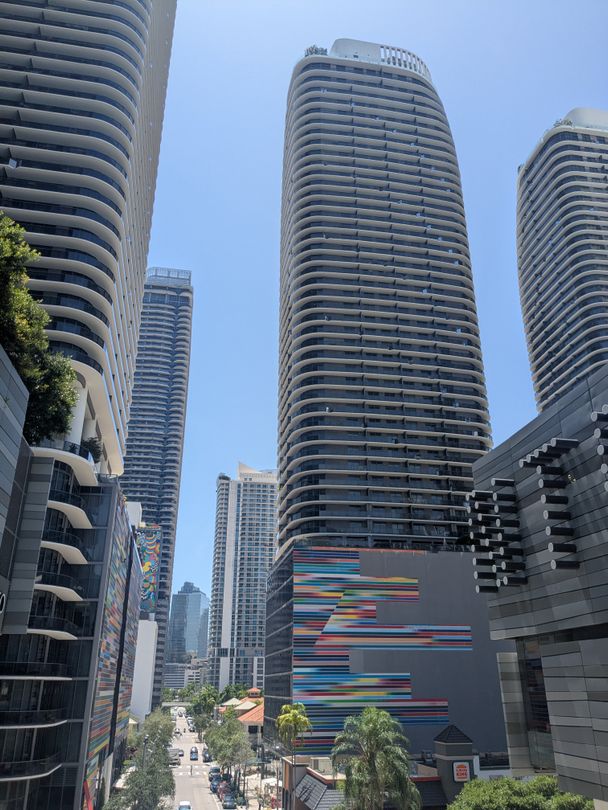
Two patterns drive these ranges. First, the trophy and tight-supply submarkets (Fisher Island, Coconut Grove) trade on a long arc with very few buyers in the queue at any moment, so when the right buyer appears the deal moves fast. Second, sponsor-controlled inventory at active pre-construction towers in Brickell is staged in tranches, so listed available units understate true depth. The lesson for a buyer is the same one I repeat in every consultation: pick the submarket that fits your life, then time the specific building, not the county average.
Outlook: Where the Miami Luxury Market Goes from Here
The data supports cautious optimism for the luxury tier through the rest of 2026. Knight Frank named Miami a future global luxury hotspot after roughly 67 percent five-year prime appreciation, and the rising-sales streak plus shrinking inventory point to continued price support. My read is that well-located branded and waterfront product should hold or appreciate modestly through year-end, while older, under-reserved mid-tier condo inventory facing Florida SB 4-D assessments will lag or soften. The two-speed split widens, it does not close.
Three forces matter most for the second half. First, the FIFA World Cup window concentrates international buyer attention into summer, with contracts converting to closings into early 2027. Second, Federal Reserve rate posture barely moves the cash-heavy luxury tier, but a late-2026 cut would unlock the financed minority and broaden mid-luxury demand. Third, Florida insurance and SB 4-D reserve pressure will keep separating well-run newer towers from older 30-plus-year buildings, a spread wide enough that two similar units in the same submarket can differ materially on price purely on the building's balance sheet.
- Branded and waterfront luxury: Hold to modest appreciation through year-end
- Edgewater / Coconut Grove mid-luxury: Tightening; supply absorbed fastest
- Older under-reserved condo stock: Lag-to-soften risk on SB 4-D overhang
- Foreign demand: Expected to stay near the 52 percent new-construction share
- Cash share: Stays elevated regardless of the Fed path
Gerardo's Recommendations by Buyer Profile at $5M+
The luxury market rewards specificity. The right move depends on whether you want a primary home, a second residence, or a pure investment, and the same buyer who is wrong in a Brickell tower can be exactly right in Coconut Grove. Below are the three buyer profiles I see most often in mid-2026, and how I steer each. For the building-by-building branded comparison, see my St. Regis vs. Cipriani vs. Waldorf comparison.
The Primary-Home Relocator (Brickell and the urban core)
If you are relocating from New York, Connecticut, California, or Chicago to make Miami your primary home, you want walkable city density plus hospitality-grade service. I steer this buyer toward branded Brickell pre-construction: Cipriani Residences Brickell, St. Regis Residences Brickell, and Waldorf Astoria Residences. Each pairs a top global brand with a financial-services neighborhood, and the branded premium tends to defend value at resale better than comparable unbranded stock.
The Second-Home Buyer (oceanfront and the bay)
For Latin American and European principals and US family offices buying a true second residence, oceanfront and bayfront luxury is the structurally correct answer. I most often place this buyer in Surfside, Bal Harbour, and Sunny Isles oceanfront product, or bayfront Edgewater for buyers who want the bay plus newer supply. These submarkets combine water exposure with the hotel-grade service second-home owners actually use. Structure your LLC and FIRPTA path before you sign, see my foreign-national buyer guide for the framework.
The Investor (yield, supply, and resale defense)
If your purchase is an investment first, the math runs through the two-speed market. I push investors toward the tightening submarkets where new supply is being absorbed fastest, Edgewater, Coconut Grove, Surfside, because thin supply defends both rent and resale. I screen every candidate building for its Florida SB 4-D reserve status and special-assessment exposure before I let a client anchor on a number, because in a market with nearly 13 months of condo supply, the building's balance sheet is the difference between a yield play and a money pit. See the new-construction condo report for the new-supply pipeline.
In Miami luxury, the worst decision is buying a beautiful unit inside a building with a balance-sheet problem. Reserves, sponsor track record, and SB 4-D status get me to yes or no faster than a view or a finish ever will.
Gerardo Gonzalez, Licensed Real Estate Agent at Compass
Related Resources
- where the market stood at the Q3 2026 close
- Miami price per square foot 2026
- how many months of supply Miami condos and houses carry
- where foreign capital comes from and what it buys in Miami
- Q1 2026 Miami Pre-Construction Market Report
- Buyer's Guide to Miami Pre-Construction 2026
- St. Regis vs. Cipriani vs. Waldorf Astoria: Miami Comparison
- Foreign National Buyer Guide: FIRPTA, LLC, DSCR
- True Cost of Owning a Miami Luxury Condo 2026
- Florida SB 4-D Condo Reserves and Capital Calls
Key Takeaways
- Miami-Dade home sales rose for a ninth consecutive month through May 2026, and existing condo sales climbed 5.4 percent year over year, from 970 to 1,022 units, per the Miami Association of Realtors.
- Cash paid for 38.7 percent of all Miami closed sales in May 2026, versus roughly 25 percent nationally, and sales of homes priced $1 million and above climbed 14.7 percent, per the same June 2026 association release.
- Condo inventory sits near 12.9 months of supply against roughly 5.4 months for single-family, and total active listings ended May 2026 down 11.9 percent year over year, from 18,879 to 16,615, per Miami Association of Realtors data.
- The Miami-Dade existing-condo median price rose roughly 110 percent in a decade, from $200,500 in September 2015 to $420,000 in September 2025, per the Miami Association of Realtors.
- Foreign buyers took 52 percent of the 6,931 new-construction units sold in the November 2025 New Construction Global Report, with Latin American buyers leading, per Miami Association of Realtors research.
Quick Facts: Miami Luxury Condo Market Mid-2026
| Consecutive months of rising sales | 9 (through May 2026) |
| Existing condo sales, May 2026 | +5.4% YoY (970 to 1,022 units) |
| $1M+ home sales, May 2026 | +14.7% YoY |
| Cash share of closed sales, May 2026 | 38.7% (vs. ~25% nationally) |
| Condo months of supply | ~12.9 (single-family ~5.4) |
| Decade condo median price gain, 2015 to 2025 | +110% ($200,500 to $420,000) |
| Foreign share of new-construction sales | 52% of 6,931 units |
Frequently Asked Questions