LuxuryDade tracks 87 South Florida pre-construction towers, and the 46 publishing a starting price begin at a median $1,575,000, about 1.9 times Miami-Dade's $832,750 conforming limit. Buyers who assume jumbo carries a rate premium are finding it gone: the Mortgage Bankers Association put the jumbo 30-year rate at 7.33 percent in October 2026, against Freddie Mac's 7.32 percent conforming average. Get the jumbo quote before you assume a conforming loan is the cheaper path.
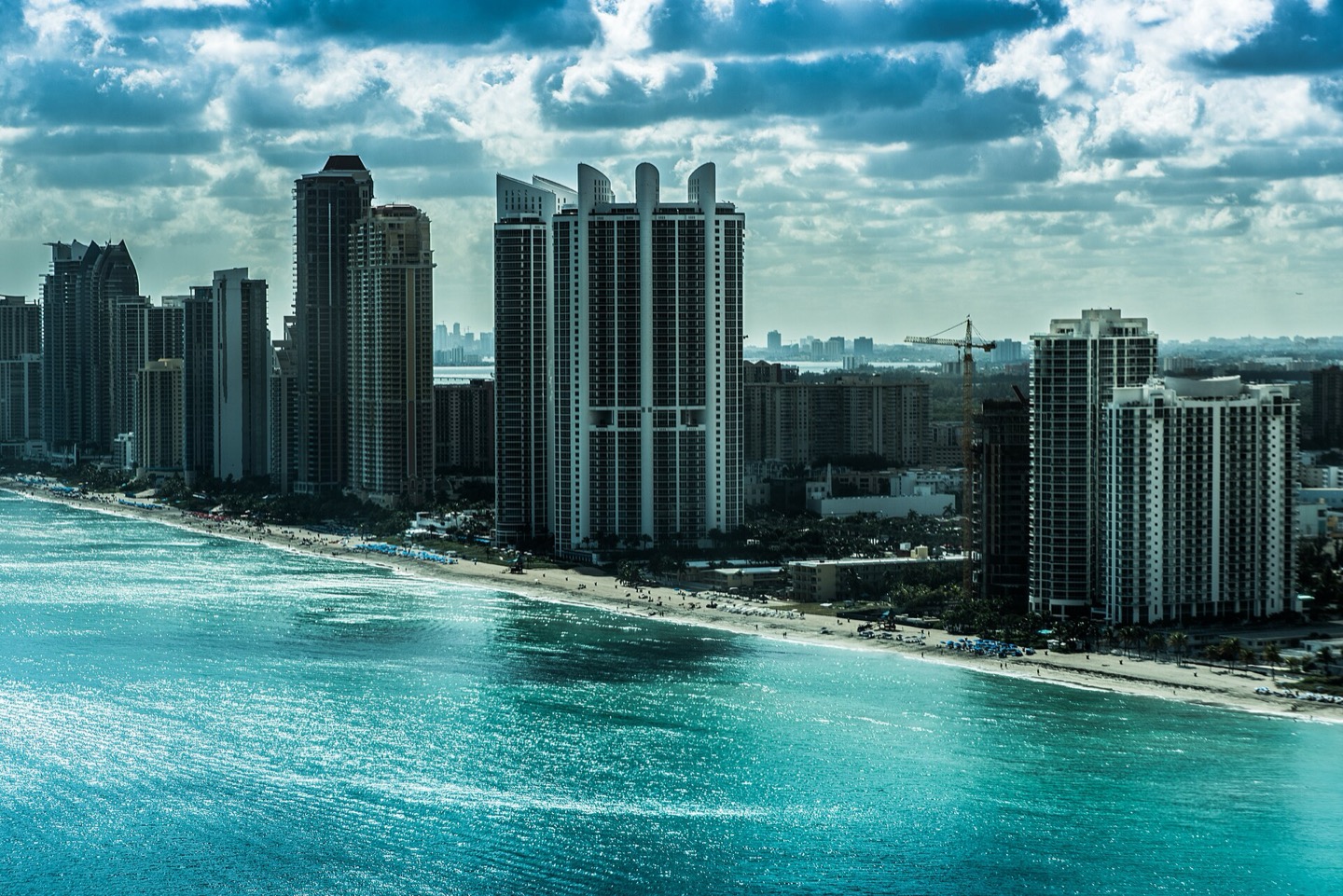
There is one number that quietly decides how a Miami condo purchase gets financed, and almost nobody quotes it: $832,750. That is the 2026 conforming loan limit for a one-unit property in Miami-Dade County, set by the Federal Housing Finance Agency. Borrow a dollar more than that on a first mortgage and the loan stops being something Fannie Mae or Freddie Mac will buy. It becomes a jumbo loan, held on a lender's own balance sheet, underwritten to that lender's own rules.
For most of the last decade that transition cost you money. Jumbo borrowers paid a premium over the conforming rate because the loan had no agency buyer behind it. In October 2026 that premium is effectively gone. This report puts the limit, the two rate series and the Miami price distribution in one place, states where each figure comes from and when it was last confirmed, and shows what the compression changes for somebody deciding how much to put down.
- The Number That Splits the Miami Market: $832,750
- Where Jumbo and Conforming Rates Sit in October 2026
- The Jumbo Premium Compressed From 19 Basis Points to 1
- What We Measured: 33 of 46 Priced Towers Start Above the Limit
- The Foreign Buyer Never Touches This Number
- Pre-Construction Makes You Shop a Rate You Cannot Lock
- Gerardo's Read: How I Use the Limit When Structuring an Offer
- Methodology, Scope and Next Refresh
- Frequently Asked Questions
The Number That Splits the Miami Market: $832,750
The FHFA sets conforming loan limits once a year and announced the 2026 values on November 25, 2025. The national baseline for a one-unit property rose to $832,750 from $806,500, an increase of $26,250, or about 3.3 percent. High-cost counties get a ceiling of 150 percent of the baseline, which works out to $1,249,125 in the contiguous states.
Miami-Dade County is not a high-cost area. It sits at the national baseline in the FHFA county loan limit file for 2026, which is the detail that matters locally. Buyers who have shopped in Los Angeles or New York arrive assuming Miami carries a high-cost limit too. It does not. The agency-backed market here stops $416,375 earlier than it does in the counties that do qualify.
| Measure | 2026 value | 2025 value | Change | Applies to Miami-Dade |
|---|---|---|---|---|
| Conforming limit, one unit (national baseline) | $832,750 | $806,500 | +$26,250 | Yes |
| High-cost area ceiling, one unit (contiguous states) | $1,249,125 | $1,209,750 | +$39,375 | No |
| Purchase price where a 20 percent down loan hits the limit | $1,040,938 | $1,008,125 | +$32,813 | Yes |
| Purchase price where a 30 percent down loan hits the limit | $1,189,643 | $1,152,143 | +$37,500 | Yes |
The bottom two rows are my arithmetic on the FHFA limit, not FHFA figures: the limit divided by the financed share. They are the version of the number a buyer actually uses, because nobody shops by loan amount. At 20 percent down, a Miami-Dade condo priced above roughly $1,040,938 puts you in jumbo territory. At 30 percent down the line moves to about $1,189,643.
Where Jumbo and Conforming Rates Sit in October 2026
Two surveys publish these rates weekly and they are not the same instrument, so the table names both. The Mortgage Bankers Association reports average contract interest rates from its Weekly Applications Survey, split by loan size, with points at 80 percent loan-to-value. Freddie Mac publishes the Primary Mortgage Market Survey every Thursday, which covers conforming loans only.
| Rate | Level | Points | As of | Source |
|---|---|---|---|---|
| 30-year jumbo, loan balance above $832,750 | 7.33% | 0.60 | Week ending October 16, 2026 | Mortgage Bankers Association |
| 30-year jumbo, prior week | 7.49% | 0.70 | Week ending October 9, 2026 | Mortgage Bankers Association |
| 30-year fixed, conforming average | 7.32% | Not reported | October 22, 2026 | Freddie Mac PMMS |
| 30-year fixed, conforming, prior week | 7.40% | Not reported | October 15, 2026 | Freddie Mac PMMS |
| 15-year fixed, conforming average | 6.68% | Not reported | October 22, 2026 | Freddie Mac PMMS |
| 30-year fixed, conforming, one year earlier | 6.19% | Not reported | October 2025 | Freddie Mac PMMS |
Two things stand out. The first is the level: at 7.32 percent conforming against 6.19 percent a year earlier, every Miami buyer financing a purchase today is paying more than a buyer who closed in October 2025, whatever loan type they use. MBA's own commentary on the October 14, 2026 release called the 30-year rate the highest since November 2023.
The second is the shape. The jumbo rate fell 16 basis points in a single week, from 7.49 to 7.33 percent, and the points charged on it fell from 0.70 to 0.60 at the same time. Rate and points moving down together is a lender competing for the loan, not a market repricing risk.
Three things are worth holding onto when reading either number:
- Jumbo loans are held, not sold. A conforming loan is priced to be bought by Fannie Mae or Freddie Mac. A jumbo loan stays with the lender, so its price reflects that lender's balance sheet and appetite rather than an agency guarantee.
- Points are part of the rate. The 7.33 percent jumbo figure carries 0.60 points at 80 percent loan-to-value, and the Freddie Mac conforming average does not report points at all, so the two headline numbers are not strictly like for like.
- Neither figure is a Miami quote. Both are national survey averages, and jumbo pricing varies more between lenders than conforming pricing does.
The Jumbo Premium Compressed From 19 Basis Points to 1
This is the finding worth carrying out of the report. Comparing the MBA jumbo contract rate against the Freddie Mac conforming average at two points twelve months apart gives a gap of 19 basis points in October 2025 and roughly 1 basis point in October 2026.
| Period | Jumbo 30-year (MBA) | Conforming 30-year (Freddie Mac) | Gap |
|---|---|---|---|
| October 2025 | 6.38% | 6.19% | Jumbo 19 bp higher |
| October 2026 | 7.33% | 7.32% | Jumbo 1 bp higher |
| Year-over-year change | +95 bp | +113 bp | Gap narrowed 18 bp |
The honest caveat has to sit directly under the table, because the comparison crosses two different surveys with different samples, different collection weeks and different definitions. MBA reports a contract rate with points stated separately; Freddie Mac reports a survey average. One basis point is well inside the noise either instrument carries. What survives the caveat is the direction and the size of the move: an 18 basis point narrowing in twelve months is far larger than the measurement gap, and it is visible on both readings.
For years I watched Miami buyers scrape together another $200,000 of down payment purely to stay under the conforming limit. On this year's numbers that work buys you about one basis point. Run both quotes before you move money, because the reason the trade-off existed has mostly gone away and almost nobody has updated the advice.
Gerardo Gonzalez, Licensed Real Estate Agent at Compass
What We Measured: 33 of 46 Priced Towers Start Above the Limit
National rate series do not tell you whether the limit binds in your market. So we measured our own coverage against it on October 28, 2026. LuxuryDade maintains 87 South Florida pre-construction and new-development building pages. Of those, 46 publish a starting price on the page; 41 do not, either because the developer has not released pricing or because sales are by appointment. The distribution below covers the 46 that do, and the share figures are shares of that 46, not of all 87.
| Band | Towers | Share of the 46 priced towers | Financing implication |
|---|---|---|---|
| Starting price at or below $832,750 | 13 | 28% | A conforming first mortgage is possible at the entry unit |
| Starting price above $832,750 | 33 | 72% | Jumbo at the entry unit, before any upgrade |
| Starting price above $1,249,125 | 27 | 59% | Above even the high-cost ceiling Miami-Dade does not receive |
| Median published starting price | $1,575,000 | 1.9x the limit | Jumbo is the default, not the exception |
The range runs from $366,685 at the bottom to $15,000,000 at the top, so the median is doing real work here. Three things follow from the table:
- Jumbo is the base case in Miami pre-construction, not an upgrade path. Nearly three quarters of priced towers are above the limit at their cheapest unit.
- Five of the 13 towers at or below the limit are in Wynwood, with the rest scattered across Aventura, Ojus, Little Havana, Coral Gables, Edgewater and Miami Beach. That is where the conforming market still functions here.
- A buyer in the $900,000 to $1,100,000 band is the one this report is actually for, because that is the range where the down payment decision flips the loan type.
The Foreign Buyer Never Touches This Number
A large share of Miami pre-construction demand comes from buyers without a United States credit file, and the conforming limit is irrelevant to them in practice. Fannie Mae and Freddie Mac underwriting assumes domestic credit history, verified United States income and a Social Security number or an equivalent. A buyer from Bogota or Sao Paulo is generally not being considered for a conforming loan at all, whatever the price.
What they get instead is a foreign-national portfolio loan or a DSCR loan qualified on the property's rental income rather than on personal tax returns. Those sit outside both rate series quoted above, typically price higher than the jumbo average and typically cap loan-to-value lower. The limit is still worth knowing, because it marks where the agency-backed market ends and where everything becomes a lender-by-lender negotiation. The foreign national buying guide covers the documentation side, and LLC structuring changes the underwriting conversation before it changes the tax one.
Pre-Construction Makes You Shop a Rate You Cannot Lock
Everything above is a snapshot, and pre-construction buyers are not transacting in the snapshot. A tower selling today may deliver in 2029 or 2030. The mortgage closes at delivery, at whatever rates exist then, which is the single most misunderstood part of buying off a floor plan.
What that means mechanically: deposits are paid in stages out of cash, with no financing contingency on them, and the loan only comes into the picture at closing. The deposit schedule report sets out the usual ladder, and the delivery calendar shows how far out each tower is. Today's $832,750 limit is also not the limit that will apply: FHFA has raised it every year recently, so the line will have moved by the time most of these towers close.
The practical consequence is that a pre-construction buyer should not be optimising for today's rate at all. They should be optimising for whether they will qualify at delivery under conditions nobody can forecast, which means the appraisal gap and the consequences of failing to close matter more than the current spread. How the process runs step by step is the right place to start if this is a first purchase.
Gerardo's Read: How I Use the Limit When Structuring an Offer
A limit is only useful once it changes a decision. Here is how I actually apply it, and the honest boundary on each. None of this is lending advice, and your lender's pricing will differ from a national survey average.
If You Are Buying Between $900,000 and $1,200,000
This is the only band where the question is live. On a $1,100,000 purchase, staying conforming means a first mortgage of $832,750 and a down payment of $267,250, which is about 24 percent. Going jumbo at 20 percent down means borrowing $880,000. The difference in monthly cost on this year's numbers is small enough that the decision should be driven by cash flexibility and by closing-cost structure rather than by rate. My instruction is to get both quotes in writing before moving any money.
If You Are Buying Above $1,300,000
The question does not exist. You are jumbo whatever you do, which means the lender relationship matters more than the rate sheet. Portfolio lenders price individually, and a borrower who brings their banking relationship to the same institution often gets terms the survey average never shows. Spend the effort there rather than on the limit.
If You Are Buying a Condo in an Older Building
Watch the project review, not the loan size. A conforming loan drags the building's finances into your approval, and in Florida that now means reserves, the milestone inspection and any open litigation. A portfolio jumbo lender may apply its own standard instead. On a 1980s oceanfront building the loan type can decide whether the deal closes at all, which is a bigger risk than one basis point. The milestone inspection guide and how to read a building's finances are where I send clients first.
Methodology, Scope and Next Refresh
What was measured. Three things. First, the 2026 conforming loan limit applying to Miami-Dade County, taken from the FHFA conforming loan limit page and its 2026 county file. Second, the average 30-year jumbo contract rate and the average 30-year conforming rate for October 2026, taken from the Mortgage Bankers Association Weekly Applications Survey and the Freddie Mac Primary Mortgage Market Survey. Third, the distribution of published starting prices across LuxuryDade's own South Florida pre-construction building pages, measured against the limit.
Scope and period. The limit is calendar-year 2026 and applies to one-unit properties in Miami-Dade County. The rate figures cover the week ending October 16, 2026 for MBA and the October 22, 2026 release for Freddie Mac, with October 2025 comparatives from the same two series. The tower distribution is a census of the 87 building pages published on luxurydade.com as of October 28, 2026, of which 46 carry a published starting price.
Stated limits. Four, and they matter. The jumbo and conforming rates come from different surveys with different samples and collection weeks, so a one basis point gap is inside the noise and only the direction of the eighteen basis point narrowing should be read as a finding. Both rate series are national averages, not Miami quotes. The tower distribution covers our own coverage, which is weighted toward luxury pre-construction and is not a sample of the Miami-Dade market as a whole. And the two derived purchase-price thresholds in the first table are our arithmetic on the FHFA limit, not published FHFA values.
Last verified and next refresh. Every figure on this page was confirmed against its primary source on October 28, 2026. FHFA announced the 2026 limits on November 25, 2025, and has announced each year's values in late November, so the 2027 Miami-Dade limit is expected in late November 2026. This page is scheduled to be re-verified when that announcement lands, and the rate rows are re-read whenever the gap between the two series moves by more than ten basis points. Figures are restated here rather than adjusted.
Related Resources
- Miami Pre-Construction Financing Guide 2026
- the Fannie Mae condo project rules that decide whether a building is financeable
- what a Miami luxury condo actually costs to hold each year
- The $5M-plus Miami ultra-luxury condo market
- Miami Months of Supply 2026: Condos vs Homes
- Miami Condo HOA Fees 2026: Averages by Type
- Miami Price Per Square Foot 2026: 11 Areas Ranked
- every South Florida pre-construction tower LuxuryDade tracks
Frequently Asked Questions