Miami has 48 completed branded residences and 55 more in the pipeline, second only to Dubai worldwide, according to the Savills Branded Residences Report 2025/26. What I tell buyers is that the brand is a service contract, not a logo, and the contracts differ enormously between towers. Read the branding agreement's term and termination clause before you sign, not after closing.

A branded residence is a condominium that carries a hotel, fashion, automotive or restaurant name under a licence agreement, usually with the operator running some part of the building. Ten years ago the category was a curiosity in South Florida. Today it is close to the default for anything selling above roughly $1,500 per square foot in Miami-Dade, and the brand names on the construction fences have stopped being only hotels.
This report is an inventory, not an opinion piece. It tracks 31 branded projects across Miami-Dade, Broward and Palm Beach with the brand family, developer, residence count, entry price and expected delivery for each, then sets that roster against the global data published by Savills and reported by The Real Deal. If you want the separate question of whether the premium is worth paying, that argument lives in our branded versus non-branded premium analysis.
- Where Miami Sits in the Global Branded Pipeline
- Which Brand Families Are Actually Building Here
- The Miami-Dade Roster: 25 Branded Projects
- The Islands and the Beaches
- Broward and Palm Beach: The Second Wave
- What the 33 Percent Brand Premium Actually Buys
- What I Check Before Recommending a Branded Unit
- Methodology and Sources
- Frequently Asked Questions
Where Miami Sits in the Global Branded Pipeline
Savills counts branded residence schemes worldwide once a year, and the 2025/26 edition put the global total at an expected 910 by the end of 2025, up from 764 in December 2024. That is 19 percent growth in twelve months. Ten years earlier the same count stood at 323, so the category has almost tripled in a decade.
Miami's share of that is larger than most residents realise. The city holds 48 completed branded projects with 55 more in the pipeline, which places it second worldwide behind Dubai and comfortably ahead of New York.
| Market | Completed Projects | In the Pipeline | Total |
|---|---|---|---|
| Dubai | 64 | 87 | 151 |
| Miami | 48 | 55 | 103 |
| New York | 32 | 4 | 36 |
| Sao Paulo | 15 | 15 | 30 |
| Cairo | 2 | 26 | 28 |
Note the shape of New York's row. Thirty-two completed projects and only four in the pipeline is a market that built its branded stock and stopped. Miami's 55-project pipeline is larger than its completed base, which means more than half of everything branded in this city has not been delivered yet. That is the single most important fact for anyone buying here in 2026: you are buying into supply, not scarcity.
Knight Frank reached a compatible conclusion from a different dataset in September 2025, finding that United States markets account for 32.7 percent of active branded residences globally but only 26.2 percent of pipeline projects, while the Middle East holds 15.9 percent of active schemes and 26.7 percent of the pipeline. The Americas is the mature market. The growth is moving east.
The question I get about branded towers is always resale, and my honest answer is that the brand protects you most in a soft market and helps you least at the top of one. In a market with 55 branded projects still to deliver, the name on the door is not the scarce thing. The service standard behind it is.
Gerardo Gonzalez, Licensed Real Estate Agent at Compass
Which Brand Families Are Actually Building Here
Marriott is the largest branded residence operator on earth with more than 300 projects, followed by Accor, Hilton Hotels and Resorts, Banyan Group and Hyatt Hotels and Resorts, per Savills. South Florida reads like a map of that ranking. Marriott alone accounts for the St. Regis at two addresses, EDITION in Edgewater and the Ritz-Carlton name now attached to a North Bay Village site, while Hilton's Waldorf Astoria holds the tallest branded tower in the city.
The more interesting shift is on the other side of the ledger. Savills counted 39 new hotel brands and 19 new non-hotel brands entering the sector in 2025 alone, and Miami has been the landing strip for a striking share of the non-hotel names: two car manufacturers, a fashion house, a crystal maker, a restaurant group and a music act.
| Brand Category | South Florida Names | Projects Tracked | What the Brand Actually Delivers |
|---|---|---|---|
| Hotel operators | Waldorf Astoria, St. Regis, Mandarin Oriental, Four Seasons, EDITION, Rosewood, Kempinski, Anantara, Banyan Tree, Viceroy, Delano, Auberge | 15 | Full hotel service, staffed front desk, operator-run amenities |
| Fashion and luxury goods | Dolce and Gabbana, Baccarat, Bentley, Pagani, Mercedes-Benz | 5 | Interior design authorship, signature features, no hotel staff |
| Food and hospitality names | Cipriani, Mr. C, Nobu, Jean-Georges, Major Food Group, Fouquet's | 7 | Restaurant, in-residence dining and catering programme |
| Lifestyle and wellness | The Standard, THE WELL, E11EVEN, Palm Tree Crew, Faena | 5 | Programming, member culture, rental-friendly rules |
Those four categories are not interchangeable, and this is where most buyer confusion starts. A hotel-operator building sells you a staffing contract. A fashion-house building sells you an interior and a badge. Both are called branded residences and both charge a premium, but only one of them has a daily operating obligation attached to it.
The Miami-Dade Roster: 25 Branded Projects
This is the working list. Twenty-five branded projects inside Miami-Dade County, with the brand family, the developer, the submarket, the residence count, the published entry price and the expected delivery for each. Every figure here is the number published on that project's own page on this site, each of which carries its own sourcing to the developer, Florida YIMBY, PROFILEmiami or The Real Deal. Where a developer has not published a delivery date or an entry price, the cell says so rather than guessing.
Two things stand out once the roster is in one place. The entry prices span from $560,000 to $5.95 million, a range wide enough that "branded residence" tells you almost nothing about the price band. And the delivery dates cluster hard in 2027 and 2028, which is when this pipeline stops being renderings and starts being closings.
| Project | Brand | Submarket | Residences | From | Delivery |
|---|---|---|---|---|---|
| Waldorf Astoria Residences | Waldorf Astoria (Hilton) | Downtown | 387 | $1M at 2021 launch | Q2 2028 |
| St. Regis Residences Brickell | St. Regis (Marriott) | South Brickell | 152 | $2.8M at 2022 launch | Q4 2027 |
| St. Regis Residences Sunny Isles | St. Regis (Marriott) | Sunny Isles Beach | 320 | $5,000,000 | 2028 to 2029 |
| Mandarin Oriental Residences | Mandarin Oriental | Brickell Key | 298 across two towers | $3,900,000 | 2030 |
| Baccarat Residences | Baccarat | Brickell | 324 | $1,800,000 | Early 2028 |
| Cipriani Residences | Cipriani | Brickell | 397 | $1,800,000 | Summer 2027 |
| Bentley Residences | Bentley | Sunny Isles Beach | 216 | $5,800,000 | 2028 |
| Dolce and Gabbana at 888 Brickell | Dolce and Gabbana | Brickell | 259 | $3,675,000 | Not published |
| Mercedes-Benz Places | Mercedes-Benz | Brickell | 791 | $750,000 | 2028, delayed from 2027 |
| EDITION Residences | EDITION (Marriott) | Edgewater | 185 | $1,900,000 | September 2029 target |
| DELANO Residences | Delano | Downtown | 421 | $742,000 | 2030 |
| Faena Residences | Faena | Miami River | 440 | $1,300,000 | 2029 |
| Four Seasons Private Residences | Four Seasons | Coconut Grove | 70 | Not published | Mid-2028 |
| Shore Club Private Collection | Auberge | Miami Beach | 49 | Not published | Under construction |
| Kempinski Residences | Kempinski | Design District | 132 plus 6 townhomes | $3,700,000 | Q4 2029 |
| Fouquet's Residences | Fouquet's | Design District | 143 | $1,800,000 | 2030 |
| Jean-Georges Miami Tropic | Jean-Georges | Midtown | 338 | $1.6M at 2024 launch | 2028 |
| Anantara Residences | Anantara (Minor Hotels) | Edgewater | 100 branded condos | Not published | 2030 |
| Nobu Residences at 619 Brickell | Nobu Hospitality | Brickell | 296 | $3,000,000 | Construction from Q2 2027 |
| Pagani Residences | Pagani | North Bay Village | 70 | $3,900,000 | 2028 |
| The Standard Residences | The Standard | Brickell | 422 | Mid-$600,000s | 2027 |
| E11EVEN Residences | E11EVEN | Park West | 457 | Sold out, resale only | Completed June 2026 |
| Palm Tree Residences | Palm Tree Crew | Downtown | 483 | $560,000 | Not published |
| THE WELL Coconut Grove | THE WELL | Coconut Grove | 194 | $1,500,000 | Broke ground Jan 2026 |
| Villa Miami | Major Food Group | Edgewater | 70 | $4,500,000 | Late 2027 |
The residence counts are worth reading as carefully as the prices. Mercedes-Benz Places carries 791 units, Palm Tree Residences 483, E11EVEN 457, Faena 440 and DELANO 421. Those five buildings alone hold more than 2,500 branded units. At the other end, Shore Club Private Collection has 49 homes, Four Seasons Coconut Grove and Villa Miami have 70 each, and Pagani has 70. Scarcity inside a branded building is a completely different product from a branded tower with four hundred neighbours, and the resale behaviour follows that split more reliably than it follows the brand name.
One more thing this list does not show, because no public source states it: the Ritz-Carlton name attached to a North Bay Village site by Related Group and Macklowe Properties, reported in October 2025 and covered in our Ritz-Carlton North Bay Village analysis, has not published a unit count or pricing yet. It is real and it is coming, and it stays off the roster until the developer publishes numbers.
The Islands and the Beaches
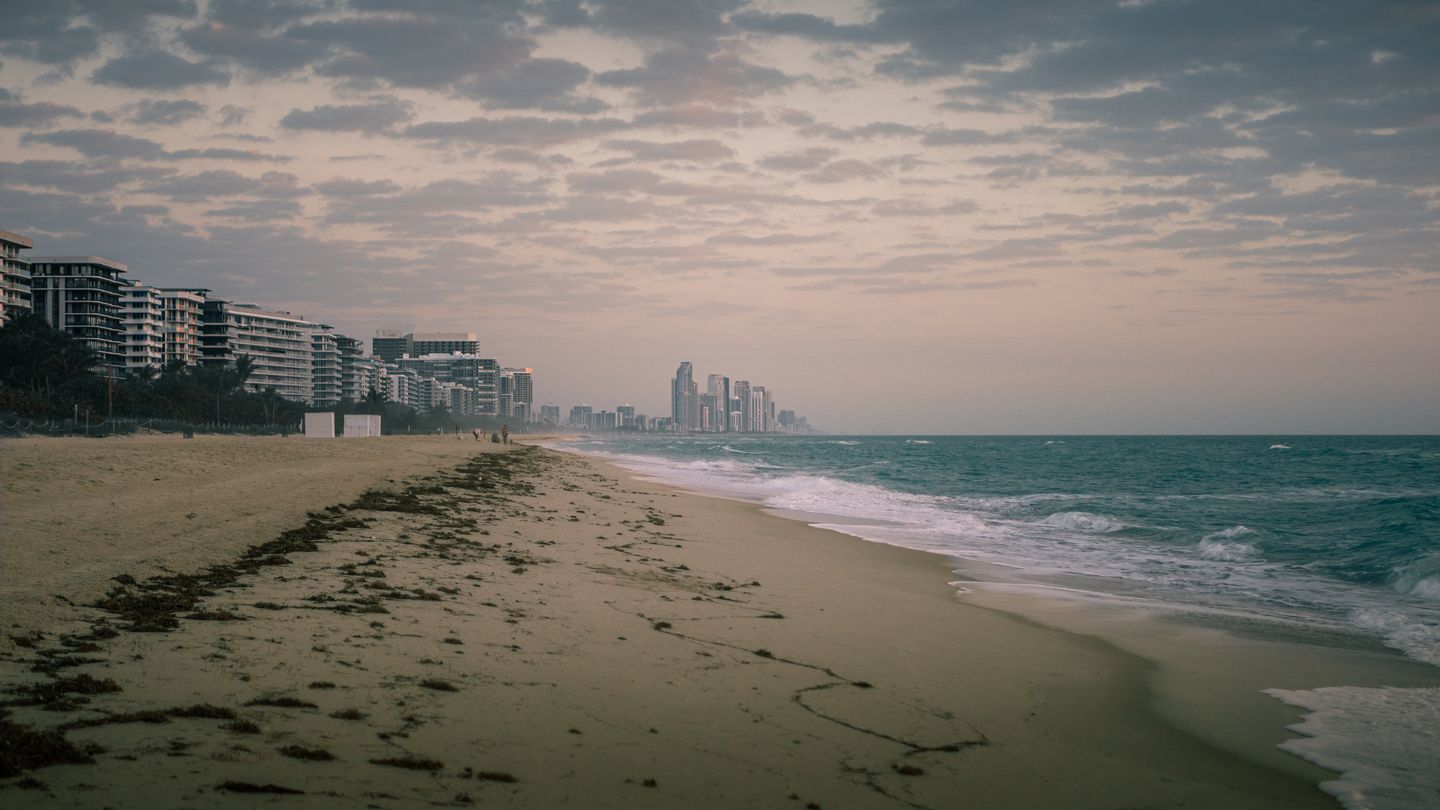
Branded product in Miami-Dade concentrates in two places, and they behave nothing alike. The mainland cluster runs Brickell, Brickell Key, Downtown, Edgewater and the Design District, and it holds the volume: eighteen of the twenty-five projects on the roster above, including every building over 350 residences. The oceanfront cluster runs Sunny Isles Beach, Miami Beach and Surfside, and it holds the scarcity.
Sunny Isles Beach is the clearest example of a submarket that branding has reshaped. St. Regis is delivering 320 residences across two towers there from about $5 million, and Bentley is delivering 216 from $5.8 million with a patented car elevator that lifts a vehicle to the residence. Both sit on a stretch of Collins Avenue that our price-per-square-foot report shows trading at $571 a foot on the resale side. That is the branded gap in one street: new branded product at multiples of the ambient per-foot price for the same ocean view.
Miami Beach is the thinnest and most expensive of the branded submarkets. Shore Club Private Collection is 49 homes on three oceanfront acres under Auberge, a project sized deliberately so that scarcity, not square footage, carries the value. Nothing else of that scale is coming to that stretch of beach, because there is no land left to put it on.
| Cluster | Branded Projects Tracked | Typical Residence Count | What Drives Value |
|---|---|---|---|
| Brickell and Brickell Key | 7 | 150 to 800 | Volume, hotel service, walkability |
| Downtown, Park West and Miami River | 5 | 380 to 490 | Height, entry price, rental flexibility |
| Edgewater and Midtown | 4 | 70 to 340 | Bayfront frontage, culinary branding |
| Design District | 2 | 130 to 145 | Retail adjacency, European hotel names |
| Oceanfront and islands | 4 | 49 to 320 | Scarcity, no remaining developable land |
| Coconut Grove and North Bay Village | 3 | 70 to 194 | Low density, wellness and design programming |
Broward and Palm Beach: The Second Wave
The branded model has moved north, and it arrived in Broward and Palm Beach as a smaller, quieter version of the Miami cycle. Six projects on the roster sit outside Miami-Dade, and every one of them is under 400 units. That is not a coincidence. These markets did not have Miami's decade of vertical absorption, so developers are building scarcity rather than volume.
West Palm Beach is the centre of it. Rosewood, Banyan Tree and Mr. C all chose the same waterfront town within a few blocks of each other, which tells you the brands read the same demographic shift out of the Northeast that the transaction data shows. Banyan Tree's West Palm tower is the group's first United States residences, and Kempinski's Design District project is that brand's first US residences too, so Miami and West Palm are between them serving as the American entry point for two Asian and European hotel groups.
| Project | Brand | City | Residences | From | Delivery |
|---|---|---|---|---|---|
| Rosewood Residences Hillsboro Beach | Rosewood | Hillsboro Beach | 92 | $5,950,000 | Early 2027 |
| Rosewood Residences West Palm Beach | Rosewood | West Palm Beach | 90 plus 8 townhouses | Not published | Approved, pre-construction |
| Banyan Tree Residences | Banyan Group | West Palm Beach | 88 | $1,900,000 | Not published |
| Mr. C Residences West Palm Beach | Mr. C | West Palm Beach | 146 | $2,000,000 | 2027 |
| Mr. C Residences Boca Raton | Mr. C | Boca Raton | 133 | $1,700,000 | Not published |
| Viceroy Residences | Viceroy | Fort Lauderdale | 370 | Penthouses from $8,800,000 | Not published |
Fort Lauderdale is the outlier in that group at 370 residences, and it is the one to watch. If Viceroy sells through at that scale, Broward gets its own branded volume cycle rather than a handful of boutique towers, and the county's luxury condo market starts to look structurally more like Brickell than like Boca.
What the 33 Percent Brand Premium Actually Buys
Savills puts the average global branded premium at 33 percent over comparable non-branded stock. That is the headline number every sales gallery in Miami quotes, and it is the number buyers should be most careful with, because it is a global average across markets where branded product is genuinely rare.
Savills' own Americas analysis makes the qualification explicit: the Americas premium runs below the global figure, at 25 percent against a 30 percent global average at the time of that study, precisely because the region is dominated by well-established locations. Miami is the most established of those locations outside New York. With 103 branded projects completed or planned in one city, the brand is not the scarce input here.
So what does the premium buy, if not scarcity? In a hotel-operator building it buys a contractual service standard: a staffed front desk, housekeeping on demand, an operator with reputational exposure if the building is run badly, and in several cases a rental programme. In a design-house building it buys authorship of the interiors and a resale story. Those are different products at similar premiums, and the second one has no daily operating obligation behind it at all.
| What You Are Paying For | Hotel-Operator Building | Design or Lifestyle Brand Building |
|---|---|---|
| Daily service obligation | Contractual, staffed, auditable | Usually none |
| Ongoing cost to owners | Higher monthly fees to fund the standard | Closer to a standard luxury condo fee |
| Rental programme | Often available through the operator | Rarely, association rules govern |
| What fails first if the brand leaves | Service level, then value | Marketing story only |
| Where the premium is defensible | Buildings where the operator is contracted long term | Buildings where the design itself is genuinely rare |
A 33 percent premium in Dubai and a 33 percent premium in Miami are not the same bet. Dubai has 87 branded projects still to build into a market that wants them. Miami has 55 into a market that already has 48. Pay for the operating contract, not for the average.
Gerardo Gonzalez, Licensed Real Estate Agent at Compass
What I Check Before Recommending a Branded Unit
My position on branded residences has not changed as the pipeline has grown: the brand is worth paying for when it comes with an enforceable operating obligation, and it is worth very little when it does not. That is not a view about any particular name. It is about which document governs the relationship, and there are five things I read before I tell a buyer a branded premium is defensible.
The Licence Term and Termination Clause
Every branded residence runs on a licence agreement between the developer or association and the brand. Read the term, the renewal mechanics and what triggers termination. A twenty-year licence with automatic renewals is a different asset from a ten-year licence the operator can walk away from if the association underfunds the service budget. This document is public in the condominium offering materials and almost nobody asks for it.
Who Pays for the Service Standard
The staffing that justifies the premium appears in your monthly fee, not in the purchase price. Ask what the projected fee per square foot is and what portion funds the branded service programme specifically. Then compare it to the Miami condo HOA fee benchmarks so you know what part of the number is the brand and what part is ordinary building operation.
Whether the Rental Programme Is Real
Several branded projects here allow short-term rentals and several forbid them, and the sales language rarely makes the distinction loudly. If the return case depends on a rental programme, get the operator's actual terms: the split, the minimum stay, the furnishing requirements and whether the operator can suspend the programme. Palm Tree Residences permits short-term rentals with no association lease restriction, for instance, and that is a materially different investment from a building where the association caps leases at twice a year.
The Reserve and Assessment Position
Florida's structural reserve rules apply to branded buildings exactly as they apply to everything else, and a branded façade does not fund a roof. On any delivered branded building I want the reserve study and the assessment history before the finishes conversation, using the same discipline set out in our SB 4-D special assessment guide.
The Developer's Delivery Record
Brands licence names. Developers build buildings. When a branded project runs late or gets value-engineered, it is nearly always a developer problem rather than a brand problem, and the brand's own remedy is usually to leave rather than to fix it. I weigh the developer's completed South Florida record more heavily than the logo, and I recommend buyers do the same before they wire a deposit under the standard pre-construction deposit schedule.
Methodology and Sources
Two different counts appear in this report and they should not be confused. The global and city-level counts (910 schemes worldwide, Miami's 48 completed and 55 pipeline projects, the market ranking table) are Savills figures published in the Branded Residences Report 2025/26 and reported by The Real Deal on November 14, 2025. Savills counts every branded residential scheme in a market, including hotel-attached residences we do not cover and completed buildings that are now resale-only.
The 31-project roster is our own editorial coverage, not a Savills subset. It is every branded project in Miami-Dade, Broward and Palm Beach that has a profile page on this site as of September 21, 2026, which means it skews toward current and forthcoming inventory and deliberately excludes older delivered branded buildings. Brand family, developer, residence count, entry price and delivery for each row are the figures published on that project's own page, each sourced there to the developer, Florida YIMBY, PROFILEmiami or The Real Deal. Cells reading "Not published" mean the developer has not released that figure; no delivery date or price is estimated.
The inclusion rule
A project is on the roster only when all six of these are true. No external register of branded residences exists to check against, so this rule is the methodology, and it is written out in full so any reader can test a row against it.
- The homes are for-sale condominium or townhome residences, not hotel rooms and not rental apartments.
- A hotel, fashion, automotive, food or lifestyle brand's name is on the residences, as publicly announced by the developer or the brand.
- The site is in Miami-Dade, Broward or Palm Beach County.
- The project was announced, in sales, under construction, or delivered in 2026 or later.
- The developer has published at least a residence count.
- The project has its own profile page on this site that names the sources for its figures.
What is deliberately left out
- Branded towers delivered before 2026, such as Porsche Design Tower and Residences by Armani/Casa in Sunny Isles Beach. They count in the Savills total of 48 completed Miami projects but are resale stock, not pipeline.
- Brand announcements with no published residence count, such as the Ritz-Carlton name at the North Bay Village site. A project joins the roster when the developer publishes numbers.
- Hotel-condominium keys sold into a rental pool and branded rental apartments, which fail the first test.
Row-level sources
Every figure in the two roster tables is the figure on that project's own page. The table below names the sources each project page cites and the date that page was last verified against them, so a reporter can check any single brand-and-building pairing without trusting this summary. On September 21, 2026 we re-read all 31 rows against their project pages and corrected five that had drifted: Mandarin Oriental now reads 298 residences across two towers from $3,900,000 (it read 220 from $3,500,000), The Standard reads 422 residences from the mid-$600,000s (it read 407 from $600,000), EDITION's delivery reads the September 2029 target (it read 2026), Mercedes-Benz Places reads 2028 after its reported delay (it read Q4 2027), and the St. Regis Brickell price is now labelled as its 2022 launch figure.
Download the full roster as a CSV file (31 rows: project, brand, county, submarket, residences, published entry price, expected delivery, project page, last verified date and sources). It is a first-party compilation by LuxuryDade and contains no MLS data. Licence: free to reuse with attribution to LuxuryDade and a link to this page, and each row's figures remain attributable to the sources named for that row.
The 33 percent premium is a global unweighted average and should not be applied to any individual Miami building. Savills' Americas analysis puts the regional figure lower. Knight Frank's September 2025 regional shares come from a separate dataset with a different methodology and are quoted only as a directional cross-check.
Data as of September 21, 2026. Last verified September 21, 2026, when every roster row was reconciled against its project page. Next scheduled review: December 21, 2026, on a 90-day cycle, and sooner when a tracked project publishes new pricing, a delivery date or a brand change, or when Savills issues its next annual count.
Related Resources
- Is the branded residence premium worth paying?
- Branded residences in Sunny Isles Beach
- Miami Condo Delivery Calendar 2026-2030: 47 Towers
- Miami $5M-plus ultra-luxury condo market
- St. Regis vs Cipriani vs Waldorf Astoria compared
- Mandarin Oriental vs Waldorf Astoria Residences
- Every Miami pre-construction building we track
- Best Miami pre-construction condos in 2026
Frequently Asked Questions